Sri Lankan Scientist Spearheads NASA-Backed Project to Transform Plastic Waste into 3D-Printed Food
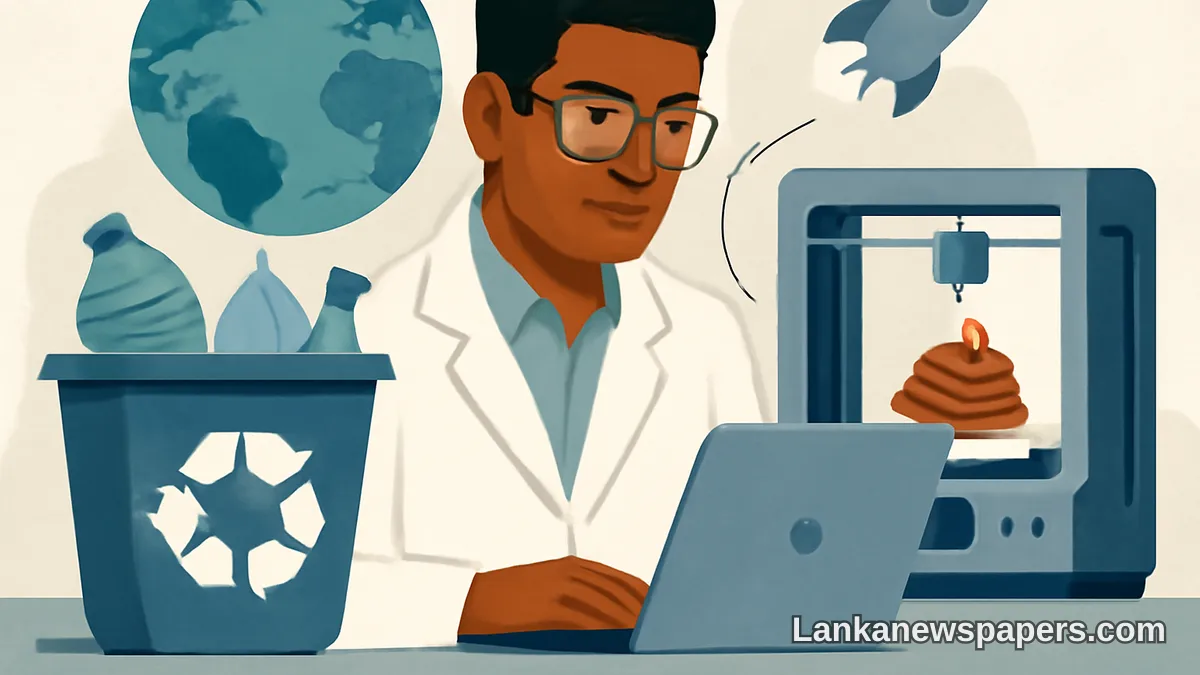
A Sri Lankan scientist is making global headlines after leading a groundbreaking NASA-backed research initiative that explores the possibility of converting plastic waste into 3D-printed edible cookies, positioning Sri Lanka on the cutting edge of sustainable food technology and space science.
A Bold Intersection of Science and Sustainability
The ambitious project, supported by the United States' National Aeronautics and Space Administration (NASA), investigates how plastic waste — one of the world's most pressing environmental challenges — can be repurposed through advanced technology to produce food items, including cookies manufactured using 3D printing processes.
The research represents a remarkable convergence of waste management, food science, and space exploration technology, drawing significant international attention to the Sri Lankan researcher's innovative work.
Addressing Two Global Crises at Once
Beyond its novelty, the research carries profound practical implications. Plastic pollution continues to devastate ecosystems worldwide, while food security remains a critical concern for space missions and vulnerable populations on Earth alike. This project attempts to tackle both problems simultaneously.
- Plastic waste is chemically processed and repurposed as a resource rather than discarded as pollution
- 3D printing technology is employed to construct consumable food products with precision
- The research could have direct applications for long-duration space travel, where food production resources are severely limited
- Earth-based applications could benefit communities in waste-heavy or food-scarce environments
Sri Lanka's Growing Footprint in Global Science
The involvement of a Sri Lankan researcher at the forefront of NASA-affiliated work underscores the island nation's growing contribution to international scientific endeavour. It serves as an inspiring reminder that Sri Lankan talent continues to break barriers and earn recognition on the world stage, even amid the country's ongoing economic and social challenges.
The project reflects not only scientific ingenuity but also a commitment to addressing some of humanity's most urgent problems through creative, technology-driven solutions.
What Comes Next
While the research is still at an exploratory stage, its NASA backing lends it considerable credibility and resources. Scientists and observers alike will be watching closely to see whether the findings can be scaled into viable real-world applications, both for space agencies planning future missions and for environmental policymakers seeking innovative answers to the global plastic crisis.
For Sri Lanka, this moment represents a source of immense national pride — a homegrown scientist helping to chart a course toward a cleaner planet and a more sustainable future, from the laboratory all the way to the stars.


💬 Join the Discussion 2
See what readers are saying — and add your view.
plastic to cookies?? bro i am not eating that sorry
same lol but if it tastes good who knows