Construction Pushes Ahead at Disputed Thaiyiddy Buddhist Temple Despite Illegal Status
Unauthorised Development Raises Concerns in Northern Sri Lanka
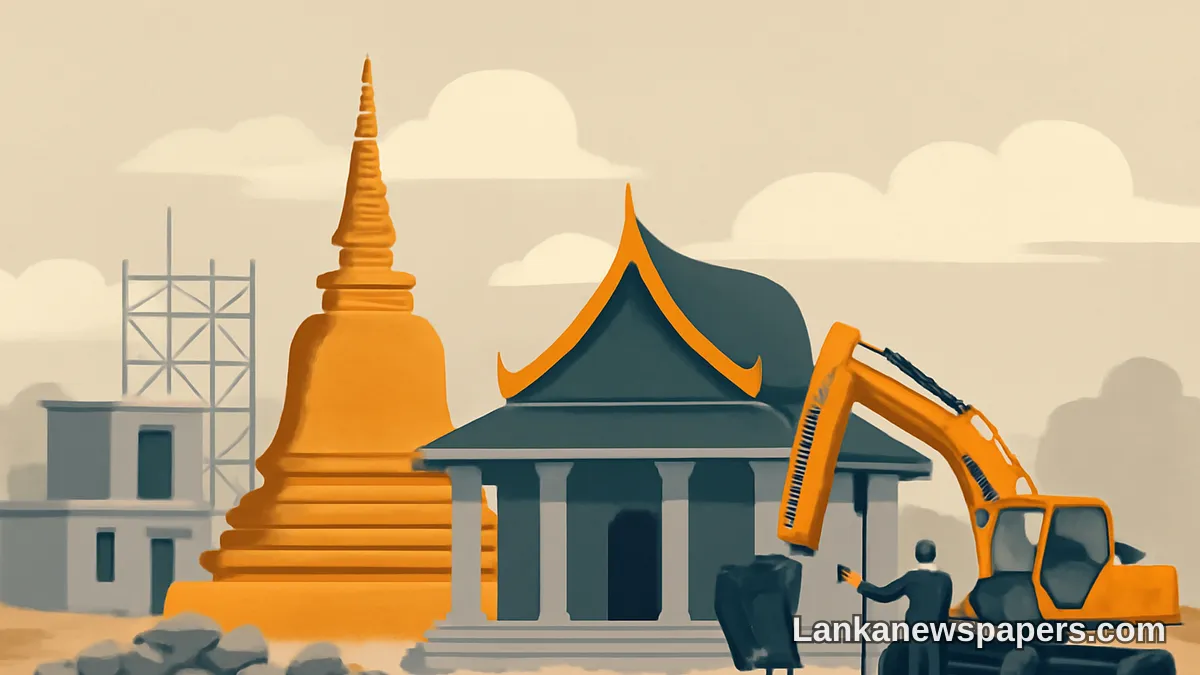
New construction work is reportedly continuing within the boundaries of the controversial Thaiyiddy Buddhist vihara in northern Sri Lanka, despite longstanding concerns that the establishment operates without proper legal authorisation.
The temple, located in the Thaiyiddy area, has been a source of tension in the region, with critics pointing to its disputed legal status as a fundamental issue that authorities have yet to adequately address. Notwithstanding these unresolved questions, fresh building activity has been observed within the premises, raising fresh alarm among local residents and community groups.
A Contentious Presence in the North
The establishment of Buddhist viharas in predominantly Tamil areas of the Northern Province has been a deeply sensitive matter in post-war Sri Lanka. Many Tamil residents and civil society organisations have repeatedly raised concerns that such developments, particularly those lacking proper permits or government authorisation, amount to a form of demographic and cultural encroachment on historically Tamil-inhabited land.
The Thaiyiddy vihara has been at the centre of such criticism for some time. Questions surrounding the legitimacy of its original construction have never been fully resolved, yet development within its grounds appears to be progressing unimpeded.
Calls for Government Accountability
Community advocates and affected residents are calling on relevant government authorities, including local planning bodies and the Archaeology Department, to intervene and enforce existing land use and construction regulations uniformly across all communities.
- The vihara's legal status remains disputed and unresolved
- New construction has been observed continuing on the premises
- Local Tamil residents have expressed concern over the development
- Civil society groups are urging government authorities to act decisively
Critics argue that the state's apparent inaction sends a troubling message about the equal application of the law in minority regions, and that allowing unauthorised construction to proceed unchallenged undermines trust in public institutions at a time when reconciliation remains a national priority.
Broader Context of Reconciliation Efforts
Sri Lanka continues to navigate a complex post-war landscape in which land rights, cultural identity, and ethnic relations remain highly charged political issues. Rights groups have consistently stressed that lasting reconciliation requires transparent governance and equal treatment under the law for all communities, regardless of ethnicity or religion.
The situation at Thaiyiddy is being closely watched by civil society organisations as a litmus test of whether the government is prepared to uphold those principles in practice.


💬 Join the Discussion 2
See what readers are saying — and add your view.
If it was a mosque or kovil they would have demolished already no?
Exactly. Double standards from goverment as usual.