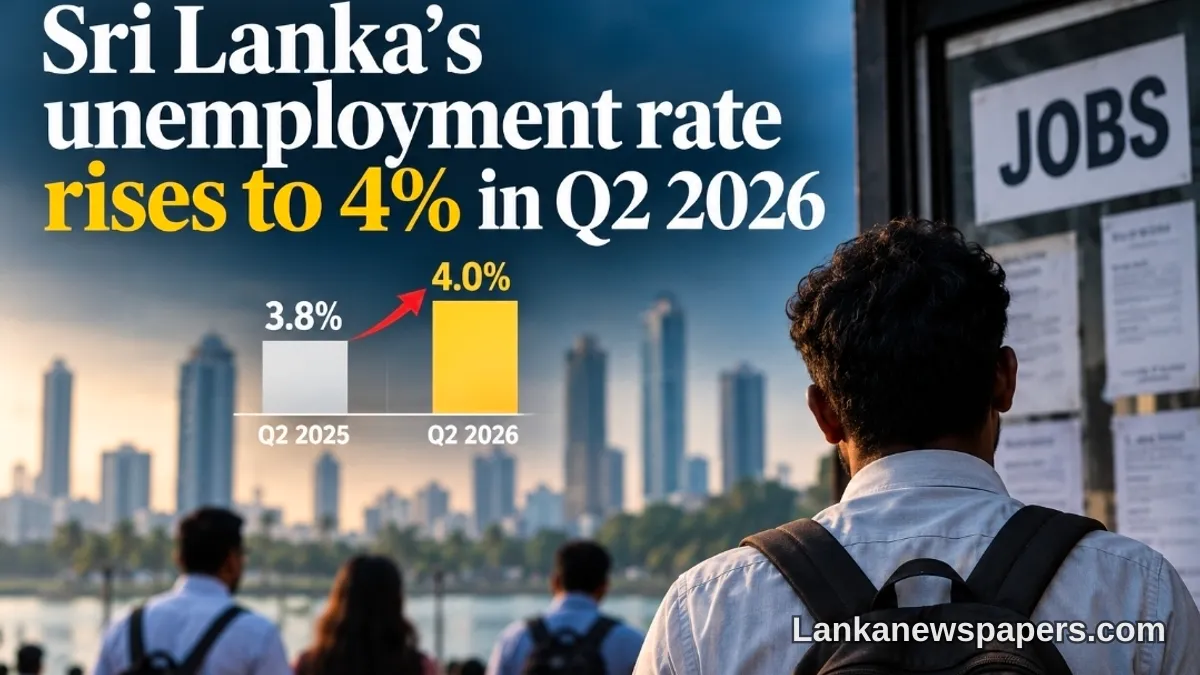
Sri Lanka's unemployment rate has edged higher, rising to 4.0% in the second quarter of 2026, up from 3.8% recorded during the same period a year earlier, according to the latest available figures.
A Modest But Notable Rise
While the increase of 0.2 percentage points may appear marginal at first glance, economists and labour market observers regard the uptick as a signal worth monitoring closely, particularly as the island nation continues its fragile economic recovery following years of financial turbulence.
The figures indicate that a slightly larger share of the working-age population actively seeking employment was unable to secure work during the April-to-June quarter of 2026 compared to the corresponding period in the previous year.
Context of Sri Lanka's Economic Recovery
Sri Lanka has been navigating a difficult path back to economic stability following the severe crisis of recent years, which had a profound impact on household incomes, businesses, and public finances. Although significant strides have been made in stabilising the economy, the latest unemployment data suggests that meaningful job creation remains a challenge.
Labour market conditions are a key barometer of how recovery efforts are translating into tangible benefits for ordinary Sri Lankans. A rise in unemployment, even a modest one, raises questions about whether economic growth is generating sufficient employment opportunities across sectors.
What This Means for Sri Lankans
Analysts note that the unemployment rate alone does not capture the full picture of the labour market. Underemployment — where individuals are working fewer hours than they would like, or in roles below their skill level — remains a concern in many parts of the country.
- The unemployment rate stood at 3.8% in Q2 of the previous year.
- The rate increased to 4.0% by Q2 of 2026.
- The rise represents a 0.2 percentage point increase year-on-year.
Policymakers will be under pressure to implement targeted measures aimed at stimulating job creation, particularly in sectors with the potential to absorb large numbers of workers, including manufacturing, tourism, and information technology.
The rise in unemployment, however slight, underscores the importance of sustaining economic reforms and attracting investment that can generate quality employment for Sri Lanka's workforce.
Further detailed data, including breakdowns by age group, gender, and province, are expected to shed more light on which segments of the population have been most affected by the shift in employment conditions during the quarter.



💬 Join the Discussion 1
See what readers are saying — and add your view.
goverment always hiding real numbers, actual rate must be way higher