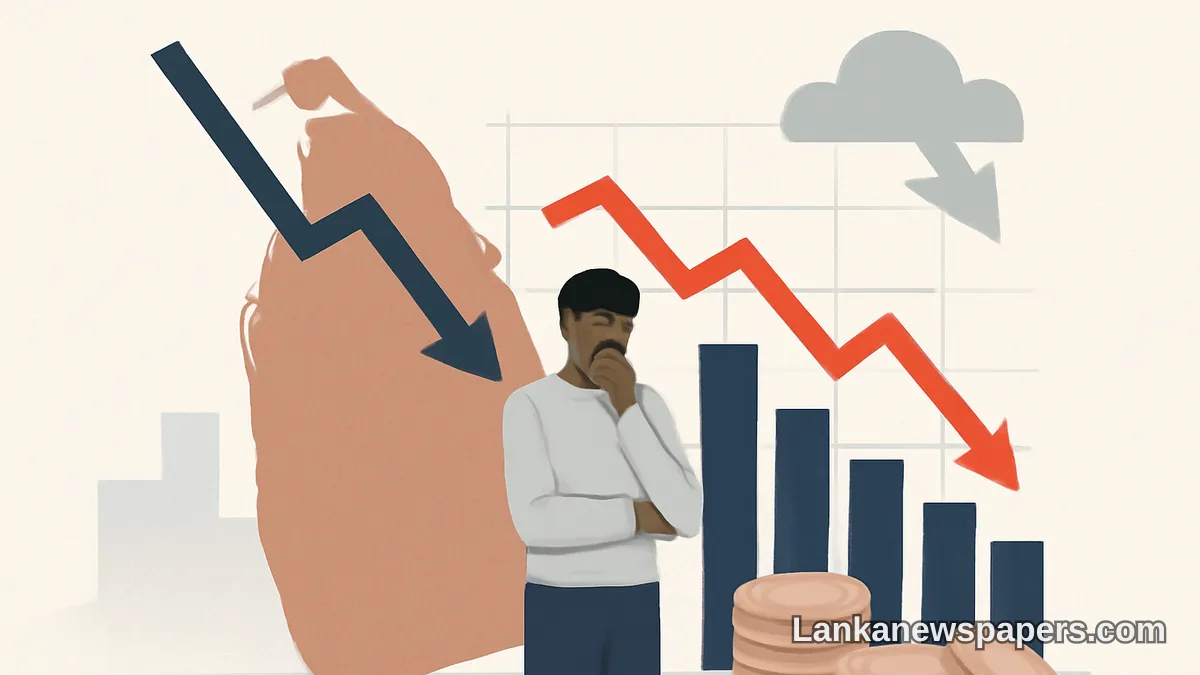
Growth Momentum Expected to Ease After Post-Crisis Recovery
Sri Lanka's economic growth is projected to reach its weakest point in three years in 2026, raising fresh concerns about the sustainability of the island nation's hard-won recovery following its devastating financial crisis.
After recording encouraging growth figures in 2024 and 2025 as the country gradually stabilised following its worst economic collapse in modern history, analysts now expect momentum to slow considerably heading into 2026.
What Is Behind the Slowdown?
The anticipated deceleration reflects a combination of factors that typically accompany post-crisis stabilisation periods, including tighter fiscal conditions, reduced consumer spending power, and the fading of the initial rebound effect that boosted output in the immediate recovery phase.
Economies emerging from deep financial crises often experience a sharp initial bounce as activity normalises, but sustaining that pace requires structural reforms and consistent investor confidence — both of which remain works in progress for Sri Lanka.
A Critical Moment for Policymakers
The projected slowdown arrives at a sensitive time, as the government continues to navigate the conditions attached to its International Monetary Fund bailout programme while trying to restore living standards for millions of Sri Lankans who bore the brunt of the 2022 economic collapse.
Policymakers face the difficult task of balancing fiscal consolidation commitments with the need to stimulate enough domestic activity to prevent growth from stalling further.
Sri Lanka's growth trajectory in 2026 is expected to mark the lowest level recorded over a three-year period, underlining the fragility of the current recovery.
Looking Ahead
While the forecast presents a sobering picture, economists note that a moderation in growth does not necessarily signal a return to crisis conditions. The key concern remains whether structural reforms can be deepened quickly enough to unlock new sources of sustainable, long-term economic expansion.
Tourism, exports, and foreign direct investment continue to be identified as the primary drivers that could help offset the growth slowdown, provided the enabling policy environment is put firmly in place.



💬 Join the Discussion 4
See what readers are saying — and add your view.
ppl still cant afford basic things and they talking about forecasts
can someone explain what caused this? genuinely want to know
after all the struggle still going backwards, what a joke
exactly, goverment will blame global economy as usual