Grade 6 Curriculum Crisis: What Sri Lanka Must Learn Before the 2027 Relaunch
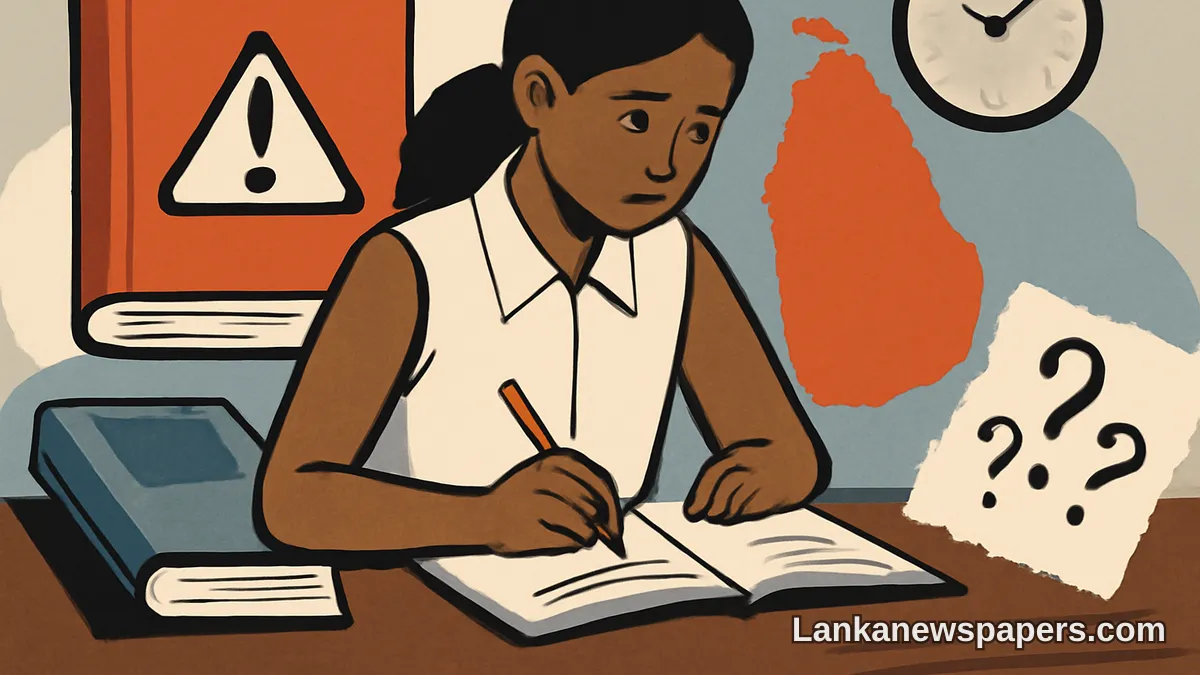
Government Steps Back on Curriculum Rollout Amid Public Outcry
Sri Lanka's Ministry of Education has officially postponed the full implementation of its revised Grade 6 curriculum until January 2027, following a storm of public criticism triggered by the discovery of an inappropriate web link embedded within an English study module. In the meantime, state schools will continue operating under the existing syllabus while authorities work to address the shortcomings that brought the reform process under intense scrutiny.
A Wake-Up Call for Curriculum Development
The incident has prompted educators, academics, and policymakers to take a hard look at the processes governing how new syllabi are designed, reviewed, and approved before they reach the hands of Sri Lankan schoolchildren. Prof. M. W. Amarasiri de Silva, a prominent voice in this national conversation, has argued that the controversy should serve not merely as an embarrassment to be managed, but as a genuine opportunity for systemic improvement.
At the heart of the criticism is a question that goes beyond a single errant hyperlink — how rigorous is the quality assurance process that governs educational materials produced for the country's state school system?
Key Lessons That Must Be Applied
Several critical areas have been identified where improvements are urgently needed before the 2027 relaunch proceeds:
- Multi-stage content review: All study materials, particularly those containing digital references and external links, must pass through multiple independent review layers before publication and distribution.
- Stakeholder consultation: Teachers, parents, child protection advocates, and subject matter experts should be meaningfully involved in evaluating curriculum content, rather than serving as an afterthought once problems emerge.
- Digital literacy safeguards: As online resources are increasingly integrated into learning materials, robust protocols are needed to verify the safety and appropriateness of all digital content referenced in modules.
- Transparent accountability: Clear responsibility must be established at each stage of curriculum development so that oversights can be traced, corrected, and prevented in the future.
The Stakes for Sri Lanka's Education System
The Grade 6 level represents a pivotal transition point in a child's schooling journey, making the quality and integrity of its curriculum especially important. Reforms at this stage have the potential to shape foundational skills in subjects such as English for an entire generation of students.
The postponement, while disruptive, may ultimately prove beneficial if the additional time is used wisely to build a more thorough and trustworthy curriculum development process.
Moving Forward With Greater Care
With January 2027 now set as the revised target, the Ministry of Education has a meaningful window to rebuild public confidence. Academics and education specialists are urging authorities to treat this period not as a waiting exercise, but as an active phase of reform — one that addresses the structural gaps in quality control that allowed the original controversy to arise in the first place.
For Sri Lankan parents and educators, the message is clear: the country's children deserve a curriculum that has been developed with the highest standards of care, transparency, and professional rigour. Whether the government rises to meet that expectation before 2027 remains to be seen.



💬 Join the Discussion 0
Be the first to share your view on this story.