Sri Lanka Deploys AI Chatbot to Engage Tamil Users — Raising Questions About Inclusion and Digital Outreach
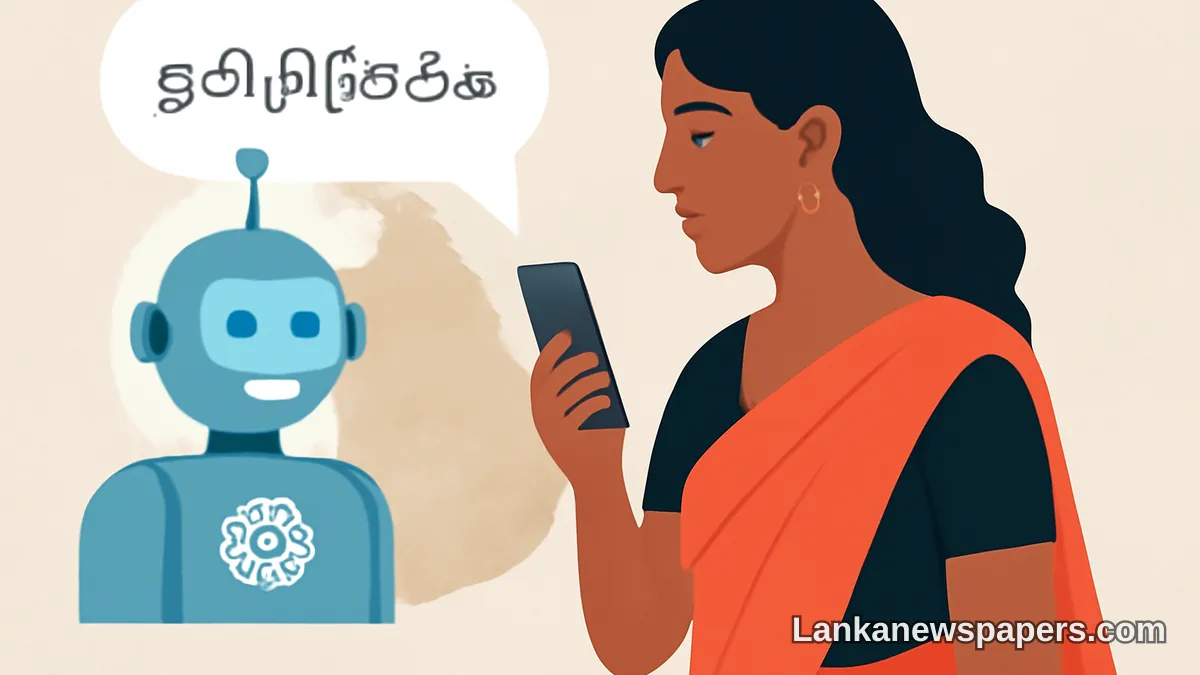
A growing conversation has emerged around Sri Lanka's use of artificial intelligence in its public-facing digital services, after reports surfaced that a Tamil-speaking user was directed to an AI chatbot following her attempt to seek assistance by identifying herself as Tamil.
A Simple Identification, An Automated Response
The incident, which has drawn attention from digital rights observers and minority community advocates, involved a woman who stated her Tamil identity while engaging with what appeared to be an official Sri Lankan government or government-affiliated digital platform. Rather than connecting her with a human representative, the system reportedly responded with an automated chatbot interaction.
For many Tamil Sri Lankans, the episode has struck a deeper chord — touching on longstanding concerns about whether minority communities receive equitable access to government services, particularly in their own language.
Questions of Language, Access, and Equity
Sri Lanka recognises both Sinhala and Tamil as official languages under its Constitution, alongside English as a link language. However, critics have long argued that Tamil speakers frequently encounter barriers when accessing state services, both offline and increasingly online.
The deployment of AI chatbots as a first point of contact raises several important questions:
- Are these systems adequately equipped to handle Tamil-language queries with accuracy and cultural sensitivity?
- Do automated responses risk marginalising communities that already feel underserved by state institutions?
- Is AI being used as a genuine accessibility tool, or as a means of deflecting engagement with minority users?
The Broader AI Rollout in Sri Lanka
Sri Lanka has been gradually expanding its use of digital tools and artificial intelligence within public service delivery, part of a wider push toward e-governance. While such initiatives are broadly welcomed as steps toward modernisation, the incident highlights the risks of deploying technology without adequately addressing the linguistic and ethnic diversity of the country's population.
The promise of digital government must extend equally to all communities — including those who have historically been the most vulnerable to institutional neglect.
Community Response
Tamil community representatives and civil society voices have called for greater transparency regarding how AI systems used in public services are designed, tested, and monitored for bias. They have urged authorities to ensure that automated platforms are capable of providing meaningful, accurate, and respectful responses in Tamil, and that human escalation pathways remain clearly accessible.
As Sri Lanka continues its post-war journey toward reconciliation and inclusive governance, the manner in which emerging technologies treat minority users will remain an important measure of the country's commitment to equality and dignity for all its citizens.


💬 Join the Discussion 4
See what readers are saying — and add your view.
who approved this, genuinely want to know
at least they trying something no? better than ignoring Tamil users completely
so the goverment cant send a real person but can send a bot? typical.
exactly, chatbot wont even understand half the Tamil dialects properly