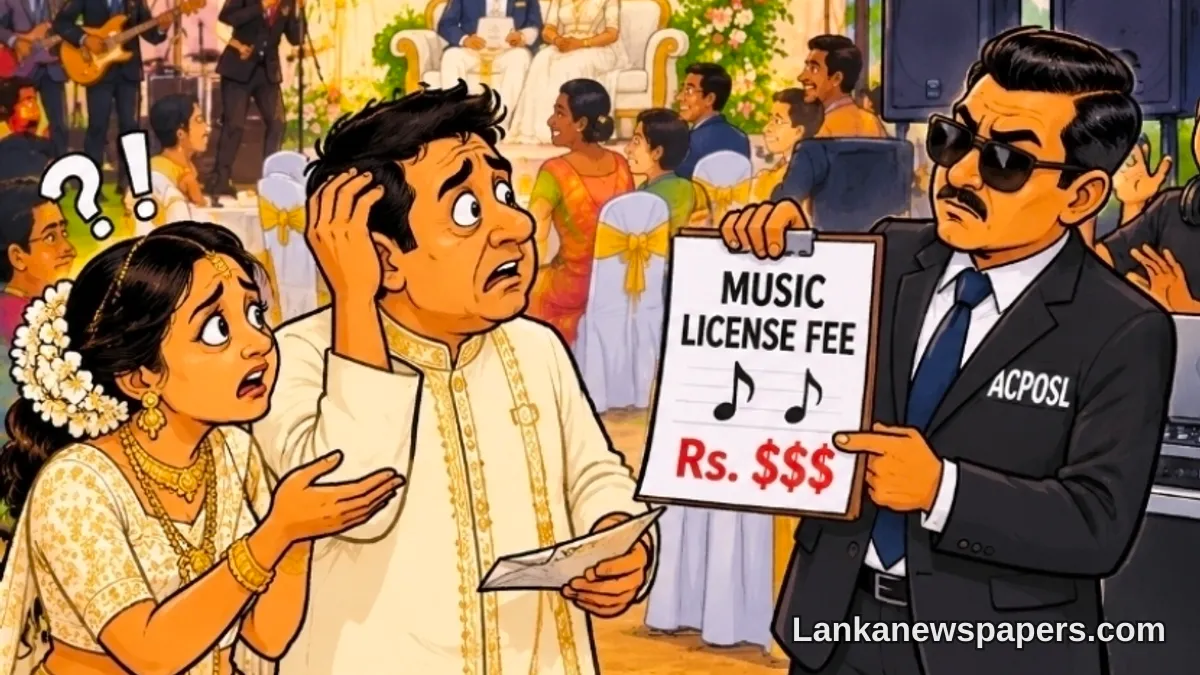
The Association of Creators and Publishers of Sri Lanka (ACPOSL) has announced a temporary suspension of its music licensing requirements for weddings, private parties, and events featuring DJ performances, offering relief to event organisers and the public who had expressed widespread concern over the fees.
A Pause Amid Public Outcry
The decision to place the licensing requirements on hold comes in response to significant backlash from Sri Lankan citizens, event planners, and the entertainment industry, who argued that imposing such fees on private celebrations was both burdensome and impractical. The move signals that ACPOSL is willing to reconsider the scope and application of its licensing framework before pressing ahead.
While the suspension is described as temporary, it provides immediate breathing room for families planning weddings and other private gatherings, who had feared being caught off guard by unexpected licensing costs tied to the music played at their events.
What the Licensing Requirements Entailed
ACPOSL, which represents the rights and interests of music creators and publishers in Sri Lanka, had sought to enforce licensing fees as part of broader efforts to ensure that artists and rights holders receive due compensation whenever their music is played publicly or at organised events. The requirements had extended to:
- Wedding receptions and ceremonies
- Private parties and gatherings
- Events featuring DJ music performances
Critics argued that applying such regulations to private, non-commercial functions was an overreach, and that many ordinary Sri Lankans planning personal celebrations would be unfairly penalised.
Industry and Public Reaction
The announcement was met with cautious relief across the events and entertainment sectors. Wedding planners and DJ associations had been among the most vocal opponents of the licensing scheme, warning that enforcement could disrupt the livelihoods of countless individuals working in the industry.
Many in the industry had raised concerns that the fees would be passed on directly to families, making even modest celebrations more expensive at a time when Sri Lankans are already navigating significant economic pressures.
What Happens Next
Although ACPOSL has suspended the requirements for now, the association has not indicated that it is abandoning its licensing ambitions altogether. It is widely expected that further discussions will take place between rights holders, industry stakeholders, and relevant authorities before any revised framework is introduced.
For the time being, those organising weddings, private parties, and DJ-led events can proceed without the immediate concern of music licensing obligations — though observers caution that clarity on the long-term position remains essential for the industry to plan ahead with confidence.



💬 Join the Discussion 2
See what readers are saying — and add your view.
finally some sense from these ppl, was getting out of hand
temporary only no? will come back double after few months watch