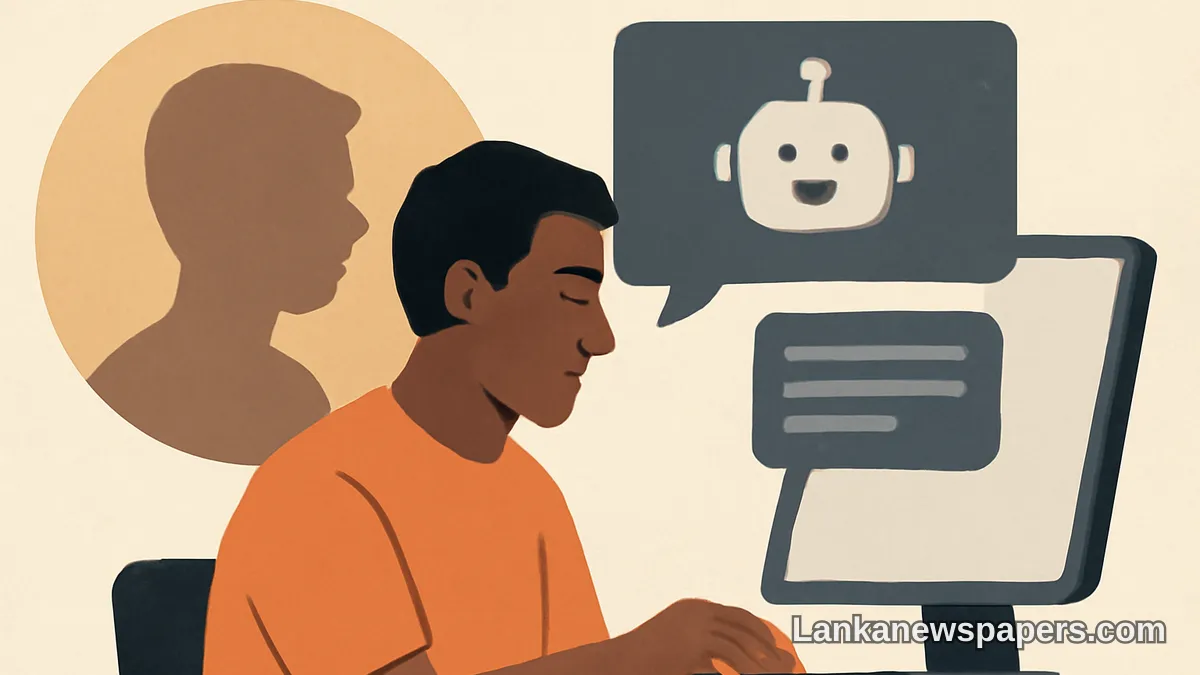
A troubling incident involving Sri Lanka's government-linked artificial intelligence chatbot has sparked fresh concerns over ethnic discrimination and digital profiling, after a Tamil woman reported being subjected to targeted questioning following her disclosure of her ethnicity online.
What Happened
Abbi Kanthasamy, a Tamil woman, claims she was contacted by an AI chatbot apparently linked to Sri Lankan authorities shortly after she identified herself as Tamil in an online interaction. The experience has drawn widespread attention and reignited painful conversations about the treatment of Tamils in post-war Sri Lanka.
Kanthasamy described the encounter as unsettling, suggesting that simply stating her ethnic identity appeared to trigger an automated response from a system that, in her view, was designed to monitor or engage individuals based on their communal background.
Concerns Over Ethnic Profiling
The incident has alarmed civil society groups and minority rights advocates, who warn that the deployment of AI tools without adequate safeguards could enable a new form of surveillance disproportionately affecting Tamil communities — a group that already carries deep wounds from decades of civil conflict that ended in 2009.
Critics argue that Sri Lanka's digital infrastructure, if left unregulated, risks becoming an instrument of ethnic targeting rather than a neutral public service tool. They are calling on the government to provide full transparency regarding the chatbot's purpose, design, and the data it collects.
The use of automated systems that appear to respond to ethnic identity markers raises fundamental questions about equality, privacy, and state accountability in a country still navigating the complex legacy of its civil war.
A Broader Pattern of Concern
This is not the first time Sri Lanka's Tamil community has raised alarms about surveillance and profiling. Human rights organisations have long documented cases of disproportionate monitoring of Tamils, particularly in the Northern and Eastern provinces, under various national security frameworks.
The emergence of AI-driven tools adds a new and sophisticated dimension to these concerns. Unlike human agents, automated systems can operate at scale, flagging or engaging individuals based on algorithmic criteria that may embed existing biases — including ethnic ones.
Government Yet to Respond Formally
At the time of writing, Sri Lankan authorities had not issued a formal public statement addressing Kanthasamy's specific claims or clarifying the operational parameters of the chatbot in question. The silence has only deepened frustration among Tamil advocacy groups, who are demanding accountability.
As Sri Lanka continues its fragile journey toward reconciliation, incidents such as this serve as a stark reminder that technology, without ethical oversight, can deepen rather than heal communal divisions. Observers and rights groups are calling for an immediate review of all AI tools deployed by state or state-affiliated bodies to ensure they do not discriminate on the basis of ethnicity, religion, or political identity.


💬 Join the Discussion 3
See what readers are saying — and add your view.
These things need proper testing before going public, basic stuff
This is shameful. Goverment using AI to target minorities now?
Dont jump to conclusions, could be a bug in the system lah