Sri Lanka Set to Protect Over 9,500 Hectares by Declaring 20 Forests as Official Reserves
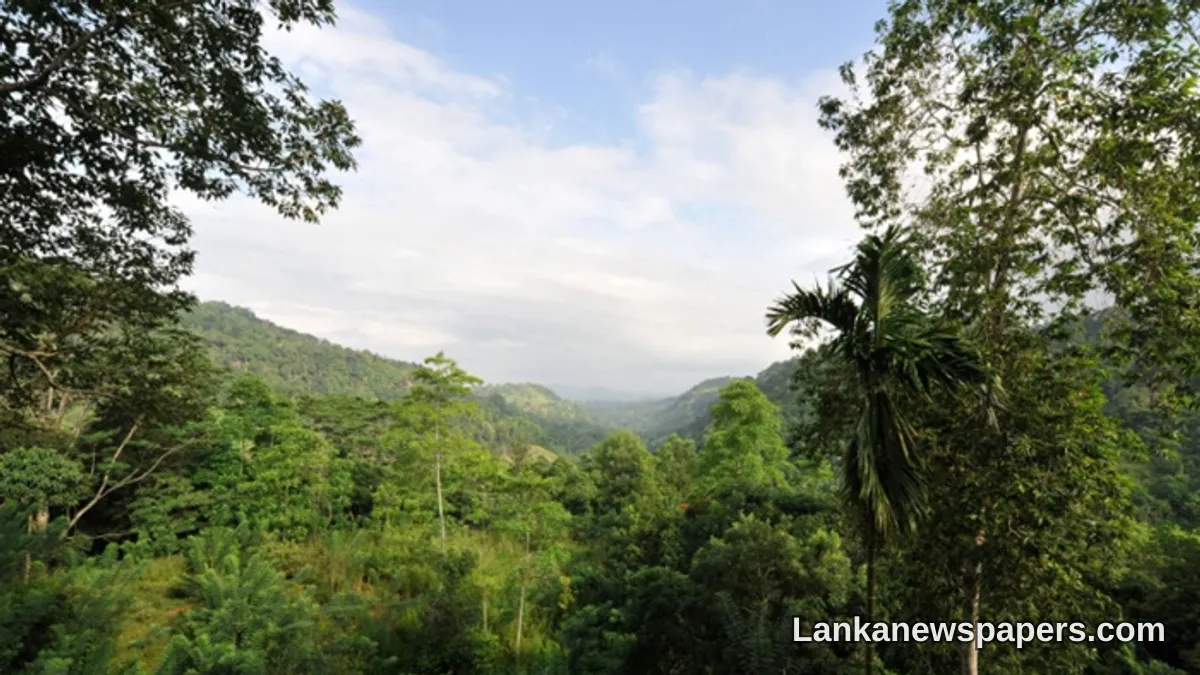
In a significant step forward for environmental conservation, Sri Lanka's Ministry of Environment has announced plans to officially gazette 20 forest areas as protected reserves, collectively spanning approximately 9,538 hectares across the island.
A Landmark Move for Conservation
The gazettal, scheduled to take effect on the 26th, marks one of the more notable conservation milestones in recent memory, bringing a substantial expanse of forest land under formal legal protection. Once gazetted, these forests will carry official reserve status, affording them stronger safeguards against encroachment, illegal logging, and other forms of environmental degradation.
Why This Matters
Sri Lanka is widely recognised as a global biodiversity hotspot, home to a rich variety of endemic flora and fauna found nowhere else on Earth. However, decades of deforestation, agricultural expansion, and urban development have placed immense pressure on the country's remaining forest cover. The designation of these 20 forests as reserves is seen as a direct response to those mounting concerns.
- A total of 20 forests will receive protected reserve status
- The combined area under protection amounts to approximately 9,538 hectares
- The gazette notification was set to be issued on the 26th
Broader Implications
Environmental advocates and conservation groups are expected to welcome the announcement, viewing it as a positive signal that the government is taking its ecological responsibilities seriously. Sri Lanka has committed to several international environmental agreements, and moves such as this help demonstrate tangible progress toward those obligations.
The Ministry of Environment has not yet detailed the specific locations of all 20 forests earmarked for protection, but further information is expected to be made available following the official gazette notification.
Gazetted forest reserves carry legal protections that restrict activities such as logging, land clearing, and unauthorised settlement, making the designation a critical tool in preserving biodiversity.
Conservation experts have long argued that formal legal protection alone is insufficient without robust on-the-ground enforcement. Authorities will now face the challenge of ensuring that the newly designated reserves are actively monitored and that violations are met with appropriate legal consequences.



💬 Join the Discussion 2
See what readers are saying — and add your view.
Good step finally. Now please actually protect them and dont just gazette on paper.
Exactly. How many reserves already getting encroached? Paper means nothing.