CIABOC Chief Urges Sri Lankans to Confront Culture of Fear in Wake of Lasantha's Legacy
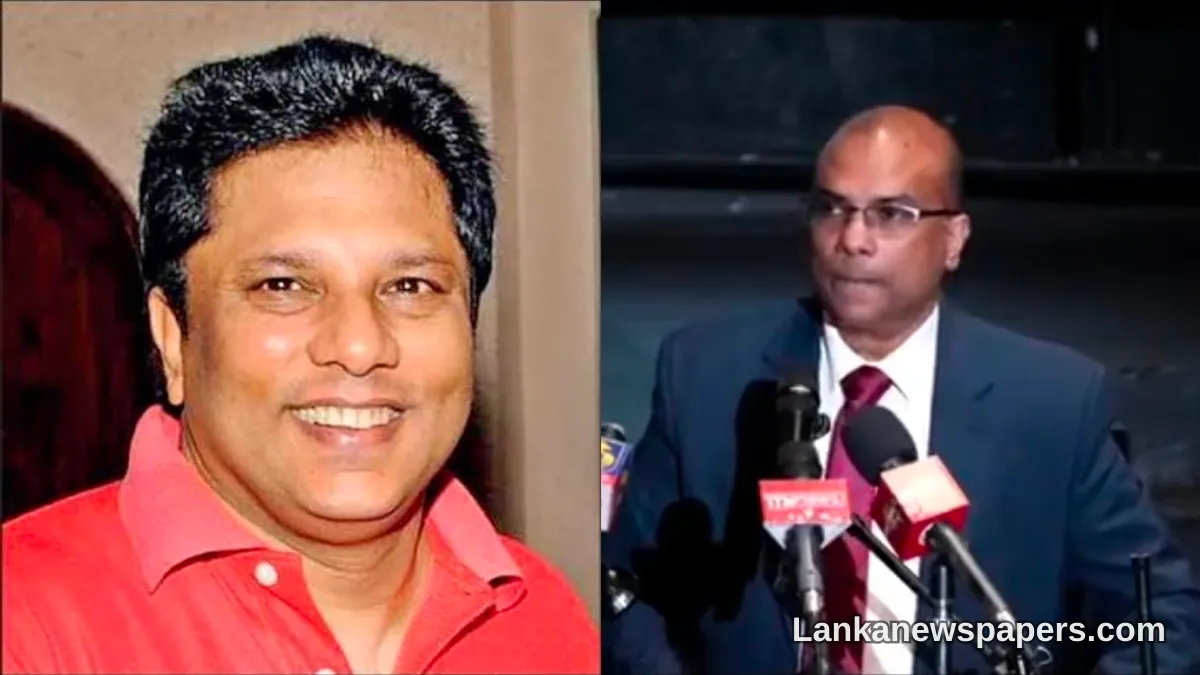
The Director General of the Commission to Investigate Allegations of Bribery or Corruption (CIABOC) has issued a powerful call to Sri Lankan society to resist and reverse the culture of fear that was deliberately fostered through the assassination of veteran journalist Lasantha Wickrematunge.
A Murder Designed to Send a Message
Speaking at a public forum, the CIABOC DG stressed that the killing of Lasantha Wickrematunge was never simply about silencing one man. It was a calculated act of intimidation — a warning directed at every journalist, activist, and ordinary citizen who dared to speak truth to power. The intent, he argued, was to make an entire society afraid to ask questions, to investigate, and to hold the powerful accountable.
"When more Lasanthas emerge, the message behind his murder fails," the CIABOC chief declared, urging Sri Lankans not to allow that original act of terror to achieve its long-term goal of suppressing dissent and public scrutiny.
Breaking the Cycle of Silence
The Director General emphasised that the true victory for those who ordered such political violence comes not in the moment of the crime itself, but in the years of silence that follow. Every journalist who self-censors, every whistleblower who stays quiet, and every citizen who looks away effectively completes what the assassins began.
He called on media institutions, civil society organisations, and the general public to actively nurture a new generation of courageous voices — individuals willing to pursue accountability journalism and expose corruption without fear of reprisal.
CIABOC's Broader Anti-Corruption Mission
The remarks carry particular weight coming from the head of Sri Lanka's primary anti-corruption body. The CIABOC DG drew a direct connection between the suppression of free expression and the entrenchment of corruption, arguing that the two are deeply interlinked. Where fear rules, corruption flourishes unchecked.
- Journalists and investigators who expose wrongdoing serve as a critical check on corrupt behaviour.
- A society conditioned to stay silent becomes fertile ground for bribery and abuse of power to thrive.
- Institutional reforms alone are insufficient without a culture that actively supports transparency and accountability.
Lasantha's Enduring Relevance
Lasantha Wickrematunge, the founding editor of The Sunday Leader, was shot dead in Colombo in January 2009 — a crime that shocked the nation and drew international condemnation. His murder remains one of the most prominent unsolved cases of journalist killings in South Asia, and his legacy continues to be invoked in discussions about press freedom, accountability, and democratic values in Sri Lanka.
The CIABOC DG's message was unambiguous: honouring Lasantha's memory means refusing to be silenced — and ensuring that those who use violence to suppress the truth find that their efforts have only inspired more voices to rise in its place.
The call resonates strongly at a time when Sri Lanka is navigating a critical period of political and institutional reform, with public trust in governance remaining fragile. Civil society groups welcomed the remarks as a timely reminder that building a corruption-free nation requires not only legal mechanisms, but also the courage of its citizens.



💬 Join the Discussion 2
See what readers are saying — and add your view.
CIABOC talking about fear culture but who actually got punished for Lasantha's murder? Nobody.
Exactly. All words no action. Same goverment different faces.