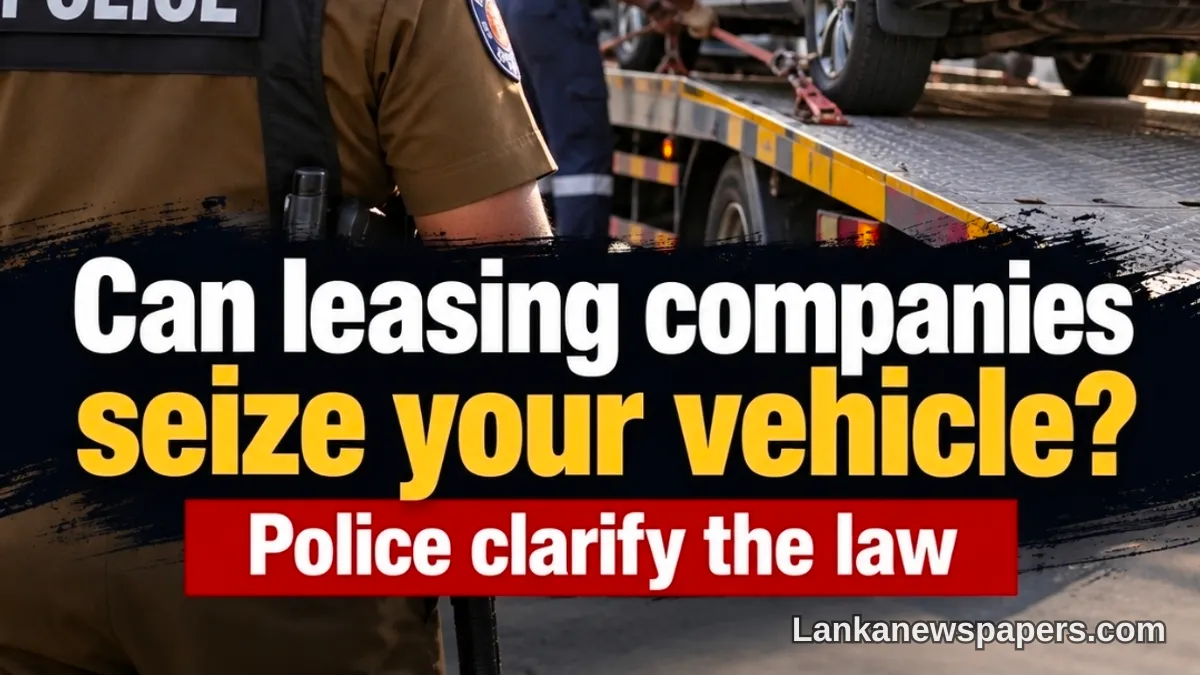
The Sri Lanka Police have issued an official clarification outlining the legal framework that governs how leasing and finance companies are permitted to repossess vehicles and other equipment from borrowers who have defaulted on their payments.
What the Law Says
The clarification comes in response to growing public concern over incidents in which leasing company representatives have been accused of seizing vehicles in an aggressive or unlawful manner, sometimes causing distress to vehicle owners and their families.
According to the police, leasing and finance companies do not have the unilateral right to physically seize a vehicle at will. Any repossession must follow a legally defined process, and companies that bypass these procedures may be acting outside the boundaries of the law.
Key Points for Vehicle Owners
- Leasing companies must follow due legal process before repossessing any vehicle or equipment.
- Borrowers who believe their vehicle has been seized unlawfully are encouraged to contact the nearest police station immediately.
- The police retain the authority to intervene in cases where repossession is carried out in a manner that breaches the law or threatens public order.
Public Urged to Know Their Rights
The police have urged members of the public to familiarise themselves with their legal rights when dealing with leasing institutions, particularly in situations involving payment defaults or disputes over outstanding balances.
Citizens should not allow themselves to be intimidated. If any party attempts to seize your property without following the correct legal procedure, you have every right to seek police assistance.
This latest statement is seen as an effort by the police to reduce confrontations between leasing company agents and vehicle owners — incidents that have occasionally escalated into public disturbances across the island.
A Timely Reminder Amid Rising Defaults
The clarification arrives at a time when many Sri Lankan households continue to face financial pressure following years of economic hardship. Industry observers note that vehicle loan defaults have remained a sensitive issue, with both lenders and borrowers navigating an uncertain economic landscape.
Legal experts advise borrowers facing repossession threats to seek independent legal counsel before surrendering any vehicle, and to document all communications with their finance provider.



💬 Join the Discussion 1
See what readers are saying — and add your view.
finally some clarity, leasing companies were doing whatever they wanted before