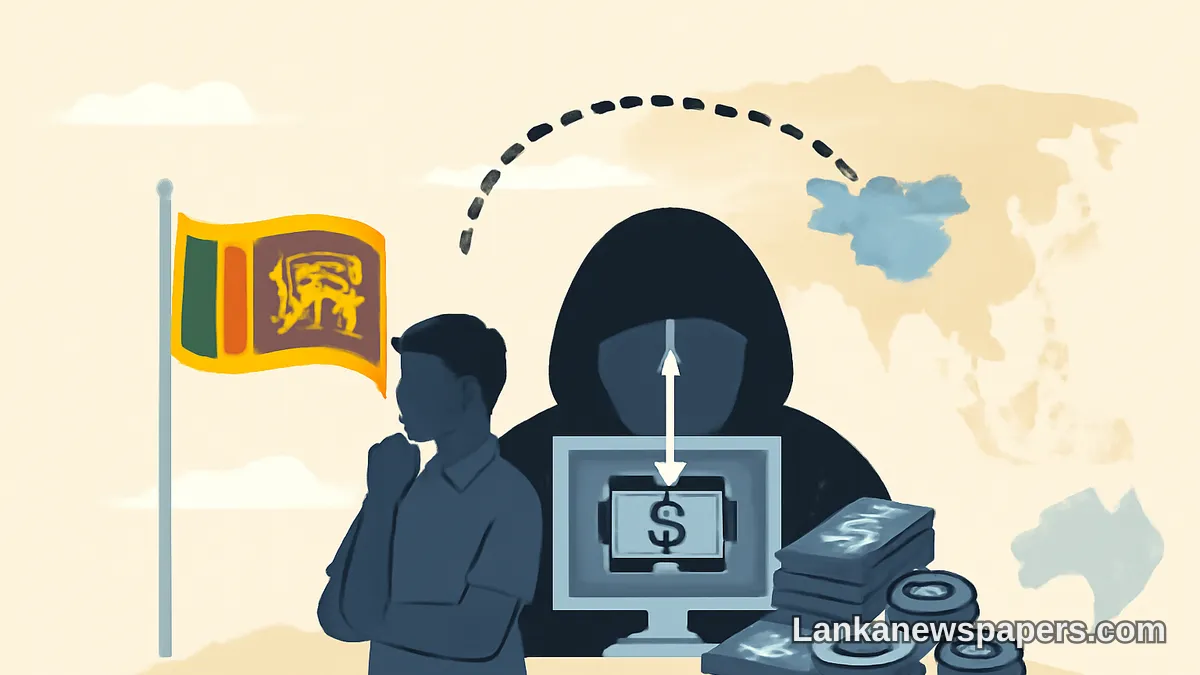
A Regional Problem With Local Consequences
As Southeast and South Asian governments intensify their coordinated crackdown on transnational cyber scam operations, Sri Lanka has emerged as a troubling case study in just how far those efforts still fall short. Despite high-level political commitments and cross-border cooperation frameworks, the island nation's experience reveals deep structural weaknesses that continue to allow scam networks to flourish.
The Scale of the Crisis
Cyber scam compounds — industrial-scale operations that force trafficked individuals to conduct online fraud targeting victims around the world — have long been associated with lawless border zones in Myanmar and Cambodia. However, growing evidence suggests that the reach of these criminal enterprises extends well beyond those notorious hubs, with Sri Lanka increasingly drawn into the web as both a source of trafficked labour and a conduit for illicit financial flows.
Many Sri Lankans, lured by promises of legitimate employment abroad, have found themselves trapped in scam centres across the region, compelled under threat of violence to defraud strangers online. Their stories have slowly filtered back home, exposing the human cost of a crisis that regional diplomacy has so far failed to adequately address.
Where Regional Cooperation Falls Short
Asia's anti-scam campaign has produced a number of headline-grabbing operations and bilateral agreements, yet critics argue these measures remain largely superficial. Key limitations include:
- Inconsistent legal frameworks across member states that create jurisdictional gaps exploited by criminal syndicates
- Limited intelligence-sharing between national law enforcement agencies
- Inadequate victim identification and repatriation mechanisms, leaving trafficked individuals stranded for extended periods
- Insufficient financial monitoring to trace and disrupt the money laundering networks that sustain scam operations
Sri Lanka's own institutional capacity to respond — both in protecting its citizens overseas and in policing domestic enablers of these networks — has been strained by years of economic crisis, limiting the resources available to investigators and border control authorities.
Economic Vulnerability as a Recruitment Tool
Analysts point out that Sri Lanka's prolonged economic difficulties have made its population particularly susceptible to fraudulent overseas job offers. When legitimate employment opportunities are scarce and household debt is high, the promise of a well-paying position in a foreign country can override caution, even when warning signs are present.
The economic desperation that drives people to accept suspicious job offers abroad is itself a governance failure — one that no amount of regional policing can fix on its own.
This dynamic underscores the argument that effective counter-trafficking and anti-scam strategies must pair law enforcement action with meaningful economic interventions at the national level.
Calls for a More Robust Response
Observers and advocacy groups are urging both the Sri Lankan government and regional bodies to move beyond periodic crackdowns and invest in durable solutions. These include stronger pre-departure screening for job seekers, mandatory registration of overseas recruitment agencies, and dedicated support services for repatriated victims of trafficking.
At the regional level, there are growing calls for a binding multilateral instrument that would standardise the legal definition of cyber scam trafficking, establish clear obligations for victim assistance, and create enforceable mechanisms for cross-border asset recovery.
A Test of Political Will
Ultimately, Sri Lanka's predicament serves as a mirror held up to the broader region. The architecture for cooperation exists, but translating agreements on paper into effective action on the ground demands sustained political will, adequate resourcing, and genuine accountability — qualities that have so far been in short supply across Asia's anti-scam campaign.
Until those gaps are closed, vulnerable citizens across the region will continue to pay the price.


💬 Join the Discussion 2
See what readers are saying — and add your view.
our goverment cant even protect our own ppl from these scam syndicates
exactly, they talk talk but nothing happens on the ground