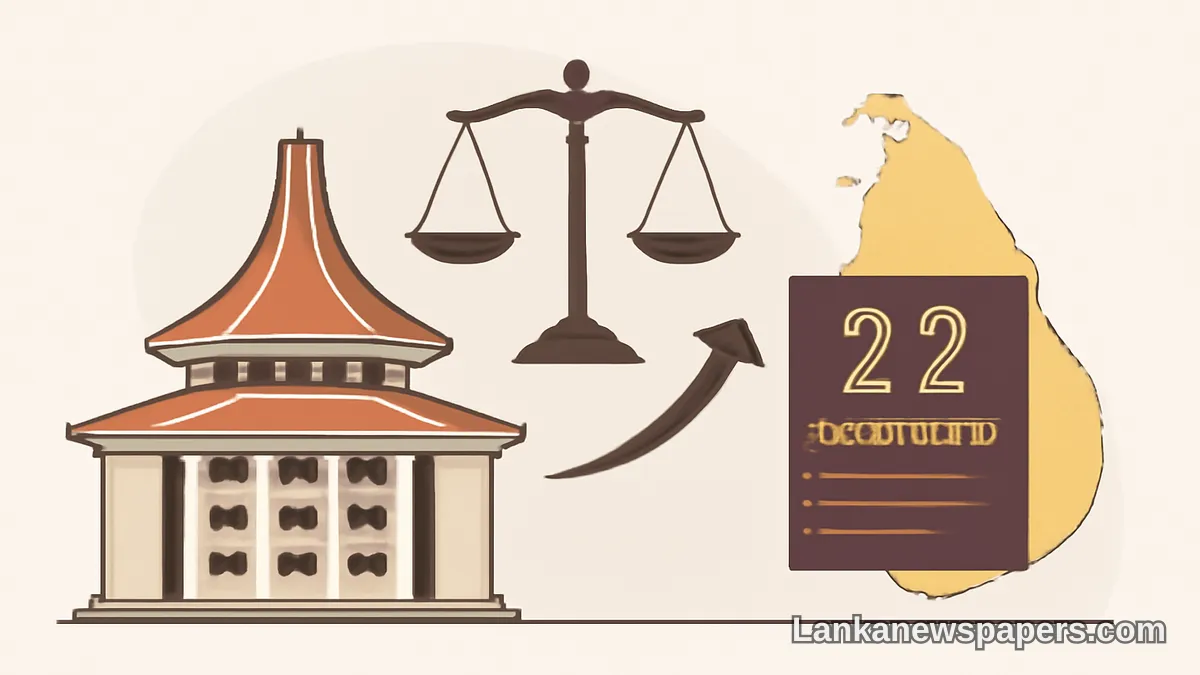
The Supreme Court of Sri Lanka has ruled that the proposed 22nd Amendment to the Constitution does not require a public referendum to be passed into law, clearing the way for the legislation to move forward with only a special majority in Parliament.
A Significant Legal Determination
The landmark ruling removes one of the key procedural hurdles that had surrounded the proposed constitutional amendment, meaning that lawmakers will not need to seek a direct public mandate before enacting the changes. A two-thirds majority in Parliament will be sufficient for the amendment to be adopted.
The decision has significant implications for the country's political landscape, as it shifts the immediate battleground from the courts to the streets and the parliamentary chamber itself.
Opposition Takes the Fight to the Streets
With the legal avenue now largely settled, the Opposition is expected to channel its energy into public demonstrations. Opposition groups have announced plans to gather at Polduwa Junction, signalling that resistance to the amendment will be carried forward through public mobilisation rather than legal challenges alone.
The planned demonstration is seen as a direct response to the Supreme Court's determination, with Opposition figures likely to use the gathering to rally support and apply pressure on the government ahead of any parliamentary vote.
What the 22nd Amendment Proposes
The 22nd Amendment has been a subject of considerable political debate in Sri Lanka, touching on core questions of governance, accountability, and the balance of power within the state. The amendment is viewed by its proponents as a necessary step toward strengthening democratic institutions, while critics have raised concerns about its provisions and the manner in which it is being pursued.
With the Supreme Court's ruling now in place, attention turns firmly to Parliament, where the government will need to secure the required special majority to see the amendment through to passage.
The coming days are expected to be politically charged, both inside the parliamentary chamber and on the roads outside, as Sri Lanka navigates yet another defining moment in its constitutional history.


💬 Join the Discussion 1
See what readers are saying — and add your view.
finally no referendum means goverment can move fast. lets see if they actually do it properly