Sri Lanka's Distinctive Three-Banded Wolf Snake Officially Recognised as Its Own Species
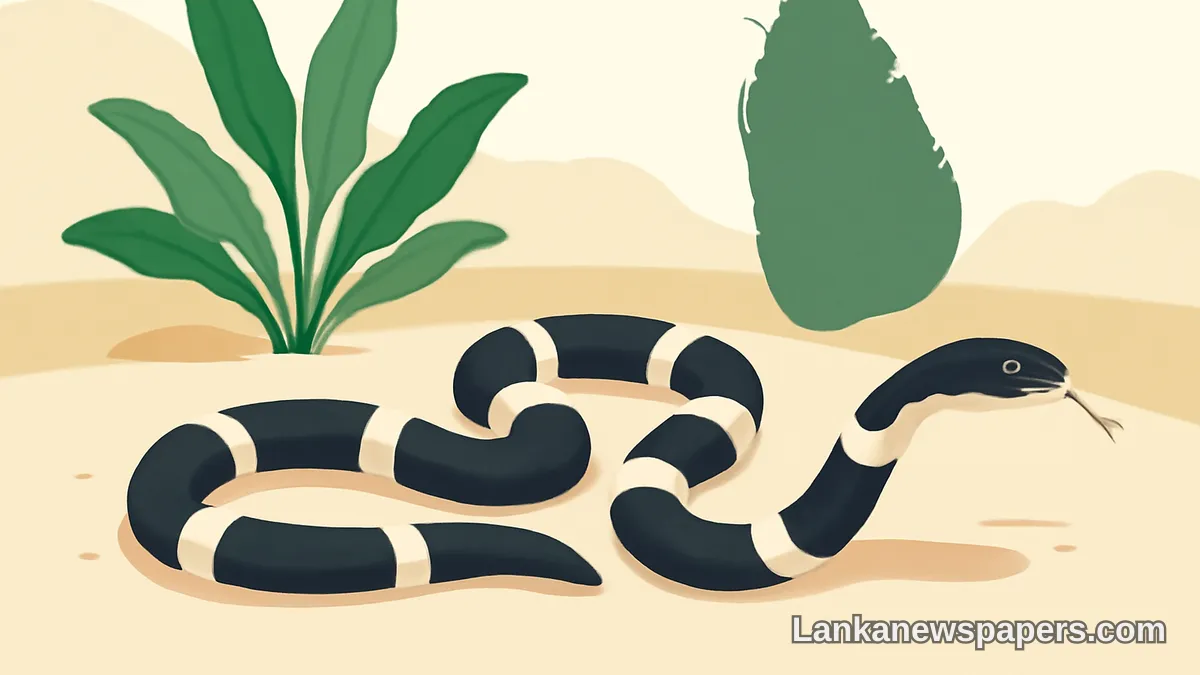
A snake long known to slither through the forests and grasslands of Sri Lanka has finally received scientific recognition as a species entirely its own. The Sri Lankan wolf snake, distinguished by its striking three-banded pattern, has been formally identified and classified as a distinct species, marking a significant milestone for the island's biodiversity research.
A New Chapter in Sri Lankan Herpetology
For years, the snake had been grouped under broader regional classifications, its unique identity overlooked amid the complexity of wolf snake taxonomy across South and Southeast Asia. Now, following dedicated scientific study, researchers have confirmed that the three-banded wolf snake found in Sri Lanka is not merely a local variant of a widespread species — it is a creature unto itself, with characteristics that set it apart from its relatives across the region.
What Makes This Snake Unique
The wolf snake's most immediately recognisable feature is its three distinctive bands, a patterning that had long caught the attention of naturalists and field researchers working across the island. Beyond its appearance, closer examination of its physical and genetic traits revealed differences significant enough to warrant full species-level recognition within the scientific community.
- The snake displays a clearly defined three-banded colouration pattern
- Physical and morphological characteristics distinguish it from related wolf snake species in the broader region
- Sri Lanka's unique ecological environment is believed to have played a role in the species' distinct evolutionary path
Why This Discovery Matters for Sri Lanka
Sri Lanka is globally celebrated as a biodiversity hotspot, home to a remarkable concentration of endemic flora and fauna given its relatively modest land area. Each newly recognised endemic species reinforces the island's standing as one of the world's most ecologically important territories and strengthens the case for continued conservation efforts.
The formal recognition of native species not only enriches scientific knowledge but also underscores the urgent need to protect the natural habitats that allow such unique life forms to survive and thrive.
Herpetologists and wildlife conservationists in Sri Lanka have welcomed the recognition, noting that accurate species identification is a foundational step in designing effective conservation strategies. A species that is misclassified or unrecognised cannot be properly protected under national or international conservation frameworks.
Conservation Implications
With its newly confirmed status, the three-banded wolf snake can now be assessed independently for its conservation needs. Researchers will be better positioned to study its population distribution, habitat preferences, and any threats it may face from deforestation, agricultural expansion, or human encroachment — challenges that confront much of Sri Lanka's native wildlife.
This latest discovery is a reminder that even in a well-studied island like Sri Lanka, nature continues to yield surprises, and that sustained scientific inquiry remains essential to understanding and protecting the country's extraordinary natural heritage.



💬 Join the Discussion 2
See what readers are saying — and add your view.
finally our own species not shared with india or anywhere. proud moment
yes but how many ppl even knew this snake existed before today lol