Sri Lanka's Repeated BRICS Absences: A Deliberate Signal or Diplomatic Drift?
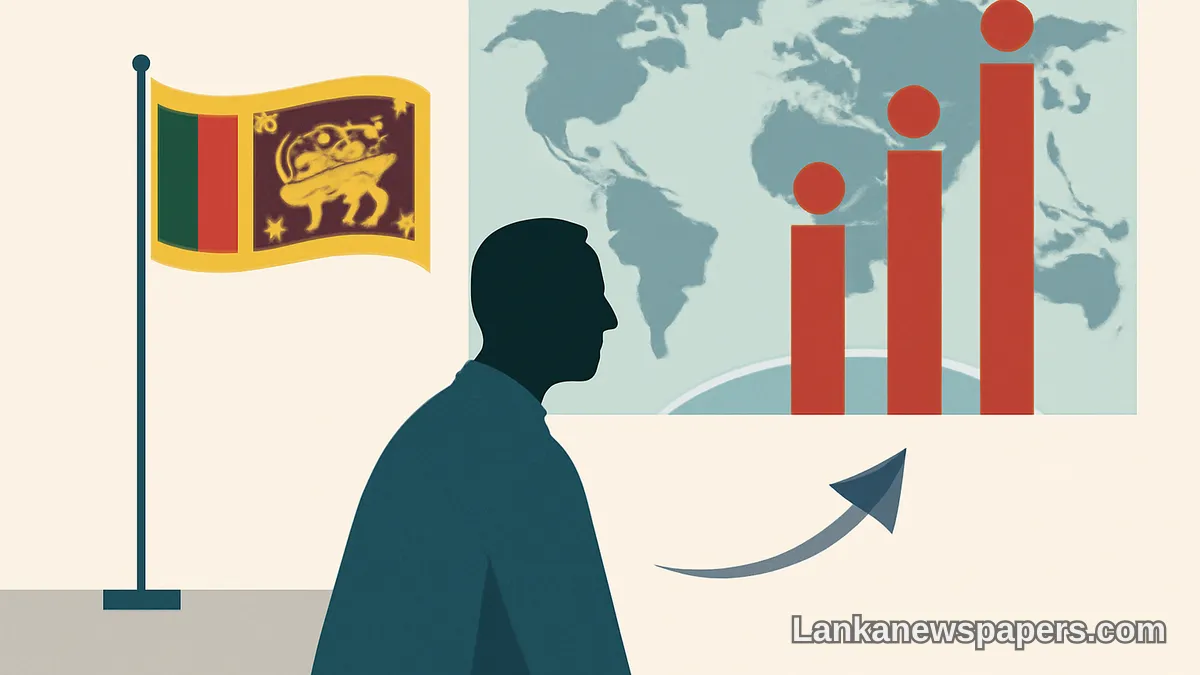
Sri Lanka's continued absence from BRICS-related engagements has sparked growing debate among foreign policy analysts and regional observers, raising pointed questions about what Colombo is truly communicating to the international community through its conspicuous no-shows.
A Pattern That Cannot Be Ignored
When a nation repeatedly declines to participate in one of the world's most consequential emerging multilateral groupings, it is rarely accidental. Sri Lanka's consistent failure to engage meaningfully with BRICS — the influential bloc comprising Brazil, Russia, India, China and South Africa, now significantly expanded — has begun to look less like scheduling conflict and more like a considered, if quietly maintained, foreign policy posture.
The question analysts are now asking is simple but weighty: is Sri Lanka deliberately keeping its distance from BRICS, and if so, what does that tell the world about where the island nation sees its future alliances lying?
The Geopolitical Tightrope
Sri Lanka has historically prided itself on a non-aligned foreign policy, a legacy inherited from its post-independence leadership. Yet the global landscape has shifted dramatically. The rise of BRICS as a counterweight to Western-led institutions such as the International Monetary Fund and the World Bank means that sitting on the sidelines is no longer a neutral act — it is a choice that carries its own diplomatic weight.
Colombo finds itself navigating an extraordinarily delicate balancing act. On one side stands China, Sri Lanka's largest bilateral creditor and a dominant BRICS voice. On the other stands India, Sri Lanka's closest neighbour and a nation with its own complex relationship within the bloc. Meanwhile, Western partners — particularly the United States and European Union members — remain critical sources of trade, tourism and development support.
Staying away from BRICS gatherings may be Sri Lanka's way of telling multiple powerful players simultaneously that it refuses to be claimed by any single camp.
Economic Vulnerability Shapes Diplomatic Choices
It would be impossible to discuss Sri Lanka's foreign policy positioning without acknowledging the shadow cast by its 2022 economic collapse — the worst the country has experienced since independence. Having turned to the IMF for a bailout programme and engaged in gruelling debt restructuring negotiations with bilateral creditors including China and India, Sri Lanka's room for bold diplomatic manoeuvring has been severely constrained.
Alienating Western financial institutions at this fragile moment of economic recovery would carry serious risks. At the same time, openly distancing itself from China — which holds considerable leverage as a major creditor — is equally fraught with danger. The result is a foreign policy that appears, at least outwardly, to favour studied ambiguity.
What the Absence Signals Internationally
Foreign policy observers have offered several interpretations of Sri Lanka's BRICS no-shows:
- A deliberate effort to preserve economic ties with Western nations and multilateral lending institutions during the ongoing IMF programme
- Sensitivity to Indian concerns about the deepening of Chinese influence in South Asia through BRICS expansion
- An internal lack of consensus within the Sri Lankan government about which geopolitical direction the country should pursue
- A strategic calculation that observer or partner status, rather than full engagement, better serves Sri Lanka's immediate interests
The Cost of Ambiguity
While careful neutrality has its advantages, prolonged ambiguity risks leaving Sri Lanka without firm advocates in any major power bloc when it needs them most. As BRICS continues to expand its membership and influence — with new members joining in recent years and more nations expressing interest — the grouping's ability to shape global financial architecture, trade flows and development financing is only expected to grow.
A Sri Lanka that perpetually hovers at the margins may find itself progressively marginalised in the very conversations that will determine the terms of twenty-first century global economic governance.
A Moment for Clarity
The administration of President Anura Kumara Dissanayake, which came to power pledging a new style of governance and a recalibrated foreign policy, now faces mounting pressure to articulate a coherent and transparent position on BRICS engagement. Continued silence or absence may have served a short-term purpose, but as the international community watches closely, Sri Lanka will eventually need to answer the question its empty chair keeps raising: which world does it wish to belong to?
For a small island nation still clawing its way back from economic catastrophe, the answer to that question may shape its fortunes for decades to come.


💬 Join the Discussion 0
Be the first to share your view on this story.