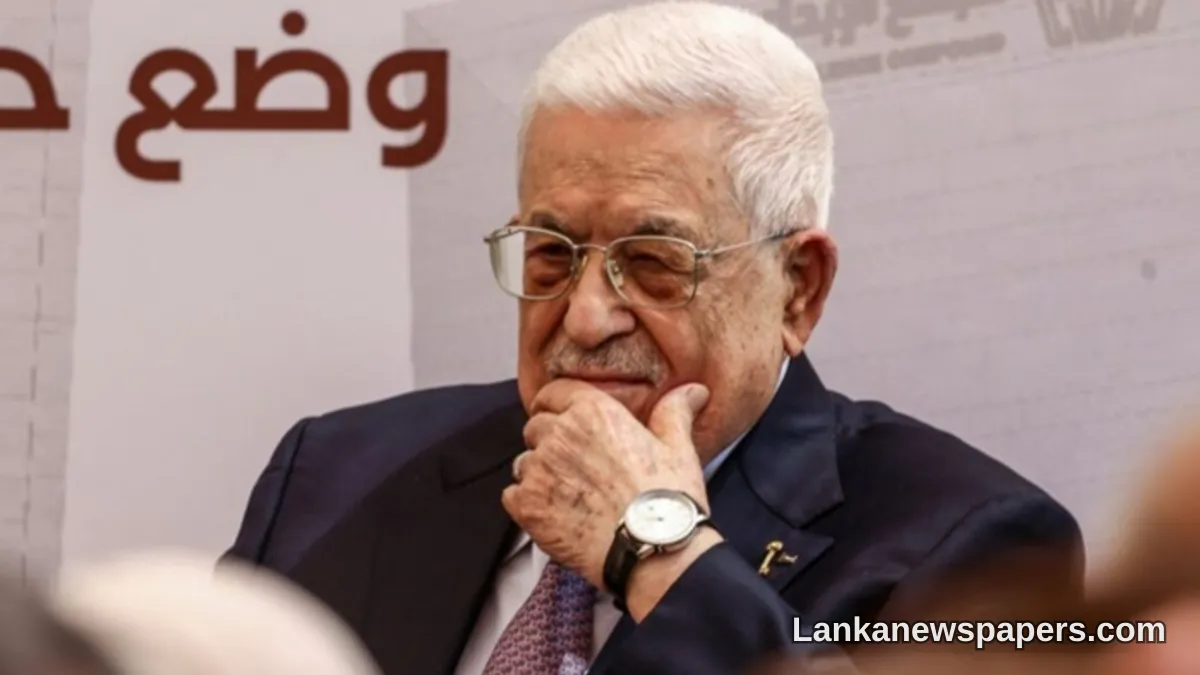
The United States has once again refused to grant Palestinian President Mahmoud Abbas a visa to attend the United Nations General Assembly, continuing a pattern of denials that has drawn sharp criticism from international observers and diplomatic circles.
A Recurring Denial
This is not the first time Washington has blocked Abbas from participating in the annual gathering of world leaders at the UN headquarters in New York. The repeated refusal raises serious questions about the United States' obligations as the host nation of the United Nations, a role that many argue carries a responsibility to grant access to recognised world leaders attending official UN proceedings.
The UN General Assembly remains one of the most significant diplomatic forums on the global stage, where heads of state and government representatives convene annually to address pressing international issues. Abbas, as the leader of the Palestinian Authority, has consistently sought to use this platform to advocate for Palestinian statehood and draw global attention to the ongoing conflict in Gaza and the West Bank.
Diplomatic and Legal Questions
Critics argue that the US denial of a visa to a sitting head of a recognised authority undermines the principles of multilateral diplomacy and raises concerns about Washington's role as an impartial host of UN proceedings. Under the 1947 Headquarters Agreement between the United States and the United Nations, the host country is generally obligated to allow entry to individuals invited to participate in UN activities.
The repeated blocking of President Abbas sends a troubling signal to the international community about respect for multilateral institutions and the rights of the Palestinian people to be heard on the world stage.
Context Amid Ongoing Conflict
The denial comes at a particularly sensitive time, with the conflict in Gaza continuing to claim lives and displace hundreds of thousands of civilians. Palestinian leaders have repeatedly turned to the United Nations as a key venue to press their case for a ceasefire, humanitarian aid access, and long-term political resolution.
The move is widely seen as reflective of the broader tensions between Washington and Palestinian leadership, particularly in the context of US foreign policy in the Middle East. The United States remains a key ally of Israel and has frequently vetoed UN Security Council resolutions perceived as critical of Israeli military operations.
International Reaction
The decision is expected to draw condemnation from a number of nations, including Arab League members and countries across the Global South that have consistently supported Palestinian representation at international forums. Several UN member states are likely to raise the matter as a broader concern about equitable access to UN proceedings.
As the General Assembly session gets underway, the absence of the Palestinian president is set to remain a prominent point of contention among delegations gathered in New York.



💬 Join the Discussion 2
See what readers are saying — and add your view.
UN is based in America so they can do whatever they want no?
thats the whole problem men, UN should move somewhere neutral