Sri Lanka's Apparel Industry Eyes Next $3 Billion Milestone — But the Road Ahead Demands Bold Action
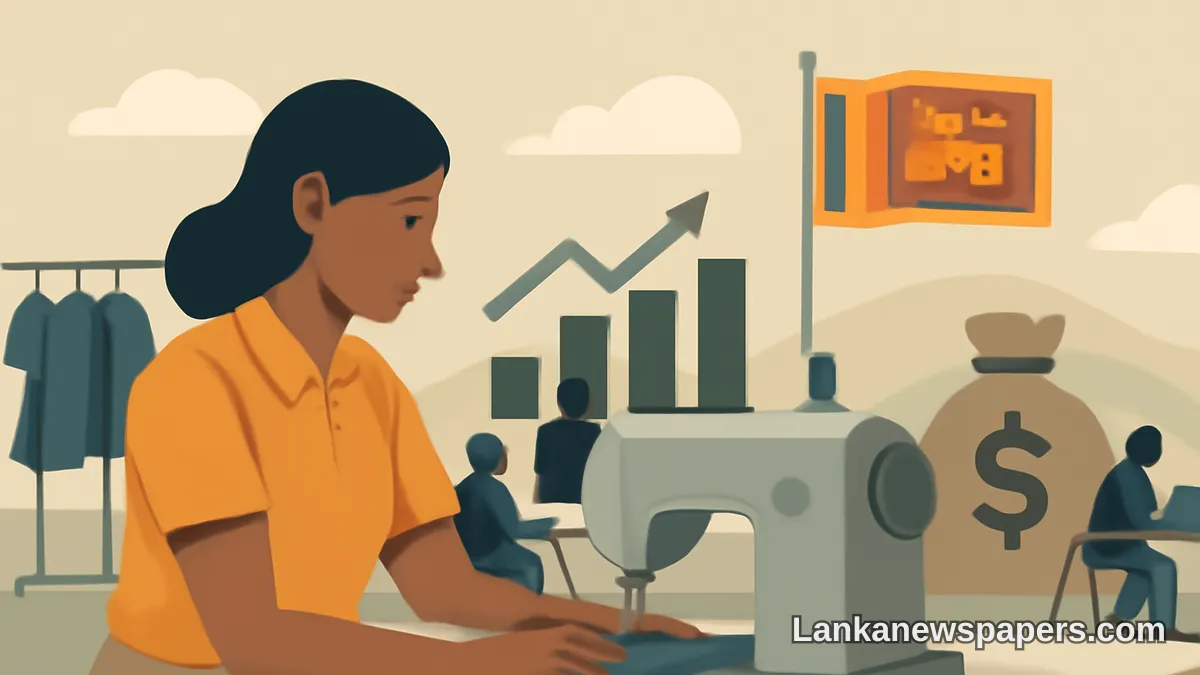
A Sector Built on Decades of Deliberate Strategy
For three decades, Sri Lanka's apparel industry has been the quiet backbone of the country's export economy. Accounting for roughly 40% of total merchandise export revenue and sustaining between 300,000 and 350,000 jobs, the sector's impressive scale was no accident — it was the product of sustained, coordinated effort between government and industry stakeholders.
Now, with that foundation firmly in place, the conversation has shifted. Industry leaders and policymakers are increasingly focused on a single ambitious question: what will it take to chase down the next three billion dollars in export earnings?
The Scale of the Challenge
Reaching the next major revenue milestone will not be a simple continuation of what has worked before. The global apparel trade is evolving rapidly, shaped by shifting buyer preferences, intensifying regional competition, and growing pressure around sustainability and ethical manufacturing. For Sri Lanka to carve out a larger share of this market, a fundamentally different approach may be required.
The industry has long distinguished itself through a reputation for quality, compliance, and ethical production — positioning Sri Lanka as a premium sourcing destination rather than a low-cost one. That identity remains a strategic asset, but experts suggest it must be leveraged more aggressively to justify higher price points and attract a broader range of international buyers.
What Growth Will Require
Analysts tracking the sector point to several key areas that must be addressed if Sri Lanka is to unlock the next phase of apparel export growth:
- Expanding into higher-value product categories such as performance wear, technical textiles, and luxury segments where margins are stronger.
- Deepening investment in research, design, and innovation capabilities to move further up the value chain.
- Accelerating sustainability commitments, including green manufacturing practices and supply chain transparency, to meet the demands of European and North American buyers.
- Addressing persistent challenges in workforce development, including skills shortages and the need to attract younger workers into the industry.
- Strengthening trade agreements and market access arrangements to remain competitive against rival sourcing destinations such as Bangladesh, Vietnam, and Cambodia.
Government-Industry Collaboration Remains Critical
The growth achieved over the past thirty years was driven in no small part by structured collaboration between the private sector and successive governments. Industry bodies and analysts argue that this partnership model must not only be maintained but deepened, with clearer long-term policy frameworks, targeted investment incentives, and a stable regulatory environment that encourages both local expansion and foreign direct investment.
Sri Lanka's apparel sector did not reach its current scale by chance — and reaching the next milestone will require the same level of deliberate, coordinated ambition that built the industry in the first place.
A Defining Moment for Sri Lanka's Export Economy
With Sri Lanka still navigating its post-economic crisis recovery, the apparel industry carries added significance as a reliable foreign exchange earner and mass employer. The decisions made in the coming years — around investment, policy, skills, and market positioning — will determine whether the sector can sustain its central role in the national economy or risk being outpaced by faster-moving competitors in the region.
For an industry that has quietly punched above its weight for a generation, the pursuit of the next three billion dollars represents both a formidable challenge and a genuine opportunity.



💬 Join the Discussion 4
See what readers are saying — and add your view.
genuine question, which countries are we even competing with now? Vietnam taking everything
goverment and industry always planning planning but execution is the problem no?
300,000 jobs and still workers getting paid peanuts. bold action for who exactly?
exactly. every milestone speech but the sewers salary never changes