Unsafe Water in Sri Lanka's Cities Putting Poorest Communities at Greatest Risk
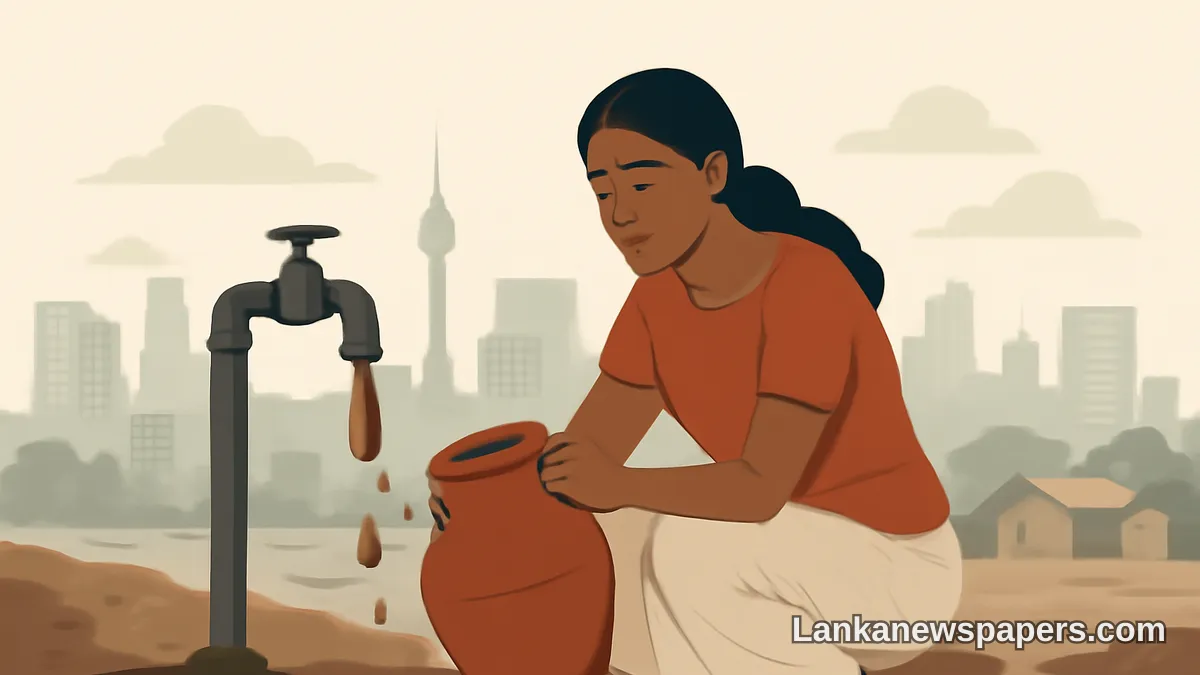
Urban Water Crisis Disproportionately Affects Low-Income Households
Millions of Sri Lankans living in low-income urban communities are facing a serious and growing threat from deteriorating water quality, with experts warning that the most vulnerable segments of society bear the heaviest burden of inadequate access to safe drinking water.
A Crisis Hidden in Plain Sight
While Sri Lanka has made notable strides in expanding water infrastructure across its urban centres, the quality of water reaching the poorest neighbourhoods tells a starkly different story. Contaminated water sources, aging pipe networks, and insufficient sanitation facilities continue to plague densely populated low-income settlements in and around major cities, including Colombo and its surrounding districts.
Residents in these areas frequently rely on wells, unregulated water sources, or shared communal taps that are highly susceptible to contamination, particularly during periods of heavy rainfall when flooding can introduce harmful pathogens into local water supplies.
Health Consequences Are Severe
The health implications of poor water quality are wide-ranging and serious. Communities exposed to contaminated water face heightened risks of waterborne diseases such as cholera, typhoid, hepatitis A, and diarrhoeal illnesses — conditions that place enormous strain on both individual families and the broader public health system.
Children and the elderly are particularly susceptible, with prolonged exposure to unsafe water contributing to chronic health conditions that can limit productivity and deepen cycles of poverty.
Systemic Inequalities Compound the Problem
Urban water quality issues in Sri Lanka do not affect all communities equally. Wealthier households typically have access to filtered or bottled water as an alternative, while low-income families often lack the financial means to supplement or replace unreliable municipal supplies. This economic disparity means that the consequences of poor water infrastructure fall almost exclusively on those least equipped to cope with them.
Access to clean water is not a privilege — it is a fundamental human right that must be guaranteed regardless of income or location.
Experts and civil society organisations have long called for targeted investment in water and sanitation infrastructure specifically designed to serve underserved urban communities, arguing that piecemeal solutions are insufficient to address the scale of the problem.
What Needs to Change
Addressing the urban water quality crisis in Sri Lanka will require coordinated action across multiple levels. Key recommendations put forward by public health advocates include:
- Upgrading aging and deteriorating water distribution networks in urban low-income settlements
- Strengthening water quality monitoring and enforcement mechanisms
- Expanding access to affordable water purification solutions for vulnerable households
- Integrating water safety planning into broader urban development and poverty reduction strategies
- Increasing community awareness about water hygiene and contamination risks
Urgent Action Required
As Sri Lanka continues its broader economic recovery, ensuring that water infrastructure improvements reach the most marginalised urban communities must be treated as a national priority. Without deliberate and sustained intervention, the gap between those with access to safe water and those without is likely to widen further — with lasting consequences for public health, human development, and social equity across the island.


💬 Join the Discussion 0
Be the first to share your view on this story.