The Uncomfortable Truth: Who Really Bears Responsibility for Genocide Allegations and Mass Graves in Sri Lanka?
A Question That Demands Honest Answers
Sri Lanka continues to grapple with one of the most sensitive and unresolved questions stemming from its decades-long civil conflict — who bears genuine responsibility for acts of genocide and the creation of mass graves on the island? It is a question that carries enormous moral, legal, and political weight, yet one that is too often shaped by agenda-driven narratives rather than verified facts.
A Conflict With Atrocities on Multiple Fronts
The civil war between the Sri Lankan state and the Liberation Tigers of Tamil Eelam (LTTE) lasted nearly three decades, officially concluding in May 2009. During that prolonged and brutal conflict, credible evidence points to serious violations of human rights and international humanitarian law committed by multiple parties — not exclusively by one side.
The LTTE, designated a terrorist organisation by numerous countries, was responsible for suicide bombings, political assassinations, ethnic cleansing of Muslim communities from the Northern Province, and the forcible recruitment of child soldiers. These acts caused immeasurable suffering across communities and left deep scars that have never fully healed.
Mass Graves: What the Evidence Shows
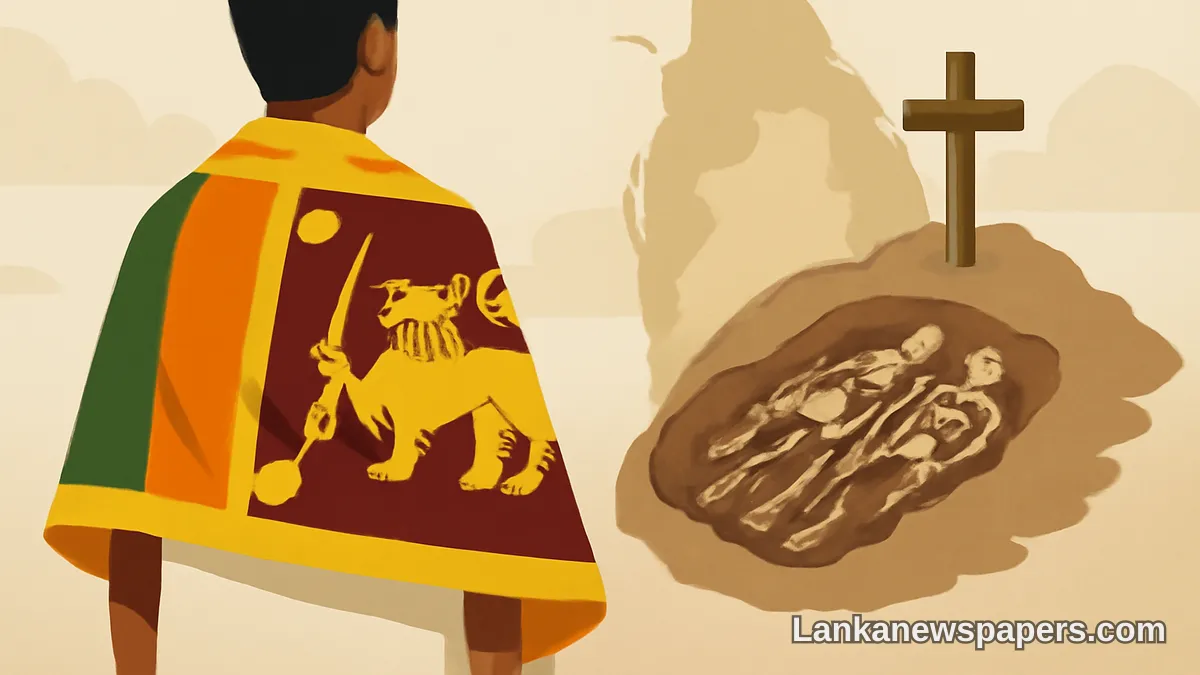
The discovery of mass graves at sites such as Matale and Mannar drew significant international attention and raised urgent questions about accountability. Investigations into these sites revealed remains of individuals from different ethnic and religious backgrounds, complicating simplistic narratives that attempt to attribute all such atrocities exclusively to the Sri Lankan military.
Some graves have been linked to periods of political violence that predate the final stages of the war, including episodes from the late 1980s involving the People's Liberation Front (JVP) insurgency and subsequent counter-insurgency operations — a chapter of Sri Lankan history that is frequently omitted from international discourse on accountability.
The Selective Nature of International Scrutiny
Critics have long argued that international scrutiny of Sri Lanka, particularly through mechanisms at the United Nations Human Rights Council, has applied an uneven standard — focusing disproportionately on alleged actions by the Sri Lankan state during the final phases of the war while giving insufficient attention to the well-documented crimes of the LTTE.
This selective approach, many argue, does a disservice to all victims, regardless of their ethnicity or political affiliation, and undermines the credibility of the accountability process itself.
The Path Forward
Genuine reconciliation and justice for all victims require an honest, evidence-based accounting of what occurred during the conflict — one that does not shield any party from scrutiny. Sri Lanka's path toward lasting peace depends not on politically convenient conclusions, but on the courage to confront the full complexity of its troubled past.
- All victims of the conflict deserve equal recognition and justice.
- Accountability must be pursued without political bias or selective application.
- International involvement must be guided by verified evidence, not geopolitical interests.
The question of who committed atrocities in Sri Lanka cannot be answered honestly by pointing in only one direction. Truth, by its very nature, does not take sides.
As Sri Lanka continues to navigate its post-war landscape, the pursuit of genuine truth and reconciliation remains both a national obligation and a moral imperative — one that demands clarity, courage, and above all, fairness to every community that suffered.



💬 Join the Discussion 3
See what readers are saying — and add your view.
both sides did wrong things, cant just point one finger only
LTTE blew up so many people but somehow only army is blamed. typical double standard.
exactly, what about all the civilians they used as human shields machang