Burnt Coconut Bait Leads Scientists to Discover New Endemic Species in Sri Lanka
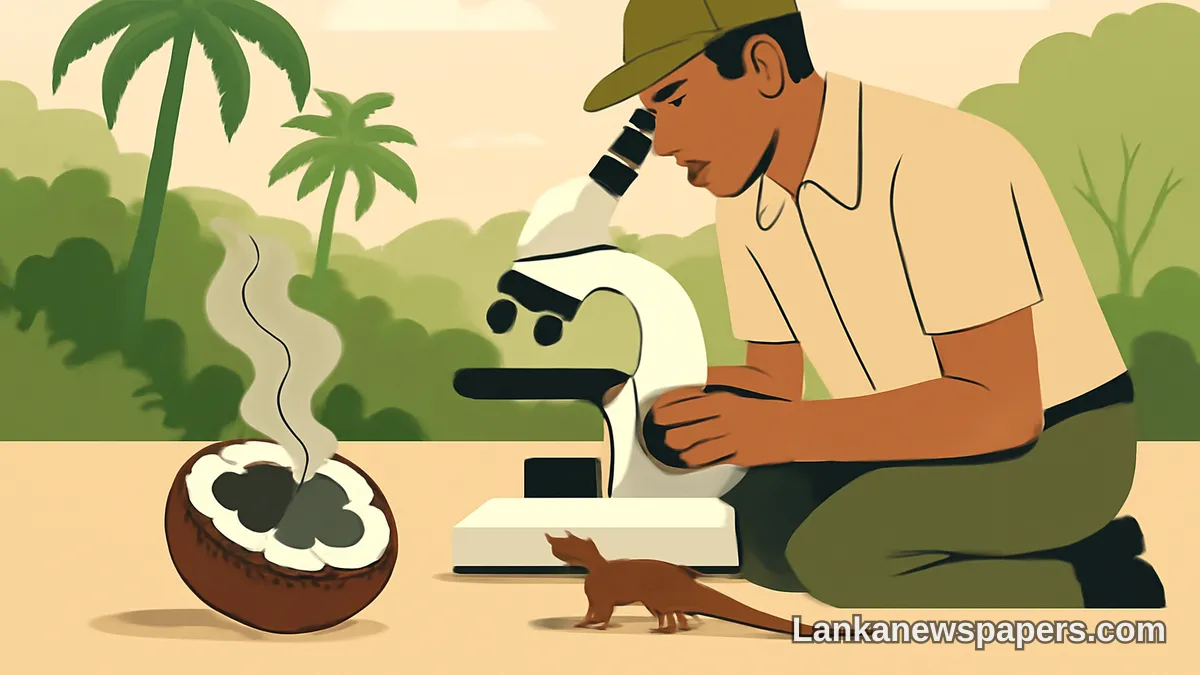
In an extraordinary scientific breakthrough, researchers have discovered a species entirely new to science in Sri Lanka — and the unlikely hero of the story is burnt coconut.
The discovery, which has captured the attention of the global scientific community, demonstrates how traditional and improvised field techniques can unlock secrets hidden within Sri Lanka's remarkably rich biodiversity. The island nation, long celebrated as a biodiversity hotspot, has once again proven that its forests and ecosystems still hold countless mysteries waiting to be uncovered.
An Unusual Lure
Scientists conducting fieldwork in Sri Lanka used burnt coconut as bait to attract the previously undocumented species. The technique, both simple and inventive, proved remarkably effective — drawing the creature out and allowing researchers to observe, collect, and study it in sufficient detail to confirm it had never before been recorded by science.
The use of such an accessible, locally available material underscores how resourceful fieldwork in tropical environments often relies on ingenuity as much as expensive laboratory equipment.
A New Endemic Added to Sri Lanka's Rich Biodiversity
The newly identified species is endemic to Sri Lanka, meaning it is found nowhere else on Earth. This distinction adds considerable scientific and conservation significance to the find, as endemic species are uniquely vulnerable to habitat loss and environmental change.
Sri Lanka is recognised globally as one of the world's most significant biodiversity hotspots, particularly within the Western Ghats and Sri Lanka hotspot zone. The country boasts an impressive concentration of endemic flora and fauna relative to its geographic size, and discoveries such as this one reinforce why protecting its remaining natural habitats remains critically important.
Why This Discovery Matters
New species discoveries carry weight far beyond scientific curiosity. Each newly documented organism contributes to a broader understanding of ecological relationships, evolutionary history, and the overall health of an ecosystem. For Sri Lanka specifically, such findings strengthen the case for conservation investment and policy protections in areas that may not yet be formally recognised as critical habitats.
- The discovery highlights the importance of continued field research in Sri Lanka's natural ecosystems.
- Endemic species face heightened extinction risk due to their limited geographic range.
- Traditional knowledge and locally sourced materials can play a meaningful role in scientific discovery.
- Sri Lanka's biodiversity remains significantly under-explored, suggesting further discoveries are possible.
A Reminder of What Remains Unknown
For a country that has faced considerable deforestation and habitat degradation over recent decades, the discovery serves as a timely reminder of what stands to be lost if conservation efforts falter. Scientists and environmentalists alike hope that findings such as this will reinvigorate public and governmental commitment to preserving Sri Lanka's remaining wild spaces.
The fact that a new species can be discovered using something as humble as burnt coconut speaks volumes about how much of Sri Lanka's natural world is still waiting to be properly documented and protected.
As researchers continue to analyse the newly found species and prepare formal academic documentation, the discovery stands as a proud moment for Sri Lankan science — and a compelling argument for sustained investment in the country's extraordinary natural heritage.


💬 Join the Discussion 0
Be the first to share your view on this story.