Sri Lanka's Export Boom Raises Questions Over Apparel Sector's Slipping Share
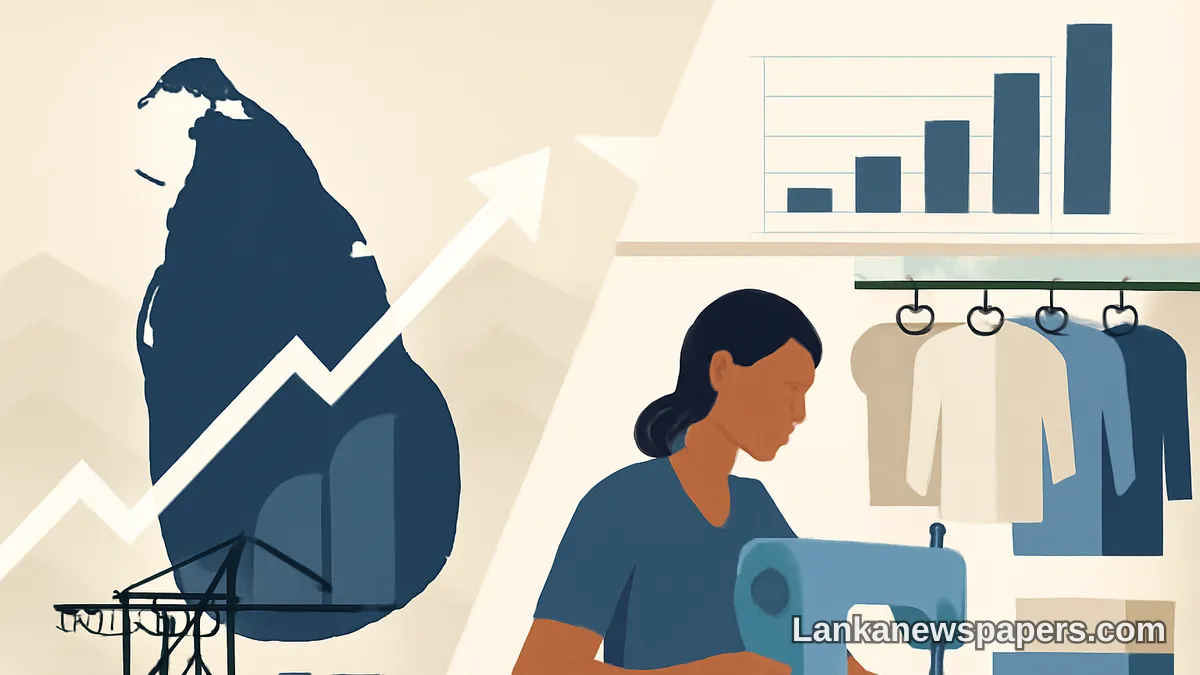
Sri Lanka's overall export performance has been gaining ground in recent months, but a closer look at the figures reveals a concerning trend for one of the country's most vital industries — the apparel sector appears to be losing its grip as the dominant force in the nation's export economy.
A Sector Under Pressure
For decades, the garment and apparel industry has been the backbone of Sri Lanka's export revenue, employing hundreds of thousands of workers — the majority of them women — and consistently accounting for a significant share of the country's foreign exchange earnings. However, as total export figures climb, the apparel sector's proportional contribution appears to be declining, raising questions about its long-term trajectory.
While the broader export basket has diversified and grown, apparel has not kept pace at the same rate, suggesting that other sectors are beginning to close the gap or that the garment industry itself is facing headwinds that are slowing its momentum.
Challenges Facing the Industry
Several factors are weighing on Sri Lanka's apparel export performance. These include:
- Rising production costs, including wages and energy prices, which have made Sri Lanka a relatively expensive manufacturing destination compared to regional competitors
- Increased competition from countries such as Bangladesh, Vietnam, and Cambodia, which offer lower overheads and larger production capacities
- Global demand fluctuations driven by economic uncertainty in key markets such as the United States and the European Union
- Lingering effects of the country's economic crisis, which disrupted supply chains and strained industry operations in recent years
A Diversifying Export Economy
On the positive side, the relative softening of apparel's dominance may partly reflect a healthy diversification of Sri Lanka's export economy. Sectors such as IT and business process outsourcing, spices and agricultural produce, rubber-based products, and gems and jewellery have all recorded growth, contributing to a more balanced export portfolio.
Economists and trade analysts have long argued that over-reliance on a single export sector leaves a country vulnerable to external shocks, and the gradual broadening of Sri Lanka's export base could be viewed as a structural improvement in the long run.
What It Means for Workers and Policymakers
Despite the broader economic narrative, the human dimension of any slowdown in apparel exports cannot be overlooked. The industry remains one of the largest formal employers in the country, and any sustained decline in its competitiveness would have serious implications for livelihoods, particularly in export processing zones and rural communities dependent on garment factory employment.
Industry stakeholders are calling on the government to introduce targeted policy support, including investment incentives, energy subsidies, and trade facilitation measures, to help apparel manufacturers remain competitive on the global stage.
As Sri Lanka works to stabilise its economy and rebuild investor confidence following the 2022 financial crisis, striking the right balance between nurturing established industries like apparel and fostering new growth sectors will be a defining challenge for policymakers in the months and years ahead.


💬 Join the Discussion 0
Be the first to share your view on this story.