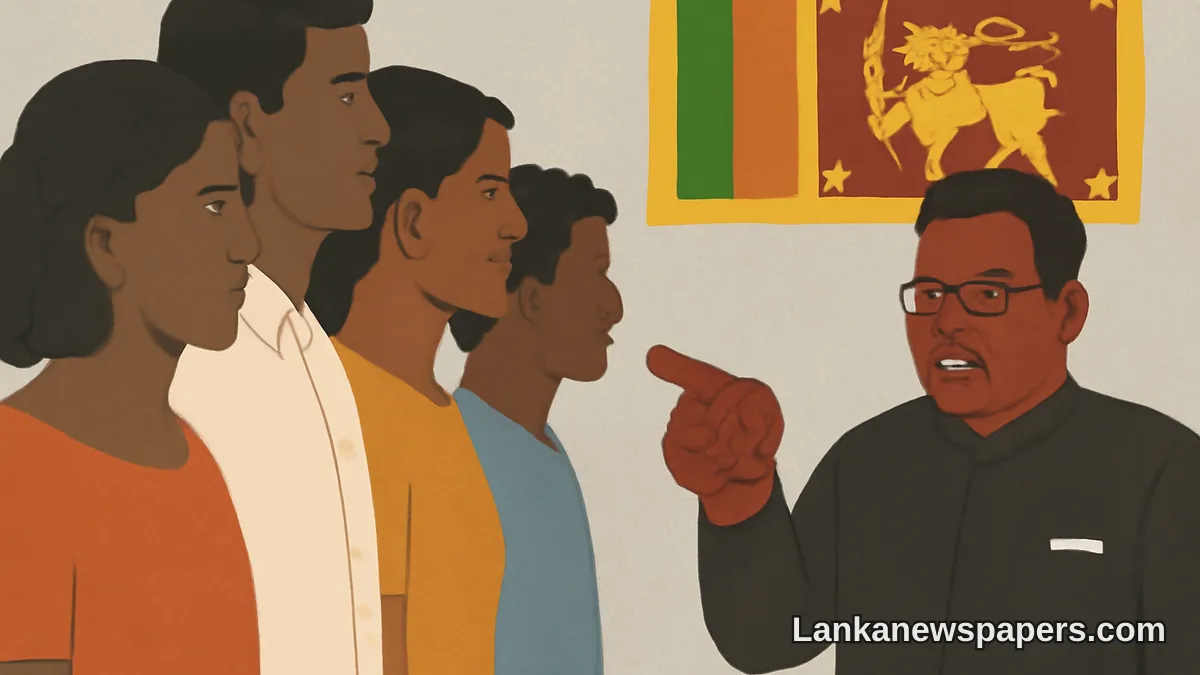
A Lesson History Keeps Repeating
From the darkened corridors of Nazi Germany to the long and troubled rule of Zimbabwe under Robert Mugabe, history has delivered the same sobering verdict time and again — nations that stand idle while those in power tighten their grip through undemocratic means are nations courting their own destruction.
Mill's Warning Echoes Through the Centuries
The great British philosopher John Stuart Mill captured this danger with striking clarity in 1867, offering words that have lost none of their urgency in the century and a half since:
Bad men need nothing more to compass their ends, than that good men should look on and do nothing.
It is a warning that speaks directly to every generation that has witnessed the slow erosion of democratic norms — not always through violent revolution, but often through the quiet complicity of citizens who chose comfort over conscience.
The Pattern Across Nations and Eras
The historical record is unambiguous. Whether in 1930s Europe or post-independence Africa, the consolidation of authoritarian power rarely happens overnight. It advances incrementally, sustained by the silence of those who might otherwise have resisted. By the time the cost of that silence becomes clear, the structures needed to mount a meaningful challenge have frequently been dismantled.
- In Nazi Germany, democratic institutions were hollowed out from within before they were abolished outright.
- In Zimbabwe, a liberation hero transformed into an entrenched autocrat over decades, while civil society struggled to find its voice.
- Across numerous other nations, similar trajectories have followed similar patterns of public inaction meeting unchecked ambition.
A Message Relevant to Sri Lanka
For Sri Lankans, these lessons carry particular weight. The island nation has navigated its own turbulent chapters — periods of democratic backsliding, executive overreach, and moments when civil institutions faced serious pressure. The hard-won understanding from those experiences is that democratic vigilance is not a luxury reserved for times of crisis. It must be exercised continuously, in ordinary times, before emergencies arise.
A healthy democracy demands more than periodic elections. It requires an informed and engaged citizenry willing to hold power to account, a free press able to scrutinise those in authority, and institutions strong enough to resist being bent to serve narrow interests.
The Responsibility of the Citizen
Mill's observation places the burden squarely on ordinary people — not simply on leaders, courts, or constitutions. It is a reminder that democratic governance is ultimately a collective responsibility. When citizens disengage, grow cynical, or conclude that their participation makes no difference, they inadvertently create the very conditions in which authoritarianism flourishes.
The nations that have suffered most acutely under autocratic rule are rarely those that lacked good people entirely. They are, more often, nations whose good people waited too long to act.
That, perhaps, is the most enduring and uncomfortable lesson history offers — and one that every society, including our own, would do well to take seriously.

💬 Join the Discussion 4
See what readers are saying — and add your view.
who are these "good people" they talking about. cant see any in parliament
Mill said this in 1867 and we still havent learned. sad honestly
this is exactly what happening in our country no. ppl just watching
what to do men, if you speak up you lose your job or worse