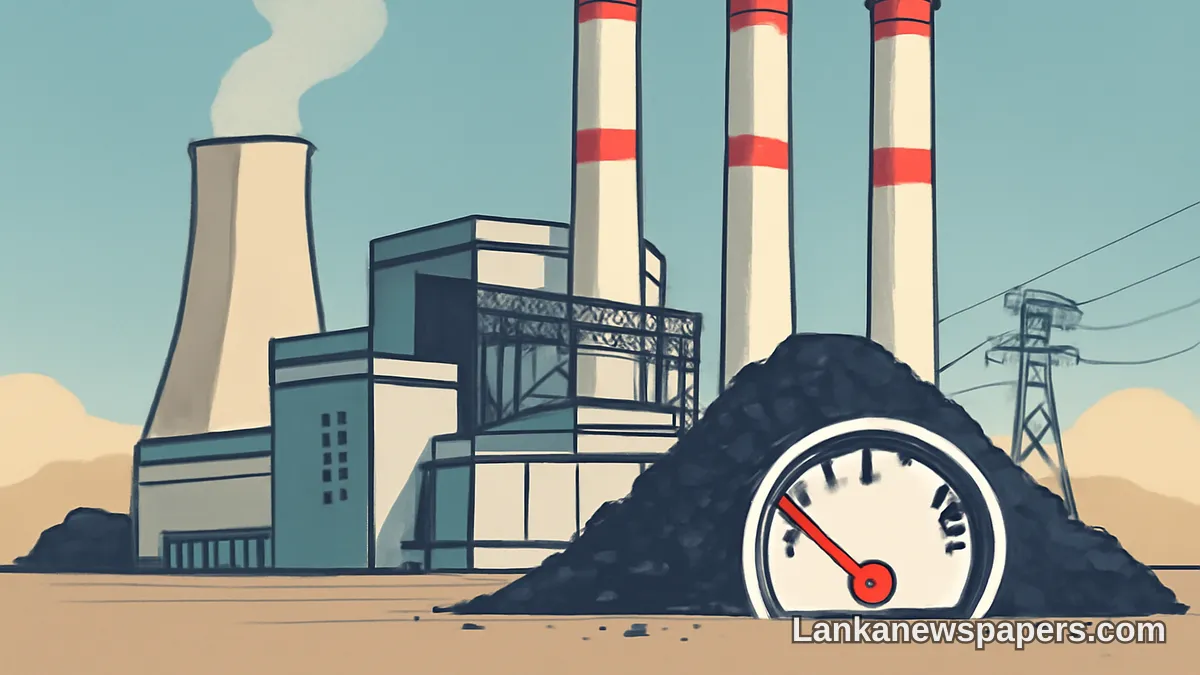
Two units significantly reduce output as dwindling coal stocks push Sri Lanka's power grid to the brink
Sri Lanka's largest coal-fired power station at Norochcholai is operating under severe strain as coal reserves plunge to critically low levels, forcing the plant to dramatically cut its electricity generation capacity.
The Norochcholai plant, which plays a central role in meeting the island's baseload power demand, has seen its output slashed from 270 megawatts to just 140 megawatts as two of its operational units reduce generation in response to the fast-depleting coal stockpile.
A System on the Edge
Energy analysts have raised serious concerns about the stability of the national grid in light of the development, warning that the power system is currently operating at what they describe as a razor's edge. Any further disruption to supply at this stage could have significant consequences for consumers and industries across the country.
The reduction in output from Norochcholai places added pressure on alternative generation sources to compensate, at a time when Sri Lanka's energy sector continues to face structural and financial challenges.
Norochcholai's Critical Role
The Norochcholai coal power plant, located on Sri Lanka's northwestern coast, has long been the backbone of the country's thermal power generation. A sustained drop in its output raises immediate concerns about:
- Potential power disruptions or load shedding for domestic and industrial consumers
- Increased reliance on costly oil-based thermal generation to plug the supply gap
- Greater financial pressure on the Ceylon Electricity Board
- The broader vulnerability of Sri Lanka's energy security framework
Authorities have yet to make a formal public statement on how quickly coal stocks are expected to be replenished or when the plant is likely to return to full operational capacity.
Growing Concerns Over Energy Security
The latest crisis at Norochcholai once again brings into sharp focus the country's ongoing dependence on imported coal and the risks associated with supply chain disruptions. Sri Lanka has previously experienced extended power outages linked to breakdowns and fuel shortages at the same facility.
Energy analysts warn the power system remains "at a razor's edge," with the current reduction in Norochcholai's output leaving little room for error across the national grid.
As the country continues its broader push toward renewable energy, incidents such as this serve as a stark reminder of the urgency with which Sri Lanka must diversify and strengthen its power generation portfolio to safeguard long-term energy stability.

💬 Join the Discussion 2
See what readers are saying — and add your view.
same story every year no? goverment never learns from this
exactly, they wait till its critical then panic buying coal at high prices