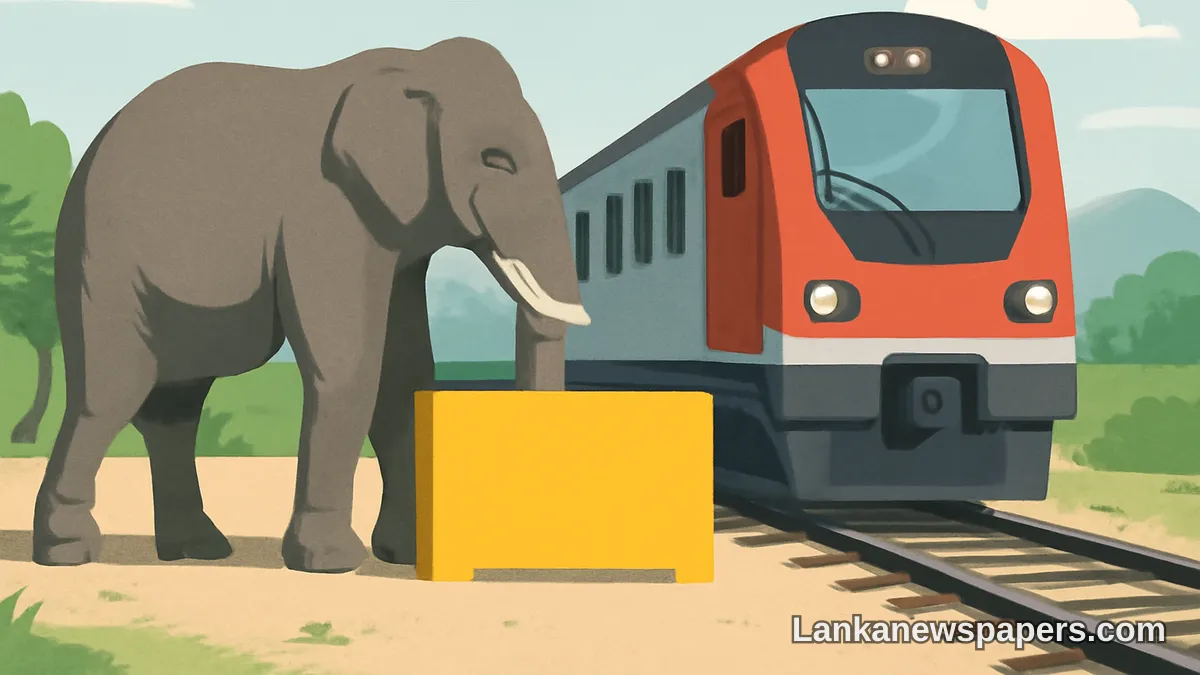
Landmark Agreement Aims to End a Deadly Threat to Sri Lanka's Iconic Wildlife
Sri Lanka has signed a Memorandum of Understanding aimed at preventing the recurring and tragic deaths of wild elephants caused by train collisions, marking a significant milestone in the country's efforts to protect its most iconic wildlife.
The agreement brings together key stakeholders committed to addressing one of the more persistent yet often overlooked threats facing Sri Lanka's elephant population. Train collisions have claimed the lives of numerous elephants over the years, particularly in areas where railway lines cut through or run adjacent to elephant habitats and migratory corridors.
A Growing Crisis on the Tracks
Sri Lanka's railway network passes through several regions that serve as critical elephant territory, and incidents of trains striking elephants — often during night hours when visibility is severely limited — have been a long-standing concern for wildlife conservationists and authorities alike. The deaths not only represent an irreplaceable loss to the country's biodiversity but also cause significant disruptions to rail operations.
Among the key measures expected to be implemented under the new agreement are:
- Early warning systems to alert train operators of elephant presence near tracks
- Reduced train speeds through designated high-risk zones, particularly during nighttime hours
- Enhanced monitoring and patrol efforts along vulnerable railway corridors
- Greater coordination between the Department of Wildlife Conservation and Sri Lanka Railways
A Commitment to Coexistence
Sri Lanka is home to the Asian elephant, a species listed as endangered, and the country carries a particular responsibility in ensuring their survival. Human-elephant conflict remains one of the gravest conservation challenges facing the island nation, and railway-related fatalities add yet another dimension to that crisis.
The signing of this MoU represents a recognition that development infrastructure and wildlife conservation must go hand in hand if Sri Lanka is to protect its natural heritage for future generations.
Conservationists have broadly welcomed the move, noting that proactive, collaborative agreements of this nature are essential to reversing the trend of elephant fatalities linked to human activity. If effectively implemented, the MoU could serve as a model for addressing similar human-wildlife conflict situations across the region.
Authorities have urged all parties involved to move swiftly from commitment to action, stressing that every measure counts when it comes to safeguarding a species that holds deep cultural, ecological, and national significance for Sri Lanka.
💬 Join the Discussion 4
See what readers are saying — and add your view.
Goverment always signing papers but tracks still not fenced properly
What does this MoU even do practically, anyone know?
Finally some action, how many elephants died already waiting for this
Exactly, MoU alone wont save them, need actual implementation