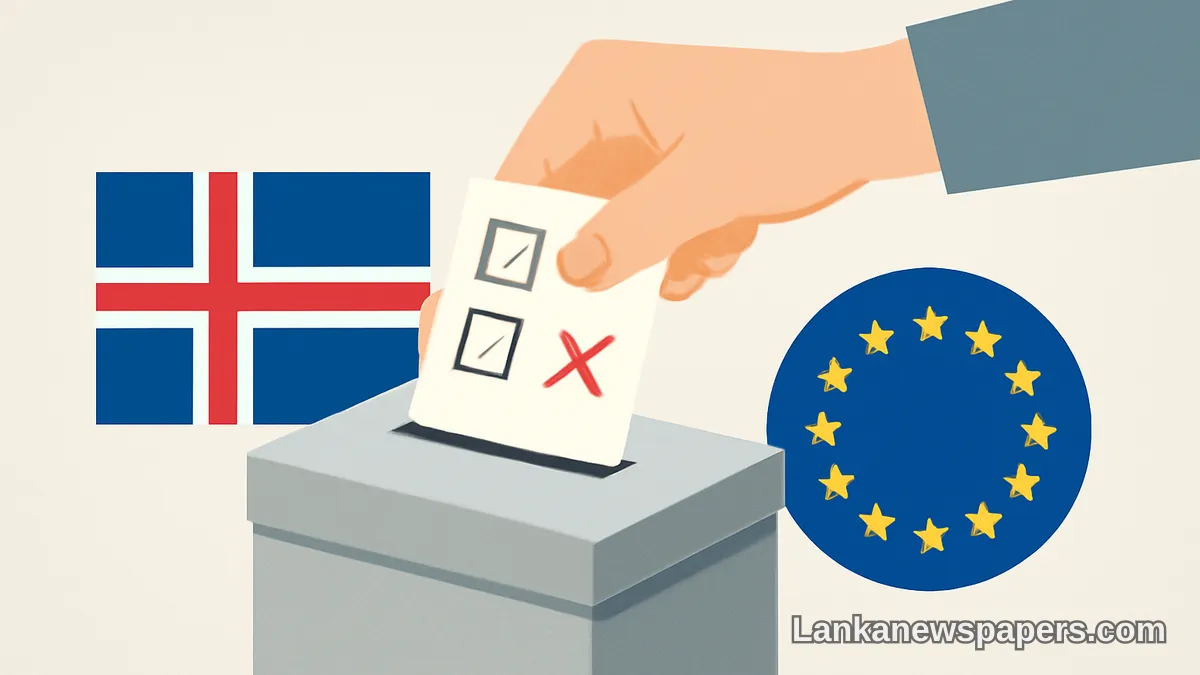
Iceland has voted against reopening negotiations to join the European Union, in a closely contested referendum that has dealt a significant blow to the government's ambitions of reviving the country's long-dormant membership bid.
A Nation Divided
Public broadcaster RUV reported that 52.8% of the 225,031 voters who cast ballots rejected the government's proposal to resume EU accession talks, while 47.2% voted in favour. The margin between the two sides amounted to approximately 12,600 votes, underscoring just how divided Icelandic society remains on the question of European integration.
Talks Frozen for Over a Decade
Iceland had originally applied for EU membership in 2009 during the height of its devastating financial crisis, when the country's banking sector collapsed and left the economy in ruins. Accession negotiations were subsequently suspended in 2013 after a change in government, and the country formally withdrew its application in 2015. The latest referendum represented the first real opportunity in over a decade for Icelanders to revisit the question.
Sovereignty and Economic Identity at Stake
Opponents of EU membership have long argued that joining the bloc would compromise Iceland's control over its rich fishing waters — a cornerstone of the national economy and a deeply symbolic issue for Icelanders. Concerns over sovereignty and the potential impact of EU regulations on local industries featured prominently in the campaign against resuming talks.
Supporters of renewed negotiations, meanwhile, contended that EU membership could strengthen Iceland's economic resilience, deepen trade ties, and provide greater political stability in an increasingly uncertain global environment.
A Setback for the Government
The result represents a notable defeat for the Icelandic government, which had championed the proposal to restart formal discussions with Brussels. With more than half the electorate voting against even opening negotiations — let alone full membership — the path toward any future EU accession bid now appears considerably more difficult.
The outcome will be closely watched across Europe, where questions of national sovereignty versus regional integration continue to shape political landscapes in both member and non-member states alike.



💬 Join the Discussion 3
See what readers are saying — and add your view.
only 52% said no, very close vote. can happen again
smart move by iceland. EU will just control everything
true no. look what happened to greece