Sri Lanka's Final Window of Opportunity to Claim Its Place as an Indian Ocean Strategic Hub
A Pivotal Moment for the Island Nation
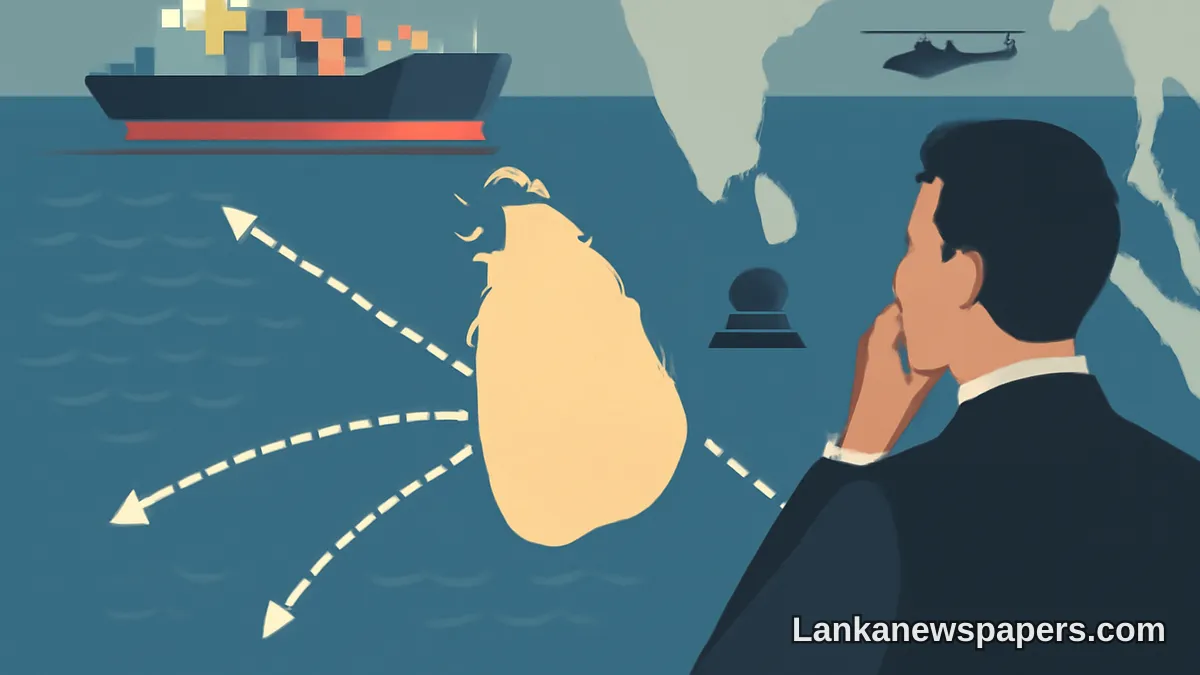
Sri Lanka stands at a critical crossroads, with analysts and strategists warning that the island nation may be facing its last genuine opportunity to establish itself as a major strategic hub in the Indian Ocean — a position that, if secured, could transform its geopolitical standing and economic fortunes for generations to come.
Geography as Destiny
Situated at the very centre of some of the world's busiest maritime trade routes, Sri Lanka has long been recognised for its extraordinary geographic advantage. The island sits astride key shipping lanes connecting East Asia, South Asia, the Middle East, and Europe, making it a natural candidate for a regional hub of commerce, logistics, and strategic influence.
Yet despite this enviable position, Sri Lanka has repeatedly struggled to fully capitalise on its geography, hampered by political instability, economic mismanagement, and the complex web of competing interests from regional and global powers — most notably India and China — that view the island through their own strategic lenses.
The Window Is Narrowing
Observers note that the current moment — as Sri Lanka slowly recovers from its devastating 2022 economic crisis — represents a narrow but real opportunity. The country's engagement with the International Monetary Fund, its efforts to restructure foreign debt, and renewed international attention all combine to create conditions under which meaningful strategic positioning could be achieved.
However, experts caution that this window will not remain open indefinitely. As regional power competition intensifies across the Indian Ocean, and as neighbouring ports and logistics centres in India, the Maldives, and Bangladesh continue to develop their own capabilities, Sri Lanka risks being bypassed entirely if it fails to act decisively.
Competing Powers, Competing Interests
The strategic calculus surrounding Sri Lanka is deeply complicated by the rivalry between India and China. Beijing's significant investments in Sri Lankan infrastructure — most notably the Hambantota Port, which was handed over to a Chinese state-owned firm on a long-term lease — have raised alarm bells in New Delhi and Washington alike.
India, keen to maintain its sphere of influence in the region, has stepped up its own engagement with Colombo, including infrastructure investments, development assistance, and energy cooperation agreements. The United States, too, has shown renewed interest in Sri Lanka as part of its broader Indo-Pacific strategy.
For Sri Lanka, managing these competing interests without being pulled into any single orbit remains both its greatest diplomatic challenge and its greatest strategic asset.
What Must Be Done
Strategic analysts argue that for Sri Lanka to truly fulfil its potential as an Indian Ocean hub, the government must pursue a clear and consistent set of priorities:
- Develop and modernise port infrastructure, particularly at Colombo and Trincomalee, to attract global shipping and logistics operators
- Establish a coherent foreign policy that balances relationships with India, China, the United States, and other key partners without defaulting entirely to any one power
- Create a stable, transparent investment environment that encourages private sector participation in key strategic sectors
- Leverage the Trincomalee natural harbour — one of the finest in the world — which remains significantly underutilised despite its immense potential
- Build institutional capacity and reduce corruption to ensure that strategic agreements translate into genuine national benefit
The Cost of Inaction
Perhaps the most sobering aspect of the current debate is the recognition that Sri Lanka has been here before. Opportunities to position the country as a regional hub have emerged and faded in the past, lost to political turmoil, short-term thinking, and the failure to build national consensus around long-term strategic goals.
If Sri Lanka does not seize this moment with clarity of purpose and genuine political will, the Indian Ocean's next great hub may well be built somewhere else — and the island will be left watching from the sidelines.
For a country still nursing the wounds of its worst economic collapse in modern history, the stakes could not be higher. The Indian Ocean is being reshaped by forces far larger than Sri Lanka alone — but where exactly Sri Lanka fits into that emerging order is still, just barely, a question the country itself can answer.


💬 Join the Discussion 0
Be the first to share your view on this story.