Catholic Bishops Call for Broad Consultation Before Changing Judges' Retirement Age
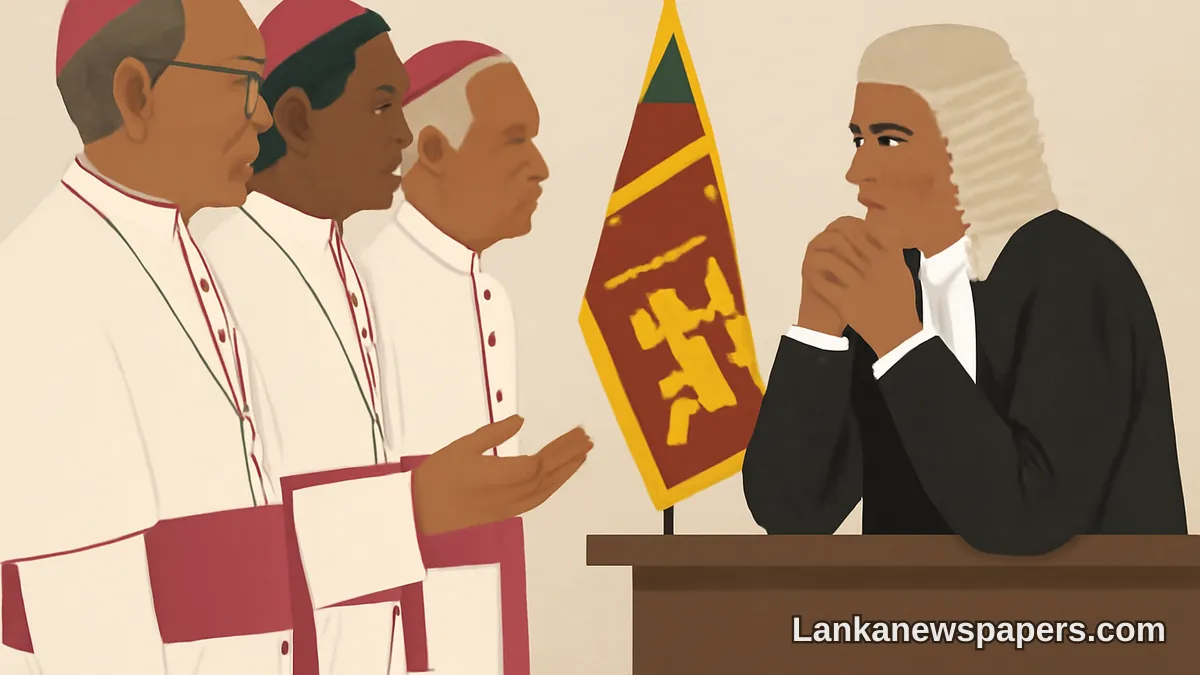
The Catholic Bishops' Conference of Sri Lanka (CBCSL) has called on the government to ensure meaningful public and stakeholder consultation before moving forward with any constitutional amendment that would raise the mandatory retirement age of judges.
Bishops Raise Concerns Over Process
In a formal statement responding to a recent Cabinet decision on the matter, the CBCSL stressed that changes of such constitutional significance must not be rushed through without adequate dialogue. The bishops indicated that decisions affecting the independence and structure of the judiciary carry far-reaching consequences for the country's democratic framework and should therefore involve the voices of all relevant parties.
The religious body emphasised that transparent and inclusive consultation is not merely a procedural formality, but a fundamental requirement when altering provisions that govern one of the most critical pillars of governance — the judiciary.
Judiciary Independence at Stake
The CBCSL's intervention reflects growing concern among civil society and religious institutions about the manner in which significant constitutional changes are being pursued. Observers have noted that any amendment touching on the retirement age of judges could have implications for judicial independence, the balance of power, and public trust in the legal system.
Sri Lanka's judiciary has long been regarded as a cornerstone of its democratic institutions, and any reform affecting the tenure or retirement conditions of judges is considered a matter of broad national interest.
A Call for Responsible Governance
The bishops urged the government to demonstrate responsible governance by creating a structured process for consultation that includes legal experts, civil society organisations, opposition parties, and the general public before any amendment is tabled in Parliament.
The CBCSL reaffirmed its commitment to upholding justice, democratic values, and the rule of law in Sri Lanka, while calling on all stakeholders to approach this issue with the seriousness and transparency it deserves.
The statement adds to a broader conversation in Sri Lanka about constitutional reform and the importance of safeguarding institutional checks and balances at a time when the country continues its recovery from a prolonged economic and political crisis.
💬 Join the Discussion 0
Be the first to share your view on this story.