Chinese Crime Syndicates Abandon Southeast Asia, Set Sights on Sri Lanka as New Base of Operations
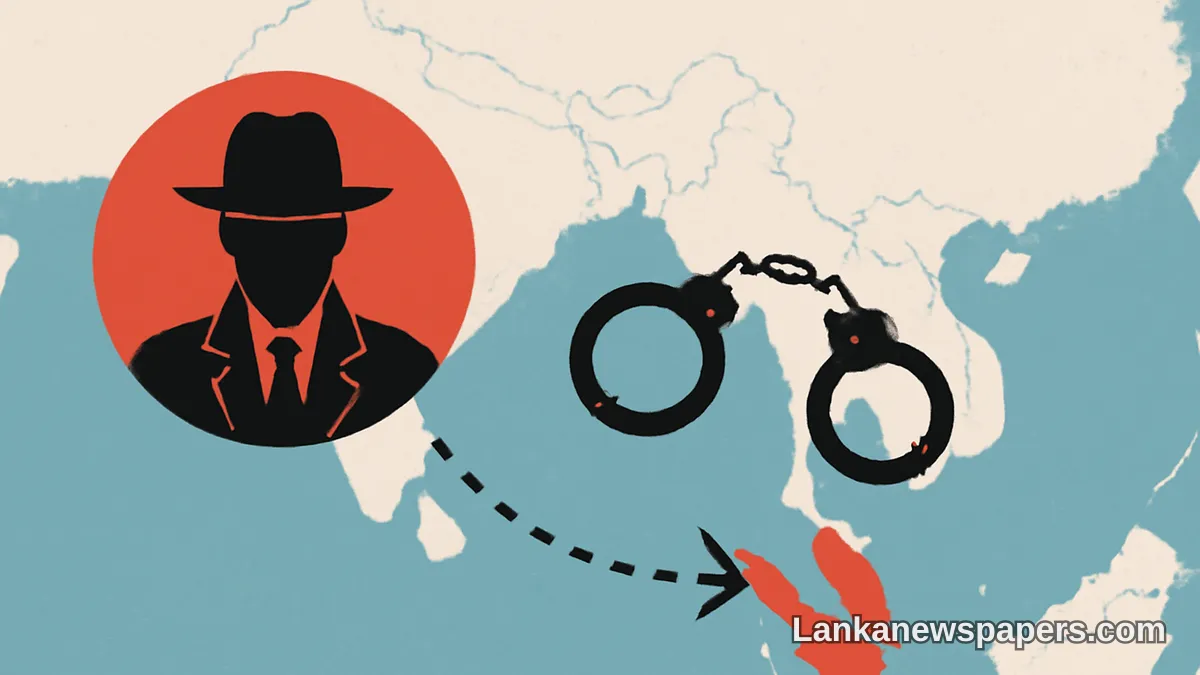
Chinese organised crime networks, having faced intensified law enforcement crackdowns across Southeast Asia, are increasingly turning their attention to Sri Lanka as a strategic new hub for their illicit operations — a shift that security analysts are describing as displacement rather than defeat.
A Calculated Relocation, Not a Retreat
Experts tracking transnational criminal activity in the Indo-Pacific region warn that Sri Lanka is emerging as a preferred destination for Chinese crime syndicates that have been squeezed out of traditional strongholds in countries such as Myanmar, Cambodia, and the Philippines. Rather than dismantling their operations, these networks are simply relocating — adapting swiftly to new environments while retaining their organisational structure and criminal expertise.
The phenomenon is being closely monitored as part of what analysts have termed "The Asian Crime Century," a broader trend in which sophisticated criminal enterprises tied to Chinese organised crime are reshaping the underworld across Asia, exploiting governance gaps, weak regulatory frameworks, and economic vulnerabilities wherever they find them.
Why Sri Lanka?
Sri Lanka's appeal to these networks is not accidental. The island nation's ongoing economic recovery following its 2022 financial crisis, its strategic location along major Indian Ocean shipping lanes, and certain institutional weaknesses in law enforcement have made it an attractive target. Criminal syndicates are known to seek out environments where state capacity is stretched and oversight mechanisms remain underdeveloped.
Additionally, Sri Lanka's growing tourism sector, its expanding digital economy, and its ports — which handle significant volumes of international cargo — present multiple avenues through which organised crime can embed itself, whether through money laundering, cyber scam operations, human trafficking, or narcotics smuggling.
Patterns Mirroring Southeast Asian Playbook
Security analysts note that the operational patterns being observed in Sri Lanka closely mirror those previously deployed by Chinese crime networks in Southeast Asia. These include:
- Establishing front businesses such as hotels, casinos, and online gaming operations to launder illicit proceeds
- Recruiting local facilitators and corrupt officials to provide cover and protection
- Running cyber scam compounds that exploit both local and foreign nationals
- Using informal financial channels to move money across borders beyond the reach of regulators
A Warning for Authorities
Law enforcement and intelligence agencies in the region are urging Sri Lankan authorities to take the threat seriously before these networks become deeply entrenched. Historical precedent from Cambodia and Myanmar demonstrates how quickly organised crime can capture local economies and corrupt state institutions once it gains a foothold.
Displacement, not defeat, is the operating principle of these syndicates. They do not disappear when pressure is applied — they simply move to the next vulnerable jurisdiction.
Regional crime analysts emphasise that Sri Lanka's response in the coming months will be critical. Proactive legislative reform, strengthened inter-agency cooperation, and deeper engagement with international law enforcement bodies such as Interpol will be essential tools in preventing the island from becoming the next regional hub for Chinese organised criminal activity.
A Regional Challenge Requiring a Regional Response
Sri Lanka cannot tackle this challenge in isolation. Coordinated intelligence sharing with neighbouring India, as well as with Southeast Asian nations that have already experienced the full weight of these criminal networks, will be vital. The broader Indo-Pacific community has a shared interest in ensuring that Sri Lanka does not become the next link in an expanding chain of organised criminal infrastructure stretching across Asia.
As Sri Lanka works to rebuild its economy and restore investor confidence, safeguarding the country's institutions from the infiltration of transnational crime is not merely a law enforcement priority — it is a matter of national security.



💬 Join the Discussion 2
See what readers are saying — and add your view.
Already happening no? Saw suspicious chinese groups in Colombo 7 area last month
Same in Wellawatte too, ppl acting very strange