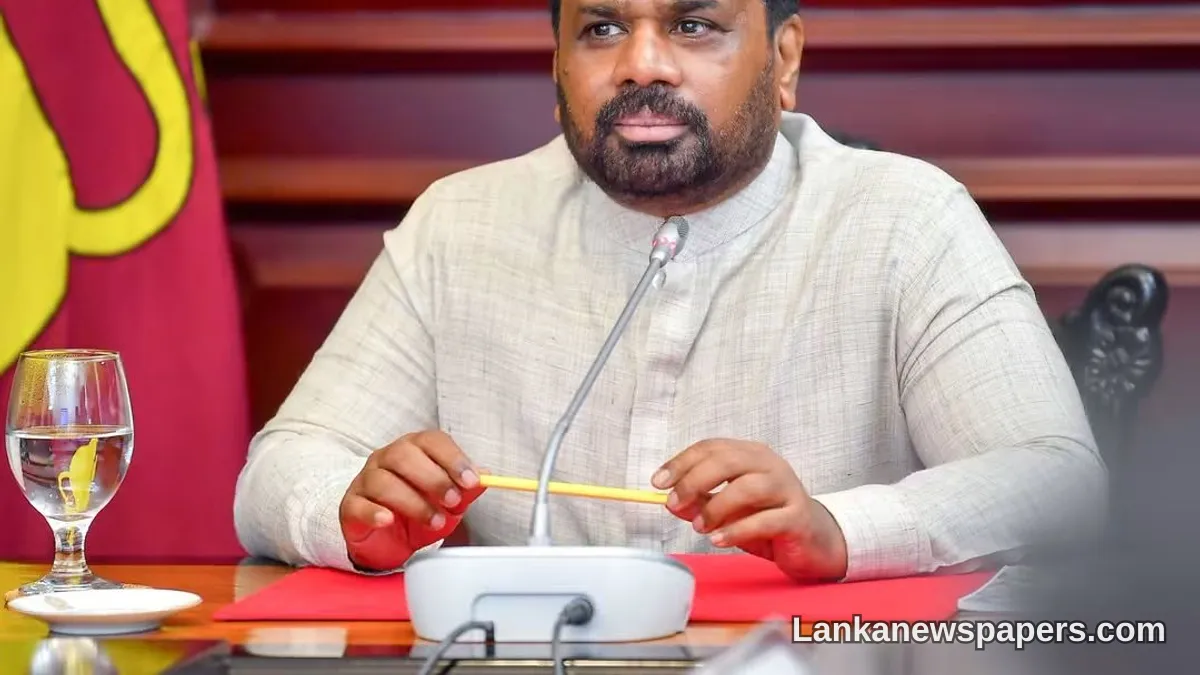
President Reviews Justice Sector Priorities Ahead of National Budget
President Anura Kumara Dissanayake on Tuesday chaired a pre-Budget consultative discussion focused on the Ministry of Justice and National Integration, signalling the government's intent to prioritise reforms across Sri Lanka's judicial and legal administration sectors ahead of the upcoming national Budget.
A High-Level Deliberation on Justice Sector Funding
The discussion, held under the direct chairmanship of the President, brought together senior ministry officials and relevant stakeholders to examine the funding requirements and strategic direction of the justice sector for the coming fiscal year. The meeting forms part of a broader series of pre-Budget consultations being conducted across key government ministries.
The Ministry of Justice and National Integration plays a central role in maintaining Sri Lanka's legal framework, overseeing the court system, prison administration, and efforts to foster national reconciliation — areas that observers say are in urgent need of sustained investment and reform.
Focus on Institutional Strengthening and National Integration
Among the matters reviewed during the discussions were allocations pertaining to the strengthening of judicial institutions, improvements to legal aid services, and programmes aimed at promoting national unity among Sri Lanka's diverse communities. National integration has remained a sensitive and complex policy area, particularly in the post-war context of the country.
The administration of President Dissanayake has repeatedly emphasised the need for a justice system that is accessible, transparent, and free from political interference — themes that are expected to shape the ministry's Budget proposals.
Prison Reform and Legal Aid Among Key Concerns
Sources familiar with the discussions indicate that conditions within Sri Lanka's overcrowded prison facilities and the expansion of legal aid to vulnerable and low-income communities were among the pressing concerns tabled during the session. Both areas have long been identified by civil society organisations and legal experts as requiring immediate and sustained government attention.
Pre-Budget Process Reflects Government's Consultative Approach
The pre-Budget consultation process, which involves the President directly engaging with individual ministries, reflects the current administration's stated commitment to a more deliberate and consultative approach to public expenditure planning. By engaging ministries ahead of Budget finalisation, the government aims to ensure that allocations are aligned with ground-level realities and policy priorities.
The upcoming national Budget is widely anticipated as a defining moment for the Dissanayake administration, which came to power on a platform of systemic change, anti-corruption measures, and equitable resource distribution. The justice sector, as a cornerstone of democratic governance, is expected to feature prominently in the government's fiscal strategy.
What to Watch Next
- Finalisation of the Justice Ministry's Budget proposals following presidential review
- Announcements on legal aid expansion and access to justice programmes
- Policy decisions relating to prison reform and rehabilitation
- Measures targeting national reconciliation and minority community integration
- Broader Budget allocations for the judiciary and court administration
Further details on the outcomes of the pre-Budget discussion are expected to be made public as the government moves toward presenting the national Budget to Parliament.



💬 Join the Discussion 2
See what readers are saying — and add your view.
11 takeaways and still no answer on court delays. typical.
exactly, ppl waiting years for simple cases to finish.