President Dissanayake Supports Abolishing Executive Presidency Through National Consensus
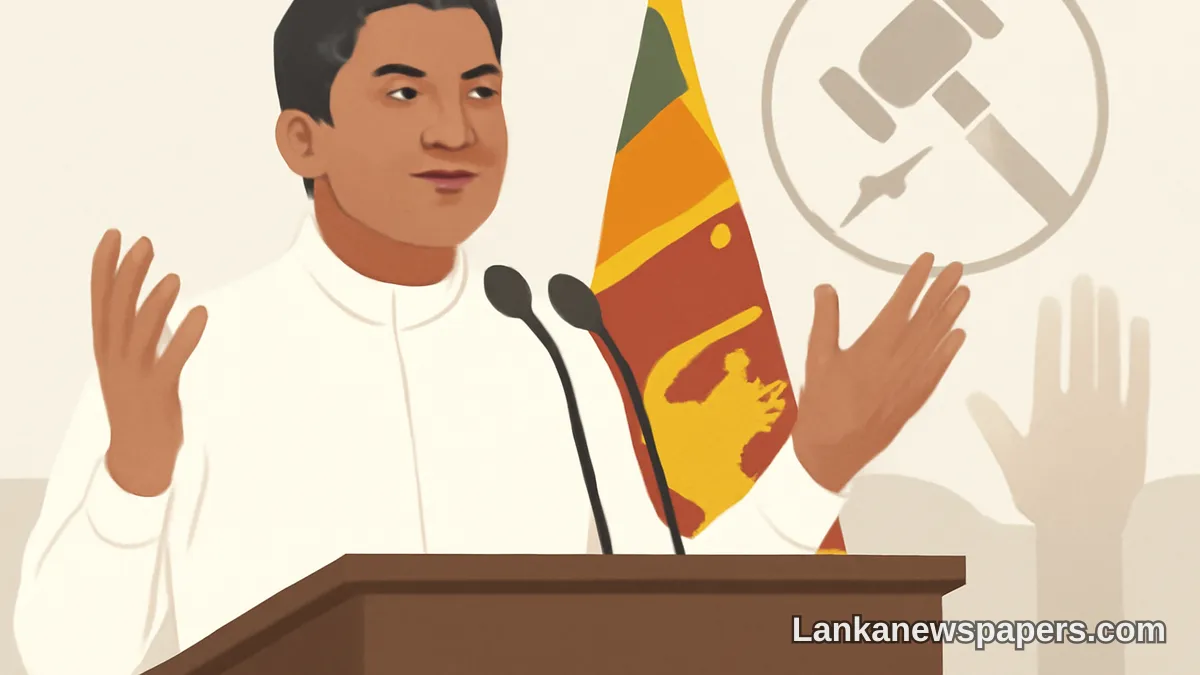
President Open to Constitutional Reform on Executive Powers
Sri Lankan President Anura Kumara Dissanayake has expressed his support for abolishing the executive presidency, provided such a move is achieved through broad national consensus rather than unilateral political action.
The statement signals a notable shift in the ongoing conversation around constitutional reform in Sri Lanka, a debate that has persisted for decades among politicians, legal scholars, and civil society groups who argue that the concentration of power in a single executive office has contributed to political instability and governance failures.
A Long-Standing Constitutional Debate
The executive presidency in Sri Lanka was established under the 1978 Constitution introduced by former President J.R. Jayewardene. Since then, successive governments have faced mounting criticism over the vast powers vested in the office, including control over the cabinet, the military, and key appointments across state institutions.
Calls to dismantle or significantly curtail the executive presidency have been a recurring feature of Sri Lankan electoral politics, with many parties promising reform while in opposition, only to retain the powers once in office.
Consensus-Based Approach Emphasised
President Dissanayake's position appears to stress that any meaningful constitutional transformation must carry the backing of a wide cross-section of political parties and the public. This approach is seen as essential given the two-thirds parliamentary majority required to pass constitutional amendments in Sri Lanka.
Such a consensus-driven model would require negotiation and agreement across party lines — a considerable challenge in the country's often fractious political landscape, but one that proponents argue is the only legitimate path forward for lasting reform.
Significance for Sri Lanka's Political Future
Political analysts view the President's remarks as an important signal that the current administration is at least open in principle to fundamental constitutional change. However, observers caution that translating stated intentions into concrete legislative action will depend heavily on the political will of all major stakeholders.
For many Sri Lankans, the question of executive power remains deeply tied to broader concerns about accountability, democratic governance, and the prevention of the kind of economic and political crises that brought the country to its knees in 2022.
Whether the current administration can build the necessary political coalitions to advance such a transformative reform remains to be seen, but the President's public endorsement of the concept is being closely watched by constitutional experts and citizens alike.


💬 Join the Discussion 2
See what readers are saying — and add your view.
Finally someone talking sense. This system needs to go, too much power for one person.
Easy to say when you have the power no? Lets see if he actually does it.