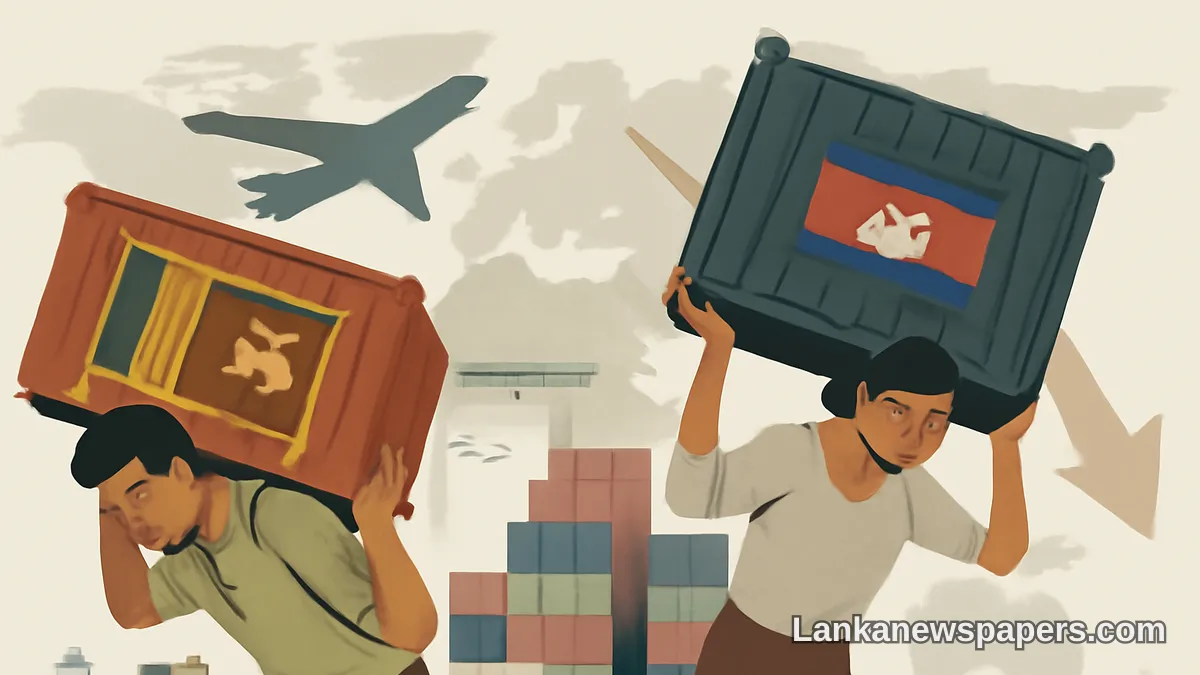
Two of Asia's most export-dependent economies, Sri Lanka and Cambodia, are finding themselves increasingly exposed to the economic tremors generated by a conflict unfolding thousands of kilometres from their shores, as global trade disruptions ripple outward and strike vulnerable developing nations with outsized force.
Small Economies, Large Exposure
Despite having no direct involvement in the geopolitical tensions driving global instability, both Sri Lanka and Cambodia are confronting serious economic consequences stemming from disrupted supply chains, shifting investor sentiment, and the cascading effects of conflict on international commodity and freight markets.
For Sri Lanka, which is still navigating its recovery from the devastating economic crisis of 2022, the timing could hardly be worse. The country has worked painstakingly to stabilise its foreign reserves, renegotiate its debt obligations, and restore a degree of confidence among international lenders and investors. Any fresh external shock threatens to undermine those hard-won gains.
Trade Routes and Supply Chains Under Pressure
A significant part of the strain on both nations stems from disruptions to key global shipping routes. Sri Lanka, positioned as a strategic maritime hub in the Indian Ocean, is particularly sensitive to changes in freight volumes and shipping costs. When major trade corridors are disrupted, the effects are felt quickly in Colombo's port traffic, export timelines, and import costs.
Cambodia, whose economy is heavily reliant on garment manufacturing and exports to Western markets, faces its own set of pressures. Uncertainty among major buyers, rising input costs, and logistical complications are squeezing an industry that employs hundreds of thousands of workers.
The Broader Challenge for Developing Nations
The situation facing Sri Lanka and Cambodia reflects a wider pattern in which developing economies bear a disproportionate share of the fallout from conflicts and crises they played no part in creating. Limited fiscal buffers, dependence on a narrow range of export sectors, and reliance on external financing leave such nations with few tools to absorb external shocks.
- Rising global commodity prices increase import bills for fuel and food
- Freight and insurance costs climb as shipping routes face uncertainty
- Investor risk aversion can trigger capital outflows from frontier markets
- Tourism and foreign direct investment sentiment weakens amid global instability
Developing economies like Sri Lanka and Cambodia often absorb the economic shockwaves of distant conflicts without having any seat at the table where decisions are made.
Sri Lanka's Precarious Recovery at Risk
Sri Lanka's economic managers are acutely aware of the country's vulnerability. After securing an IMF bailout programme and beginning the long process of debt restructuring, authorities have been striving to maintain macroeconomic stability. A renewed deterioration in the external environment — through higher oil prices, weaker export demand, or tightening global financial conditions — could slow the pace of recovery and place fresh pressure on the rupee and foreign reserves.
Tourism, one of Sri Lanka's key sources of foreign exchange, is also sensitive to global confidence levels. When international uncertainty rises, discretionary travel spending tends to contract, which would deal a further blow to an industry the country is counting on for its economic revival.
Calls for Greater International Support
Observers and policymakers in both countries have underscored the need for stronger multilateral mechanisms to shield smaller, developing economies from the economic fallout of conflicts they have no hand in. Greater access to concessional financing, more flexible debt arrangements, and coordinated international support have all been cited as necessary tools to help nations like Sri Lanka and Cambodia weather the storm.
For now, both governments face the difficult task of managing economic headwinds beyond their control, while continuing to pursue the domestic reforms and fiscal adjustments that their respective recovery programmes demand.

💬 Join the Discussion 4
See what readers are saying — and add your view.
who is going to pay for all this loss, definitely not the politicians
Cambodia also suffering? thought only we had bad luck lol
this is why we cant depend on export only. need more local industries men
true but goverment wont listen, same story every year