Dwindling Tame Elephant Population Puts Sri Lanka's Beloved Perahera Tradition at Risk
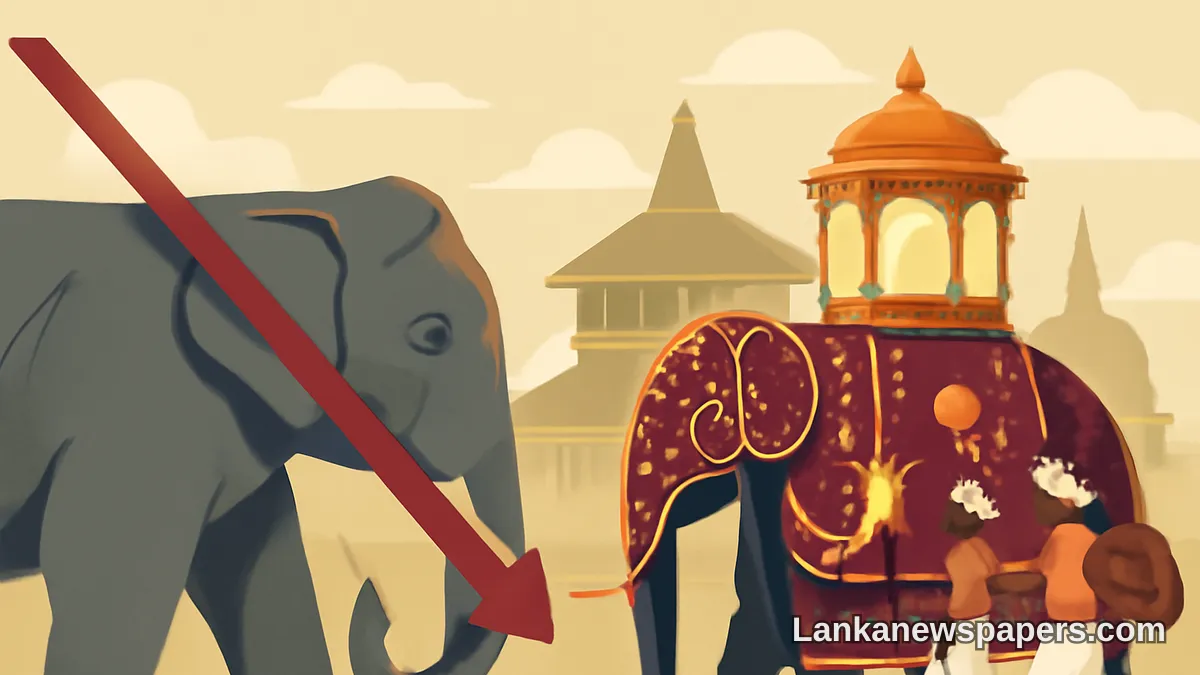
Sri Lanka's centuries-old Perahera festival culture faces an increasingly uncertain future as the number of tamed elephants in the country continues to fall at an alarming rate, a senior cultural custodian has warned.
A Stark Warning from the Diyawadana Nilame
Diyawadana Nilame Pradeep Nilanga Dela, the lay custodian of the sacred Dalada Maligawa in Kandy, has raised serious concerns about the rapidly shrinking population of domesticated elephants in Sri Lanka. He noted that the country currently has only 93 tamed elephants remaining — a figure he described as deeply troubling for the preservation of traditional Perahera processions.
The Perahera, most famously celebrated as the Esala Perahera in Kandy, is one of Asia's grandest and most culturally significant festivals. Elephants serve as its centrepiece, carrying sacred relics and adorned in elaborate traditional regalia as they process through the streets in a spectacle that draws hundreds of thousands of local and international visitors each year.
A Culture Under Threat
With the tamed elephant population in steady decline, organisers of Perahera festivals across the island are finding it increasingly difficult to secure sufficient numbers of elephants to maintain the grandeur and religious sanctity of these events. The shortage threatens not only the visual splendour of the processions but also the deep spiritual and cultural traditions that have been passed down through generations of Sri Lankans.
The dwindling numbers reflect a broader crisis facing elephant domestication in Sri Lanka, driven by factors including the deaths of ageing captive elephants, restrictions on capturing wild elephants, and the high costs associated with caring for these majestic animals.
A Call for Urgent Action
Cultural and wildlife observers alike have stressed that without a coordinated national effort to address the issue, the living tradition of elephant-led Perahera processions could be significantly diminished within the coming decades. Among the concerns raised are:
- The ageing profile of the existing tamed elephant population
- The absence of a sustainable mechanism to replenish numbers
- The growing financial burden on temples and private owners responsible for elephant upkeep
- Legal and ethical restrictions surrounding the acquisition of elephants from the wild
The Perahera is not merely a festival — it is a living expression of Sri Lanka's Buddhist heritage and national identity, one that future generations deserve to witness and celebrate.
Authorities and cultural stakeholders are being urged to engage in meaningful dialogue to find sustainable, humane solutions that can safeguard both the welfare of Sri Lanka's elephants and the continuity of one of the island's most treasured cultural institutions.



💬 Join the Discussion 2
See what readers are saying — and add your view.
only 93 left? goverment should have acted years ago honestly
exactly, they wait until problem is too big then panic