Death Sentences Expose Sri Lanka's Glaring Double Standard on War Crimes Accountability
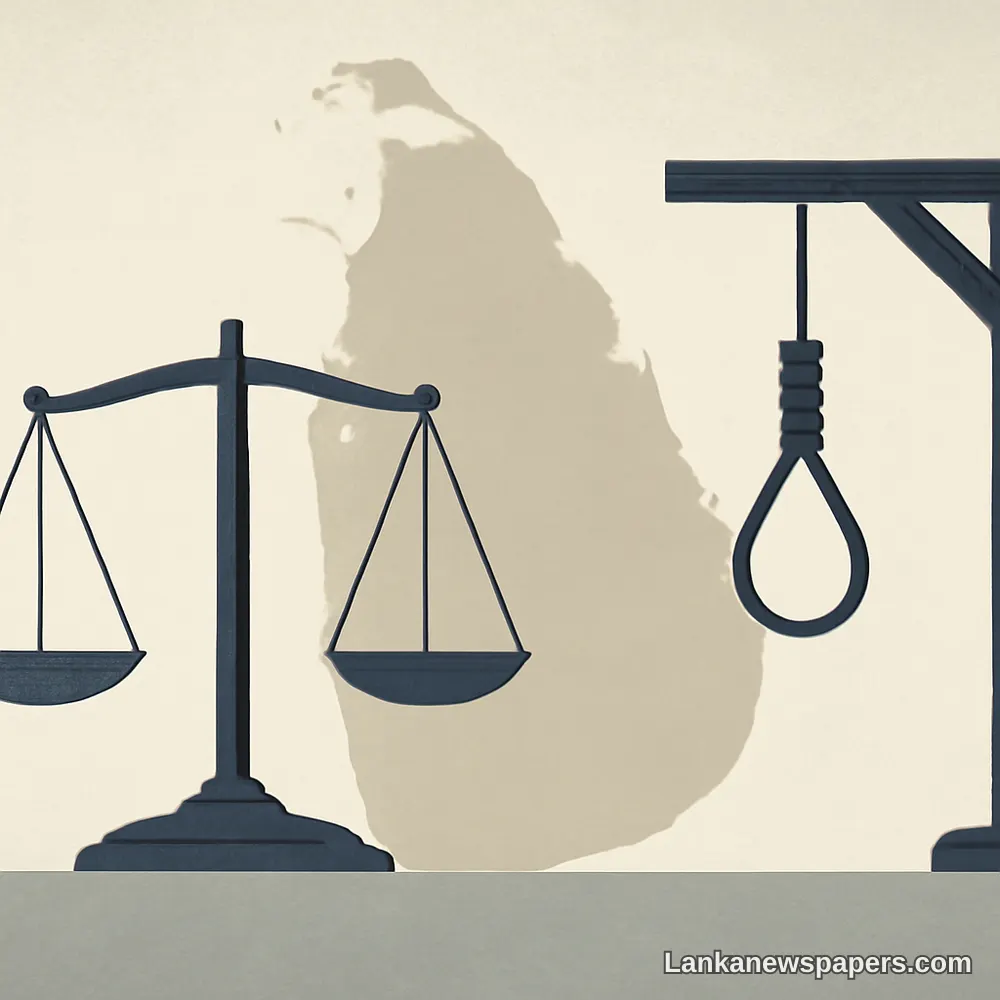
Sri Lanka finds itself caught in a profound moral contradiction — a nation that has handed down death sentences in select criminal cases while continuing to shield those accused of grave war crimes committed during its brutal decades-long civil conflict from any meaningful form of justice.
A Justice System Riddled With Inconsistency
The application of capital punishment in Sri Lanka has thrown into sharp relief the deeply uneven nature of the country's judicial system. While courts have been willing to impose the harshest possible sentence in certain criminal proceedings, successive governments have systematically refused to prosecute military and political figures accused of serious violations of international humanitarian law during the war against the Liberation Tigers of Tamil Eelam (LTTE), which ended in May 2009.
Critics and human rights advocates argue that this selective approach to justice exposes a fundamental flaw at the heart of Sri Lanka's legal and political establishment — one that protects the powerful while applying the full force of the law against others.
Decades of Alleged Atrocities Left Unaddressed
The final stages of the civil war, particularly the military offensive of early 2009, have long been at the centre of international concern. United Nations investigations and independent human rights bodies have documented allegations including:
- Mass civilian casualties resulting from indiscriminate shelling of designated safe zones
- Extrajudicial killings of surrendering combatants and civilians
- Enforced disappearances of Tamil individuals in the aftermath of the conflict
- Systematic sexual violence against detainees
- Deliberate targeting of hospitals and humanitarian infrastructure
Despite the gravity of these allegations, no senior Sri Lankan military commander or political official has faced prosecution before a domestic court in connection with these events. Promises of transitional justice mechanisms, made partly in exchange for international goodwill and trade concessions, have repeatedly stalled or been abandoned under political pressure.
International Pressure Continues to Mount
Sri Lanka remains under scrutiny at the United Nations Human Rights Council, where resolutions calling for accountability have been passed over the objections of Colombo. The country's government has consistently rejected calls for an international or hybrid court, insisting that domestic mechanisms are sufficient — even as those mechanisms have produced no meaningful prosecutions related to wartime conduct.
Tamil diaspora communities around the world, as well as survivors living within Sri Lanka's Northern and Eastern provinces, continue to demand truth and accountability. For many, the passage of time has only deepened their sense of abandonment by a justice system that appears structured to forget their suffering.
A Nation at a Crossroads
The bitter irony identified by human rights observers is difficult to dismiss. A state that invokes the ultimate punishment within its criminal justice framework simultaneously maintains a culture of impunity for those accused of crimes that international law considers among the most serious known to humanity.
For Tamil families who lost loved ones in the final stages of the war, the sight of a functional death penalty system operating alongside complete impunity for alleged war criminals is not merely an irony — it is a wound that refuses to heal.
Sri Lanka's path toward genuine reconciliation and sustainable peace remains obstructed so long as accountability is applied selectively. Observers both within the country and abroad warn that without a credible reckoning with the past, the foundations of lasting ethnic harmony and democratic governance will remain dangerously fragile.
The question facing Sri Lanka is no longer simply whether justice is possible — but whether those in power possess the political will to pursue it.


💬 Join the Discussion 0
Be the first to share your view on this story.