Sri Lanka Government Acknowledges 65,000 War Disappearances in Landmark Admission
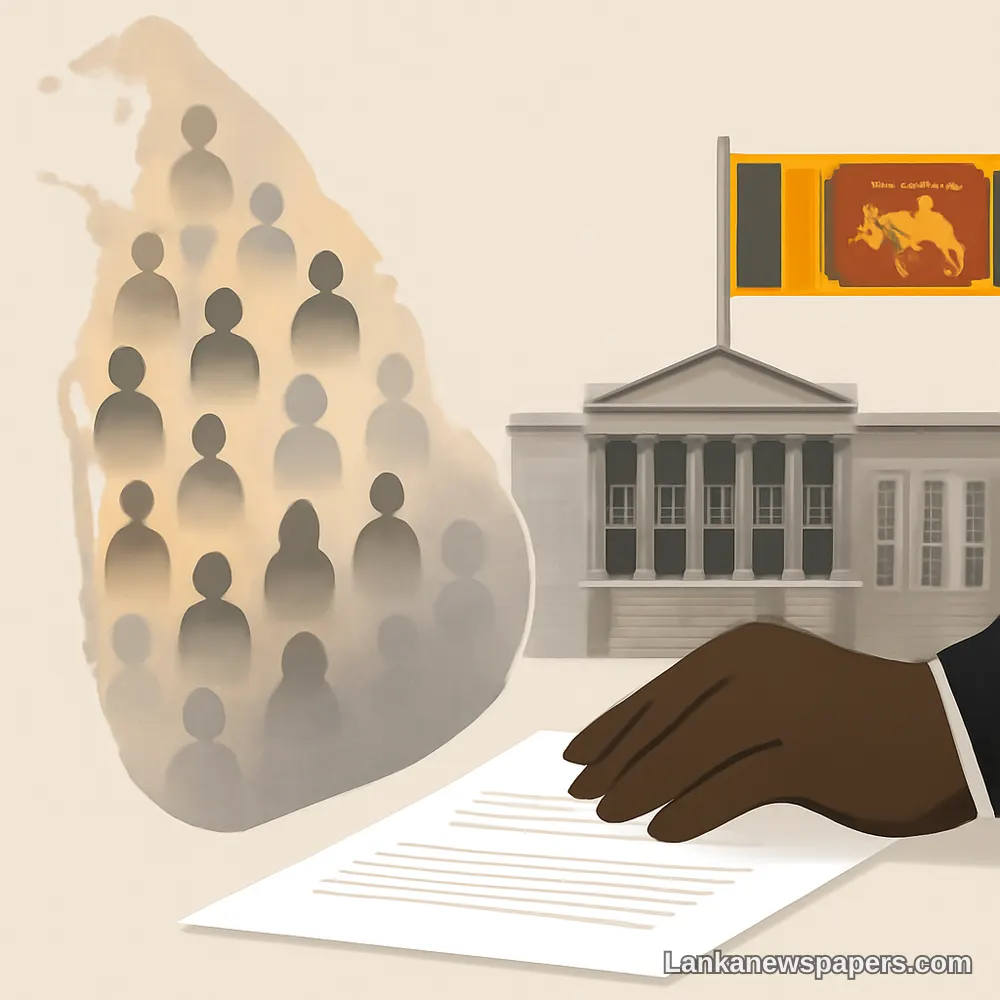
The Sri Lankan government has made a significant acknowledgement, officially admitting that approximately 65,000 people were reported as disappeared during the country's decades-long civil war — a figure that marks one of the most candid official recognitions of the conflict's devastating human toll.
A Historic Concession
The admission by the Colombo administration represents a watershed moment in Sri Lanka's post-war reconciliation process. For years, successive governments had been reluctant to publicly quantify the scale of enforced disappearances that occurred during the brutal civil conflict between government forces and the Liberation Tigers of Tamil Eelam (LTTE), which formally ended in May 2009 after nearly three decades of fighting.
The war claimed tens of thousands of lives and left countless families — predominantly in the island's north and east — searching for answers about missing loved ones whose fates have never been officially explained.
Families Still Searching for Truth
The issue of enforced disappearances has long been a deeply painful wound for Sri Lanka, particularly within Tamil communities. Families of the missing have staged persistent protests over the years, holding photographs of their loved ones and demanding accountability from the state.
- Many disappearances are alleged to have occurred during the final stages of the civil war.
- Both state security forces and the LTTE have faced accusations of committing enforced disappearances throughout the conflict.
- Sri Lanka has one of the highest numbers of reported enforced disappearances globally, according to international human rights organisations.
Reconciliation and Accountability
Human rights advocates and Tamil political representatives have long called for a credible, independent mechanism to investigate disappearances and deliver justice to affected families. The government's acknowledgement of the 65,000 figure could be seen as a step — however cautious — toward addressing those longstanding demands.
Accountability for wartime disappearances remains one of the most sensitive and unresolved challenges in Sri Lanka's path toward lasting national reconciliation.
International bodies, including United Nations human rights agencies, have repeatedly urged Colombo to establish transparent investigative processes and ensure that the families of the disappeared receive truth, justice, and reparations.
A Long Road Ahead
While the government's admission is notable, critics caution that acknowledging numbers alone is insufficient. Many advocacy groups stress that concrete mechanisms must be established to determine the individual fate of each missing person and to hold those responsible for disappearances accountable under the law.
For thousands of Sri Lankan families still awaiting answers after years — and in many cases decades — of uncertainty, the government's statement, though significant, is only the beginning of a long journey toward justice and closure.


💬 Join the Discussion 3
See what readers are saying — and add your view.
65 thousand people. let that sink in. whole families gone.
finally some honesty from goverment. took them long enough no?
honesty? they admitted nothing about who is responsible. just numbers.