Sri Lanka Caught Napping as Trump Tariffs and AKD's Gazette Reshape Economic Landscape
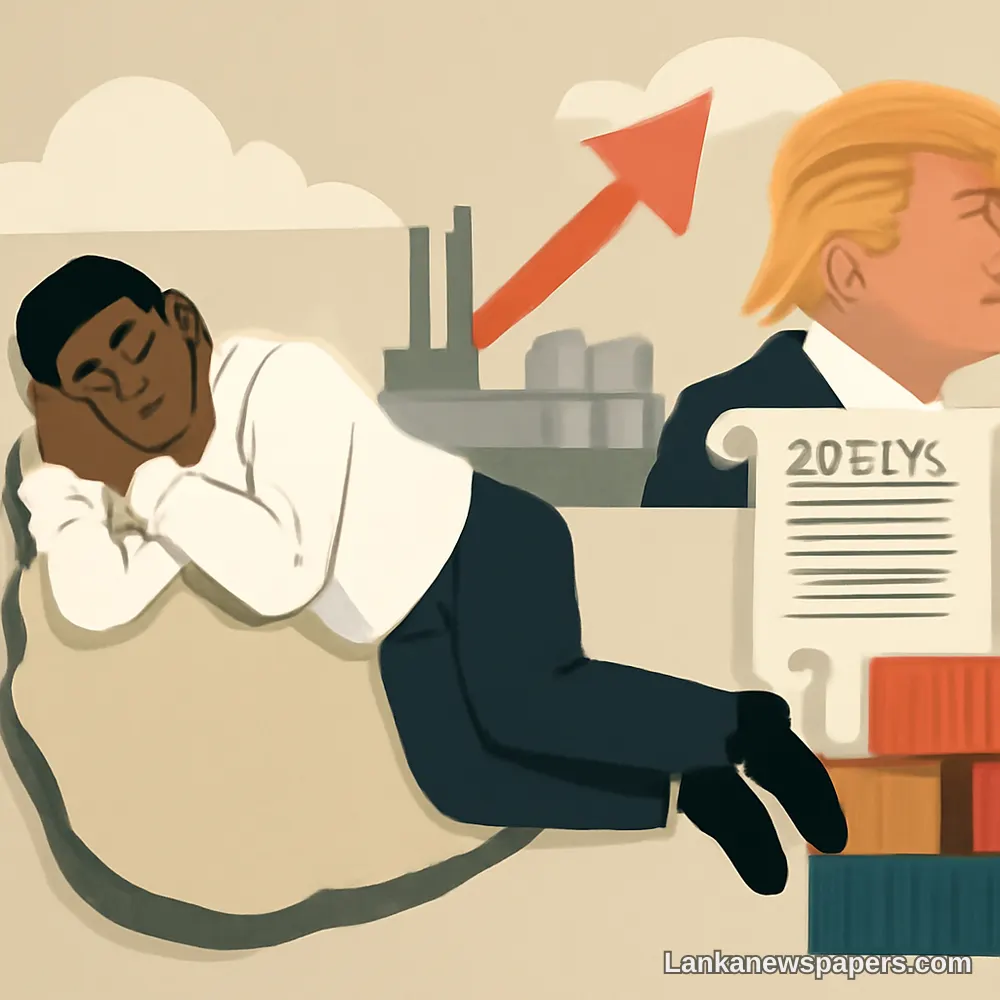
Sri Lanka finds itself at a critical crossroads, caught between the sweeping economic pressure of United States President Donald Trump's aggressive tariff regime and a domestic policy environment shaped by President Anura Kumara Dissanayake's recent gazette notifications — with observers warning that the island nation's diplomatic machinery appears dangerously slow to respond.
The Trump Tariff Shock
Washington's renewed push toward protectionist trade policy under President Trump has sent ripples across global markets, and Sri Lanka is no exception. The tariff measures, which target a broad range of imports into the United States, pose a significant threat to Sri Lanka's export-driven sectors, most notably the garment and apparel industry, which remains one of the country's largest sources of foreign exchange earnings.
For an economy still navigating the aftermath of its worst financial crisis in decades, any disruption to export revenue is not merely an inconvenience — it is a serious blow to recovery efforts. Industry stakeholders have raised alarm bells, noting that Sri Lankan exporters could find themselves at a competitive disadvantage relative to regional rivals if swift diplomatic and trade-level interventions are not pursued.
AKD's Gazette and Domestic Policy Shifts
Domestically, President Dissanayake's administration has been issuing gazette notifications that signal shifts in economic and regulatory policy. While the government frames these measures as part of a broader reform agenda aimed at restructuring the economy and delivering on electoral promises, critics argue that the timing and coordination with Sri Lanka's external trade challenges leave much to be desired.
The interplay between domestic regulatory changes and the external trade environment requires careful calibration. Businesses operating in export-oriented industries need policy clarity and stability — conditions that become harder to guarantee when both internal and external pressures are intensifying simultaneously.
A Diplomatic Machinery in Slumber
Perhaps the most pointed concern raised by analysts is the apparent sluggishness of Sri Lanka's diplomatic response to the evolving global trade situation. While countries across Asia have mobilised their foreign affairs and trade ministries to engage Washington and explore mitigation strategies, Sri Lanka's response has been, by comparison, muted.
Sri Lanka's diplomatic missions abroad, particularly in Washington, carry the responsibility of lobbying for favourable trade treatment and flagging the country's economic vulnerabilities to policymakers in partner nations. Critics contend that this function has not been executed with the urgency the moment demands.
What Is at Stake
The stakes for Sri Lanka are considerable. Key areas of concern include:
- The garment and textile sector, which employs hundreds of thousands of Sri Lankans, predominantly women
- Tea and agricultural exports that depend on stable access to Western markets
- Foreign direct investment sentiment, which is sensitive to perceptions of political and trade stability
- The country's ongoing IMF-supported economic recovery programme, which requires consistent external revenue flows
The Need for Urgent Action
Economists and trade policy experts are calling on the Dissanayake administration to treat the current global trade turbulence as a national economic security issue, not a routine diplomatic matter. Proactive engagement with Washington, coordination with regional partners, and clear communication with the private sector are identified as immediate priorities.
Sri Lanka cannot afford the luxury of diplomatic slumber at a time when its trade lifelines are under threat from forces far beyond its borders.
As the government balances its domestic reform agenda with the realities of an increasingly volatile global trade environment, the coming weeks will be telling. Sri Lanka's ability to protect its economic interests abroad while maintaining policy coherence at home will be a defining test for the AKD administration — and for the resilience of an economy still finding its footing after years of crisis.


💬 Join the Discussion 0
Be the first to share your view on this story.