Ranil Wickremesinghe Reveals He Was Fourth in Line for Sri Lanka's Top Job During 2022 Crisis
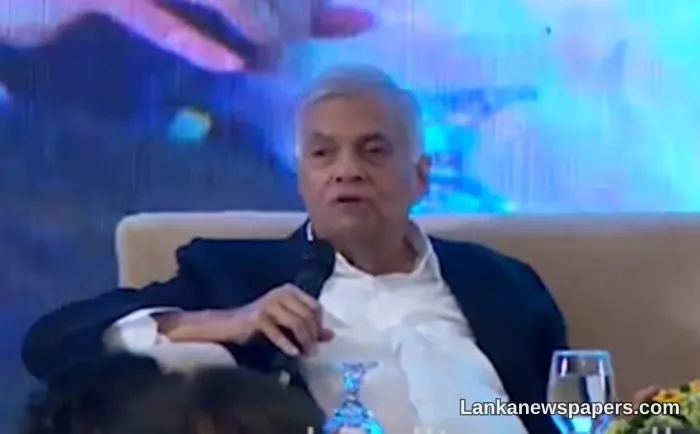
Former President Ranil Wickremesinghe has made a candid admission that he was not the preferred candidate to step in and lead Sri Lanka during the height of its devastating economic and political crisis in 2022, revealing that he was in fact the fourth choice considered for the role.
A Leadership Vacuum at a Critical Moment
Sri Lanka's 2022 political upheaval remains one of the most turbulent chapters in the island nation's post-independence history. As widespread public protests forced then-President Gotabaya Rajapaksa to flee the country and ultimately resign, the question of who would steady the ship became one of urgent national importance.
Wickremesinghe, who at the time was serving as Prime Minister, disclosed that several other individuals were approached or considered before the responsibility ultimately fell to him. His willingness to step forward at such a precarious moment, he suggested, was born out of necessity rather than personal ambition.
Stepping In Where Others Would Not
The former president's remarks shed new light on the behind-the-scenes deliberations that took place as Sri Lanka teetered on the edge of complete institutional collapse. With foreign exchange reserves virtually depleted, fuel queues stretching for miles, and essential medicines in short supply, the country desperately needed a steady hand at the helm.
Wickremesinghe, a seasoned political veteran and six-time Prime Minister, ultimately assumed the presidency in July 2022 following a parliamentary vote. His tenure was marked by painful but widely acknowledged economic stabilisation measures, including a landmark bailout agreement with the International Monetary Fund.
Wickremesinghe indicated that he was the fourth choice to assume leadership, suggesting that others had declined or were passed over before he accepted the challenge.
A Controversial but Consequential Presidency
Despite steering the country through its worst economic storm in decades, Wickremesinghe remained a deeply polarising figure throughout his presidency. Many citizens who had taken to the streets during the Aragalaya protest movement viewed him with suspicion, seeing his elevation to the presidency as a continuation of the political establishment they had risen up against.
Nevertheless, his administration managed to restructure Sri Lanka's crippling foreign debt and restore a degree of macroeconomic stability, laying the groundwork for a gradual recovery.
Reflections After Leaving Office
Wickremesinghe's latest comments appear to form part of a broader post-presidency reflection on his role during one of Sri Lanka's darkest periods. By acknowledging that he was not the first, second, or even third choice for the job, the former president appears to be framing his acceptance of the role as an act of patriotic duty at a moment when the country had few viable options.
His remarks are likely to reignite debate among political analysts and the public alike about how Sri Lanka's leadership crisis of 2022 was truly managed, and what alternatives may have existed had others been willing to take on the burden of governance at that critical juncture.
💬 Join the Discussion 4
See what readers are saying — and add your view.
at least he admitted it. most politicians wont even say this much
fourth choice or first choice, still ended up making ppl suffer
so who were the first three? nobody talking about that part
exactly men, thats the real story no