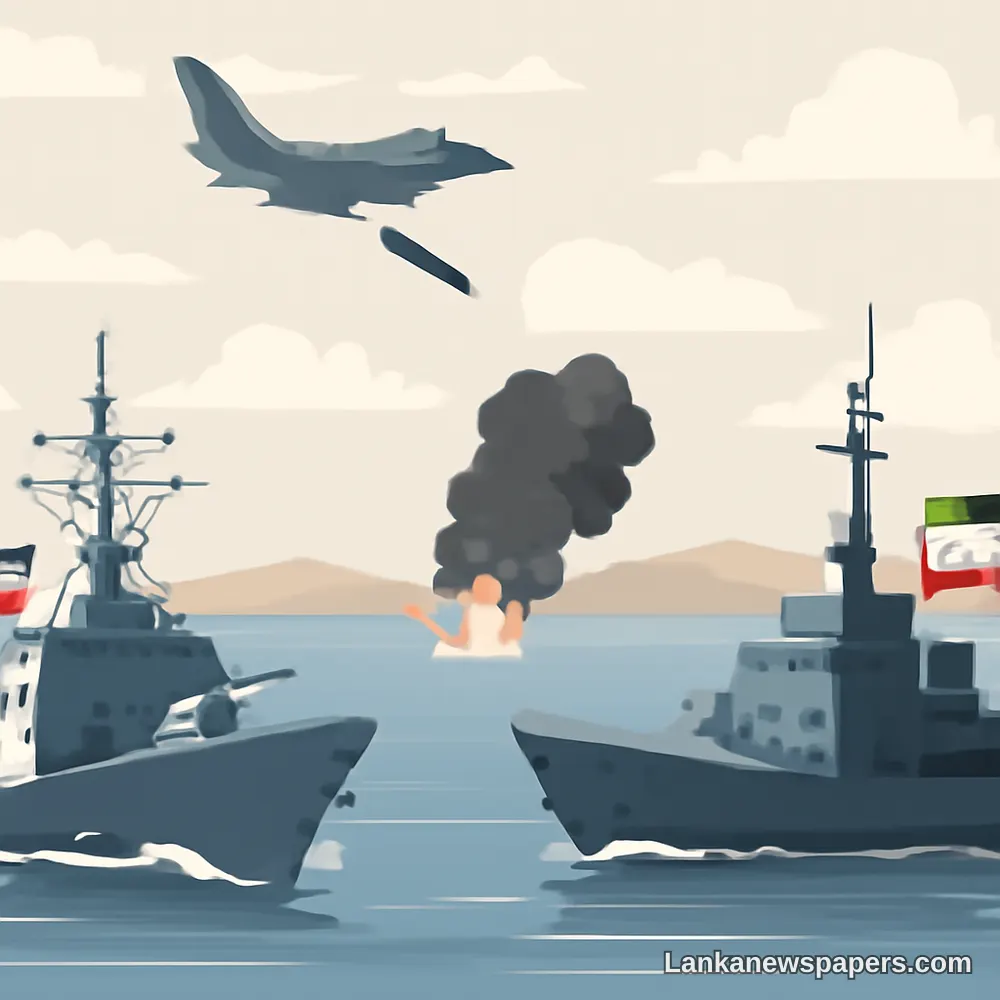
The United States military has confirmed it carried out a third consecutive night of strikes against Iran, escalating a dangerous confrontation between the two nations just hours before a reinstated American naval blockade of Iranian ports was set to take effect.
Control of a Critical Waterway
At the heart of the escalating standoff lies the Strait of Hormuz, one of the world's most strategically vital maritime chokepoints. Both Washington and Tehran have staked competing claims to control the narrow passage, through which a significant portion of the global oil supply flows daily. The dispute has dramatically raised fears of wider conflict and potential disruptions to international energy markets.
US Central Command, the military's regional command authority overseeing operations in the Middle East, confirmed the latest round of strikes without disclosing full details of the targets or the extent of any damage caused. Iranian forces have also launched retaliatory attacks, with both sides trading blows in what observers are describing as one of the most serious direct confrontations between the two countries in recent memory.
Naval Blockade Reinstated
The fresh round of strikes comes as the United States moved to reinstate a naval blockade targeting Iranian ports, a measure widely seen as an attempt to apply maximum economic and military pressure on Tehran. The timing of the overnight strikes, launched in the hours immediately preceding the blockade's return, signals Washington's intent to maintain an aggressive posture as the standoff deepens.
Iran, for its part, has shown no signs of backing down, with its military responding to the American strikes and asserting its own authority over the strategically critical strait.
Global Implications
The intensifying conflict carries significant implications for global commerce and energy supply chains. Sri Lanka, which relies heavily on imported fuel, remains particularly vulnerable to any sustained disruption in oil shipments through the Strait of Hormuz, a route used by tankers supplying much of Asia.
- The Strait of Hormuz handles an estimated 20 percent of global oil trade.
- Any prolonged blockade or military disruption could trigger sharp increases in international crude oil prices.
- Asian economies, including Sri Lanka, would face heightened fuel import costs should the conflict escalate further.
International calls for de-escalation have grown louder, with diplomatic observers warning that continued exchanges of fire risk spiralling into a broader regional conflict with far-reaching consequences for global stability and economic recovery.
The situation around the Strait of Hormuz remains extremely fluid, with both sides showing little willingness to stand down as military and economic pressure mounts on multiple fronts.
Developments are being closely monitored by governments and markets worldwide as the confrontation between the United States and Iran enters what many analysts are calling a critical and unpredictable phase.



💬 Join the Discussion 2
See what readers are saying — and add your view.
oil price going to skyrocket again, we are the ones suffering
exactly, already cant afford petrol now what