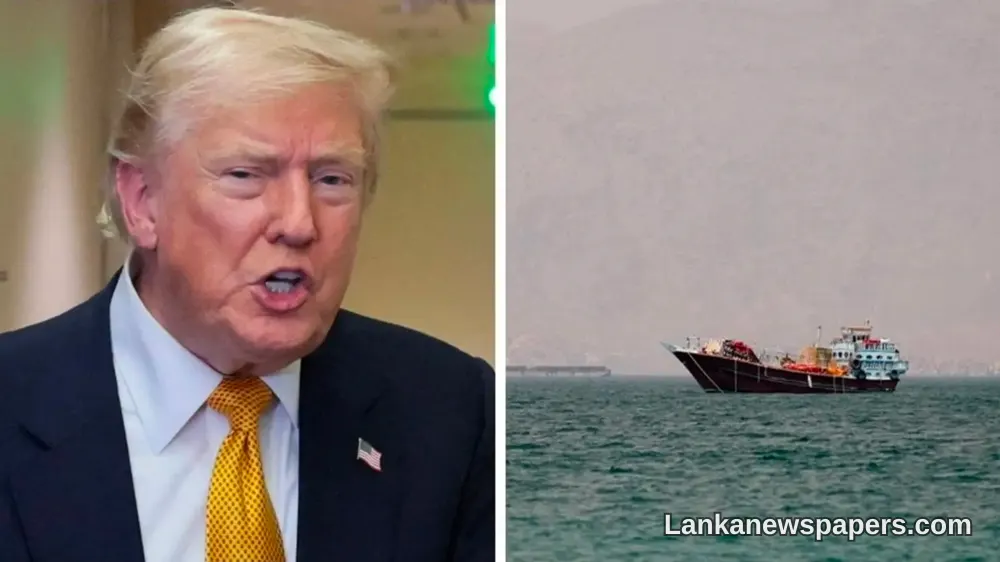
Washington moves to tighten economic pressure on Tehran
United States President Donald Trump has announced the reinstatement of a naval blockade targeting Iranian ports and vessels, escalating Washington's pressure campaign against Tehran amid ongoing tensions over Iran's nuclear programme and regional influence.
Alongside the blockade, Trump revealed plans to impose a 20 percent charge on cargo passing through the Strait of Hormuz, one of the world's most strategically critical waterways through which a significant share of global oil supplies is transported.
A vital chokepoint under scrutiny
The Strait of Hormuz, located between Iran and the Arabian Peninsula, is considered the world's most important oil transit corridor. Any disruption or surcharge applied to shipping lanes in the strait has the potential to send ripple effects across global energy markets, including fuel prices in import-dependent nations such as Sri Lanka.
The move represents a significant hardening of the Trump administration's posture towards Iran, reviving tactics reminiscent of the maximum pressure strategy pursued during his first term in office.
Implications for global trade and energy markets
Analysts warn that the combined effect of a naval blockade and a new cargo levy could have far-reaching consequences, particularly for:
- Global crude oil prices, which are closely tied to Persian Gulf shipping conditions
- Asian economies heavily reliant on Middle Eastern oil imports
- Shipping companies and freight operators navigating the region
- Diplomatic efforts aimed at reviving the Iran nuclear deal
Sri Lanka, which depends substantially on imported petroleum products to meet its energy needs, could find itself exposed to price volatility should the measures trigger sustained disruptions in oil supply chains.
Iran yet to formally respond
At the time of publication, the Iranian government had not issued a formal official response to Trump's announcement. However, Tehran has historically rejected unilateral American economic measures and has previously threatened to close the Strait of Hormuz in response to what it describes as acts of aggression.
The reinstatement of the blockade and the proposed Hormuz cargo charge mark a sharp escalation in US-Iran relations, with potential consequences stretching well beyond the two nations involved.
International observers and governments are closely monitoring developments, with many calling for diplomatic engagement to prevent the situation from deteriorating further into open confrontation.



💬 Join the Discussion 4
See what readers are saying — and add your view.
Hormuz levy means every ship pays 20%? our imports also affected then
Trump doing this for Iran votes or what, doesnt make sense
oil prices going to skyrocket again, we cant afford this
already petrol queue coming back or what