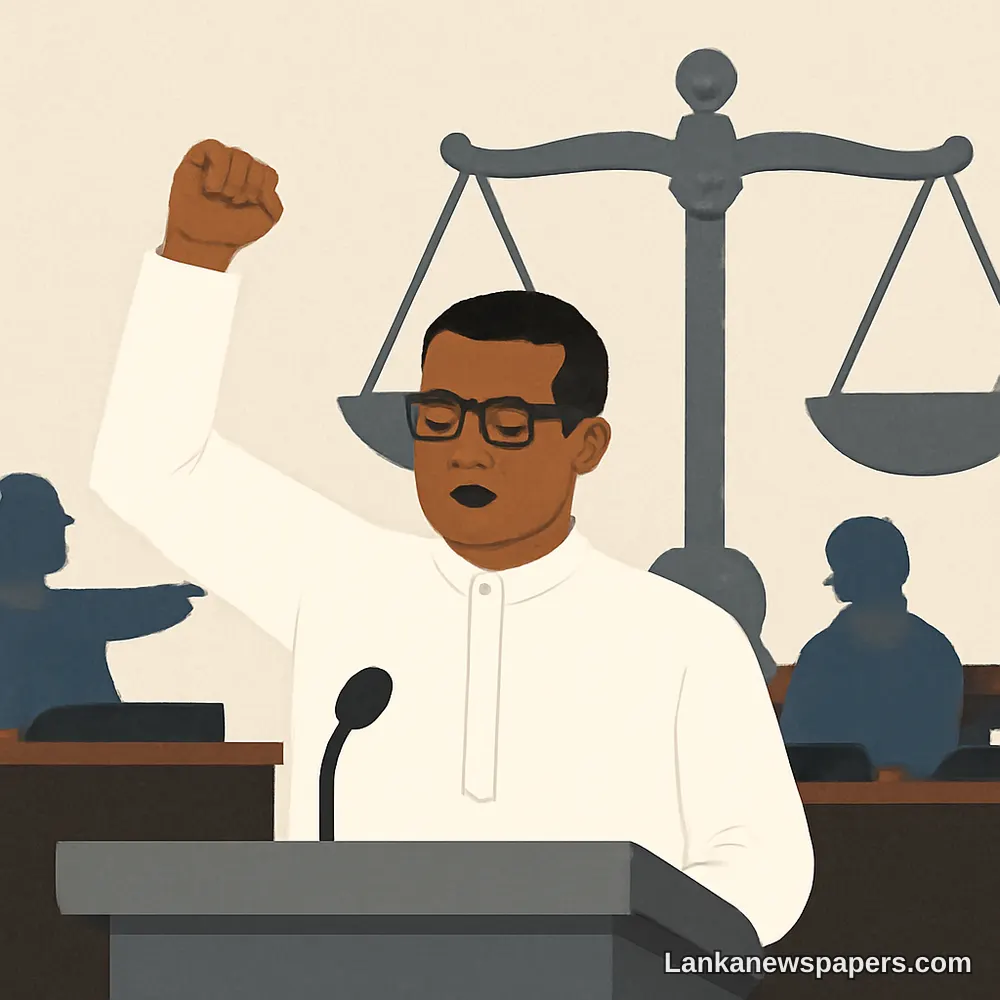
Sri Lankan parliamentarians are well known for their passionate declarations of commitment to natural justice and the presumption of innocence — fundamental legal principles that form the bedrock of any democratic society. Yet, a troubling contradiction continues to play out within the walls of parliament, where those very same legislators routinely exploit their parliamentary privilege to insult, defame, and publicly condemn individuals who have not yet been found guilty of any offence.
A Culture of Double Standards
The irony is difficult to ignore. On one hand, lawmakers invoke the language of fairness, due process, and the rights of the accused whenever it suits their political narrative. On the other, they stand behind the shield of parliamentary immunity to make sweeping allegations against suspects still in custody — effectively pronouncing guilt before any court has had the opportunity to do so.
This behaviour raises serious questions about the integrity of Sri Lanka's legislative culture and whether the country's elected representatives truly understand — or genuinely respect — the very principles they so frequently champion.
Privilege Without Responsibility
Parliamentary privilege exists to protect free and frank debate in the national interest. It was never intended as a weapon to be wielded against individuals who have no platform from which to defend themselves. When legislators use this privilege to publicly humiliate suspects or pre-judge criminal cases, they undermine the justice system, prejudice public opinion, and potentially compromise ongoing legal proceedings.
The presumption of innocence is not merely a legal formality — it is a cornerstone of civilised governance. When lawmakers ignore it for political convenience, they corrode public trust in both parliament and the judiciary.
Critics argue that this pattern of behaviour reflects a broader malaise in Sri Lankan political culture, where theatrical outrage often substitutes for genuine accountability, and where grandstanding before television cameras carries more currency than measured, principled conduct.
Time to Choose a Side
The message from civil society and legal observers is increasingly blunt: Sri Lankan legislators must decide whether they stand for the rule of law or merely pay it lip service. They cannot credibly champion natural justice in one breath and trample upon it in the next.
Parliament's credibility depends not only on the laws it passes but on the conduct of those who sit within it. If lawmakers wish to be taken seriously as guardians of justice, they must lead by example — both inside the chamber and beyond it.
For now, however, the gap between rhetoric and reality remains wide, and for many Sri Lankans watching from the outside, it is a gap that is becoming harder to overlook.


💬 Join the Discussion 2
See what readers are saying — and add your view.
Classic politicians. Rules are for us not for them.
Exactly. Privilege means they can say anything without consequences no?