Sri Lanka's foreign exchange inflows presented a mixed picture in June 2026, with workers' remittances posting solid year-on-year growth while tourism earnings showed a decline from the stronger levels recorded in May.
Remittances Sustain Year-on-Year Growth
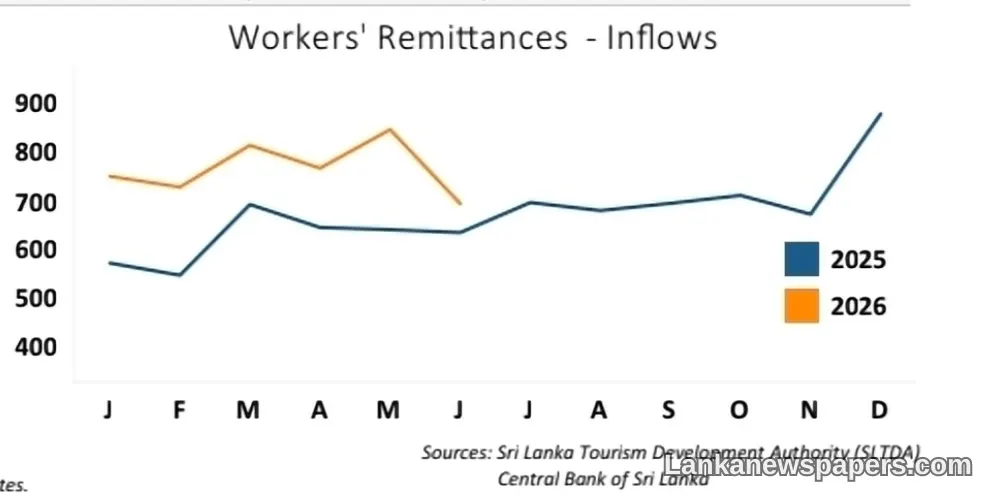
Workers' remittances reached US$695 million in June 2026, reflecting a year-on-year increase of 9.3 percent. The figure underscores the continued importance of Sri Lanka's overseas workforce as a reliable source of foreign currency for the island nation's economy.
Despite the healthy annual comparison, the June remittance total represented a step down from the figures recorded in May 2026, indicating some month-on-month softening in inflows from Sri Lankans working abroad.
Tourism Earnings Ease from May Highs
Tourism-related foreign exchange earnings also retreated in June compared to the previous month. The decline reflects the seasonal patterns that typically affect visitor arrivals and spending during the mid-year period, as Sri Lanka's peak tourism window begins to wind down following the earlier months of the year.
The drop in tourism earnings serves as a reminder of the sector's vulnerability to seasonal fluctuations, even as the industry continues its broader post-crisis recovery trajectory.
Broader Economic Context
Both remittances and tourism remain two of Sri Lanka's most critical sources of foreign exchange earnings, playing a pivotal role in stabilising the country's external accounts following the severe economic crisis of recent years.
- Workers' remittances: US$695 million in June 2026, up 9.3% year-on-year
- Tourism earnings: declined relative to May 2026 levels
- Both indicators eased on a month-on-month basis from May figures
Economists and policymakers will be closely monitoring whether the month-on-month dip in both sectors proves temporary, or whether it signals a need for more targeted measures to sustain foreign currency inflows during the traditionally quieter mid-year period.
Sri Lanka's ability to maintain healthy remittance and tourism inflows is considered essential to preserving the exchange rate stability and foreign reserve buffers that underpin the country's ongoing economic recovery programme.
Authorities are expected to release further data in the coming weeks that will provide a clearer picture of how the external sector is performing across the third quarter of 2026.



💬 Join the Discussion 2
See what readers are saying — and add your view.
remittances up but tourism down? goverment needs to explain this properly
exactly, they always celebrate one number and hide the other