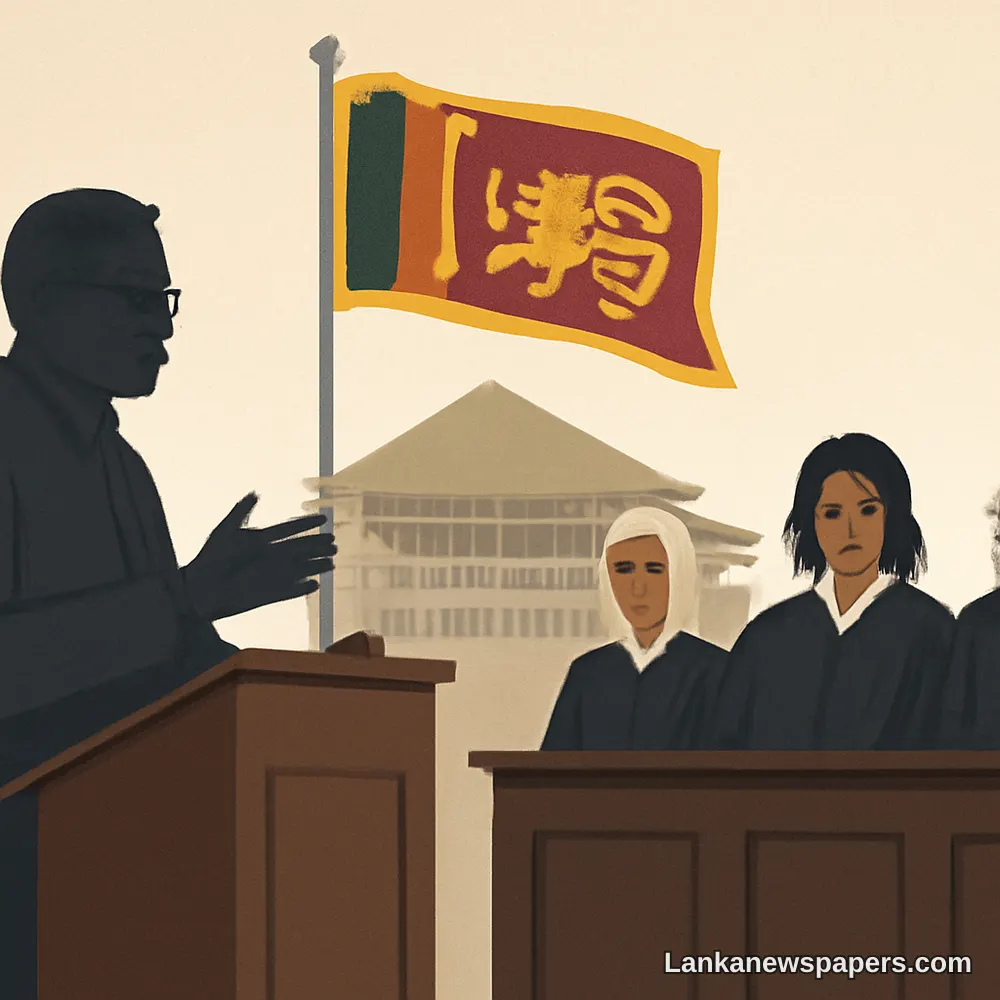
President Anura Kumara Dissanayake's effort to contain the political firestorm surrounding his government's controversial proposal to extend the retirement ages of Supreme Court and Court of Appeal judges has failed to deliver the desired effect, despite a direct intervention in Parliament.
A Presidential Address That Changed Little
The President took to the floor of the House in a bid to reassure lawmakers and the public that his administration's intentions regarding the judiciary were above board. However, his remarks appear to have done little to quiet the storm of criticism that has been building over the proposal, which many legal observers and opposition figures have condemned as a dangerous encroachment on judicial independence.
The Core of the Controversy
At the heart of the dispute is the government's plan to alter the retirement ages of judges serving on Sri Lanka's two highest courts — the Supreme Court and the Court of Appeal. Critics argue that such a move, if implemented, could give the executive branch an uncomfortable degree of influence over the composition and conduct of the country's senior judiciary.
- The proposal targets sitting judges of the Supreme Court and the Court of Appeal
- Opposition parties and legal professionals have raised serious constitutional concerns
- The President's parliamentary address has failed to pacify critics
Fears of Democratic Backsliding
The controversy has prompted comparisons to situations in other nations where governments have manipulated judicial structures to consolidate executive power — a trajectory that many Sri Lankans are understandably anxious to avoid, given the country's hard-won democratic traditions and its recent experience of severe institutional stress during the economic crisis.
The independence of the judiciary is not a privilege extended to judges — it is a fundamental guarantee to every citizen that the law will be applied without fear or favour.
Legal commentators have warned that any perception of political interference in judicial appointments or tenures — regardless of stated intent — risks undermining public confidence in the courts at a time when Sri Lanka can least afford institutional fragility.
Opposition Mounts Pressure
Opposition parties have seized on the issue, framing it as evidence of an administration willing to push constitutional boundaries in pursuit of its policy agenda. The failure of the President's parliamentary intervention to draw a line under the controversy suggests the debate is far from over, and is likely to intensify as the proposal moves further along the legislative process.
Observers across the political spectrum will be watching closely to see whether the government presses ahead with the plan, modifies it in response to public pressure, or steps back entirely — a decision that will speak volumes about the Dissanayake administration's commitment to the separation of powers.



💬 Join the Discussion 1
See what readers are saying — and add your view.
AKD tried his best but these judges issue wont go away that easy