Sri Lanka Climbs to Upper-Middle-Income Status: What It Means and Why India Hasn't Made the Cut
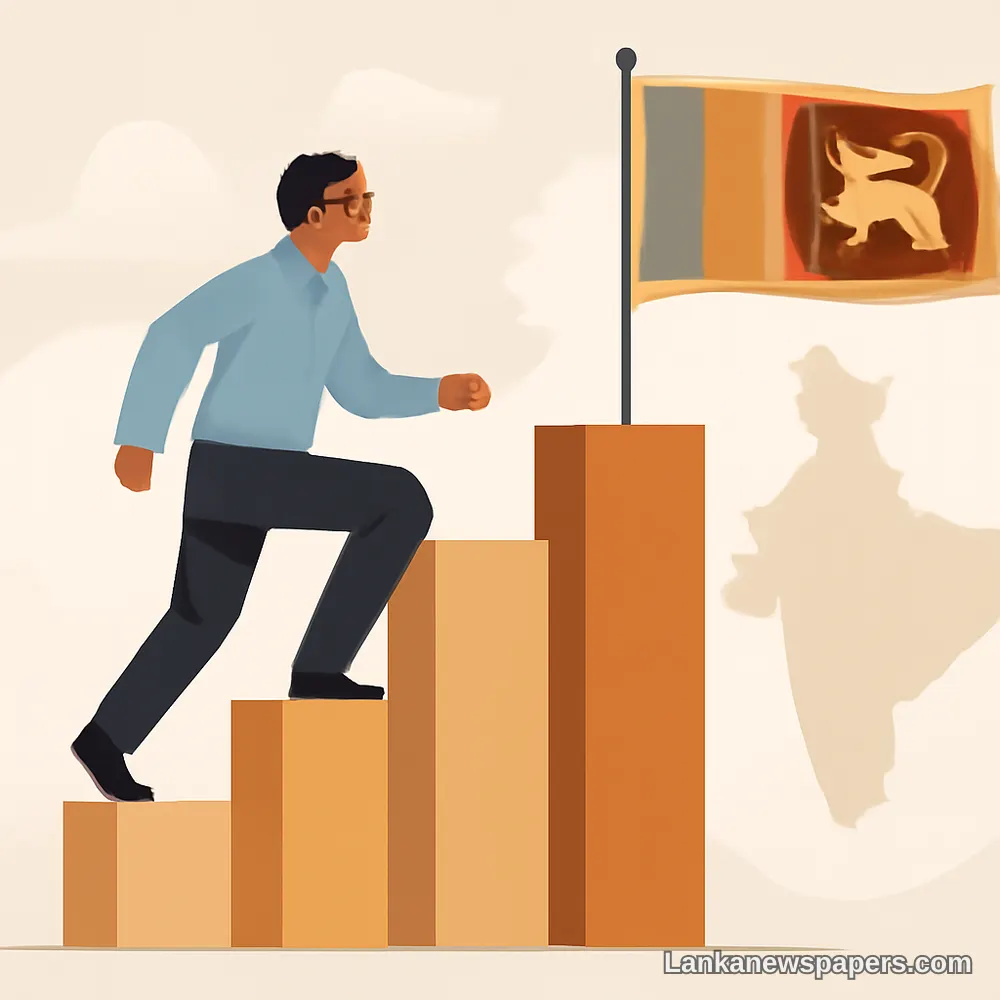
Sri Lanka has been reclassified as an "upper-middle-income economy" by the World Bank, a significant milestone for the island nation that comes even as it continues to recover from one of the worst economic crises in its modern history. The reclassification has prompted many to ask a simple but telling question: how has Sri Lanka achieved this designation while a regional giant like India has not?
What Determines the Classification?
The World Bank groups countries into four income categories — low-income, lower-middle-income, upper-middle-income, and high-income — based on Gross National Income (GNI) per capita. These thresholds are updated annually. To qualify as an upper-middle-income economy, a country must have a GNI per capita that falls within the World Bank's defined range, which currently sits between approximately US$4,516 and US$14,005.
Sri Lanka's GNI per capita has crossed the lower boundary of that bracket, earning it the upgrade. India, despite having the world's fifth-largest economy by total GDP, has a much lower GNI per capita due to its enormous population of over 1.4 billion people. The per-person figure — not the overall size of the economy — is what determines the classification.
Sri Lanka in Good Company
Sri Lanka now joins a group of nations that carry the upper-middle-income label, including:
- Vietnam, which has seen rapid economic transformation over recent decades
- Jordan, a Middle Eastern nation with a comparatively high standard of living in its region
- Several Latin American and Eastern European countries
The reclassification signals that Sri Lanka's GNI per capita has recovered sufficiently following the devastating 2022 economic crisis, during which the country defaulted on its foreign debt, faced acute shortages of fuel and medicine, and saw its currency collapse sharply.
A Recovery Still in Progress
Economists caution that the World Bank label, while symbolically important, does not paint the full picture of Sri Lanka's economic reality. The country is still engaged in debt restructuring negotiations, and many households continue to feel the pressure of elevated living costs and reduced public services.
The reclassification reflects improvements in per capita income figures, but sustained progress will depend on structural reforms, fiscal discipline, and restoring investor confidence over the coming years.
Nevertheless, the upgrade is being viewed as a vote of confidence in Sri Lanka's ongoing recovery trajectory. It may also improve the country's standing when accessing certain categories of international financing, as some lending terms and eligibility criteria are tied to World Bank income classifications.
Why India Remains Lower-Middle-Income
India's continued placement in the lower-middle-income category is not a reflection of its economic power on the global stage, but rather the mathematical reality of dividing its national income across more than a billion people. As India's per capita income continues to grow, analysts expect it too will eventually cross into the upper-middle-income bracket — though the timeline remains a subject of debate among economists.
For Sri Lanka, the reclassification offers a moment of cautious optimism — recognition that despite an extraordinary period of hardship, the country's economic indicators are pointing in a more positive direction.

💬 Join the Discussion 4
See what readers are saying — and add your view.
goverment will use this to brag for next 5 years guaranteed
at least better than India on something for once lol
on paper we upper middle income but people still cant afford rice and dhal
exactly men, statistics and reality two different things