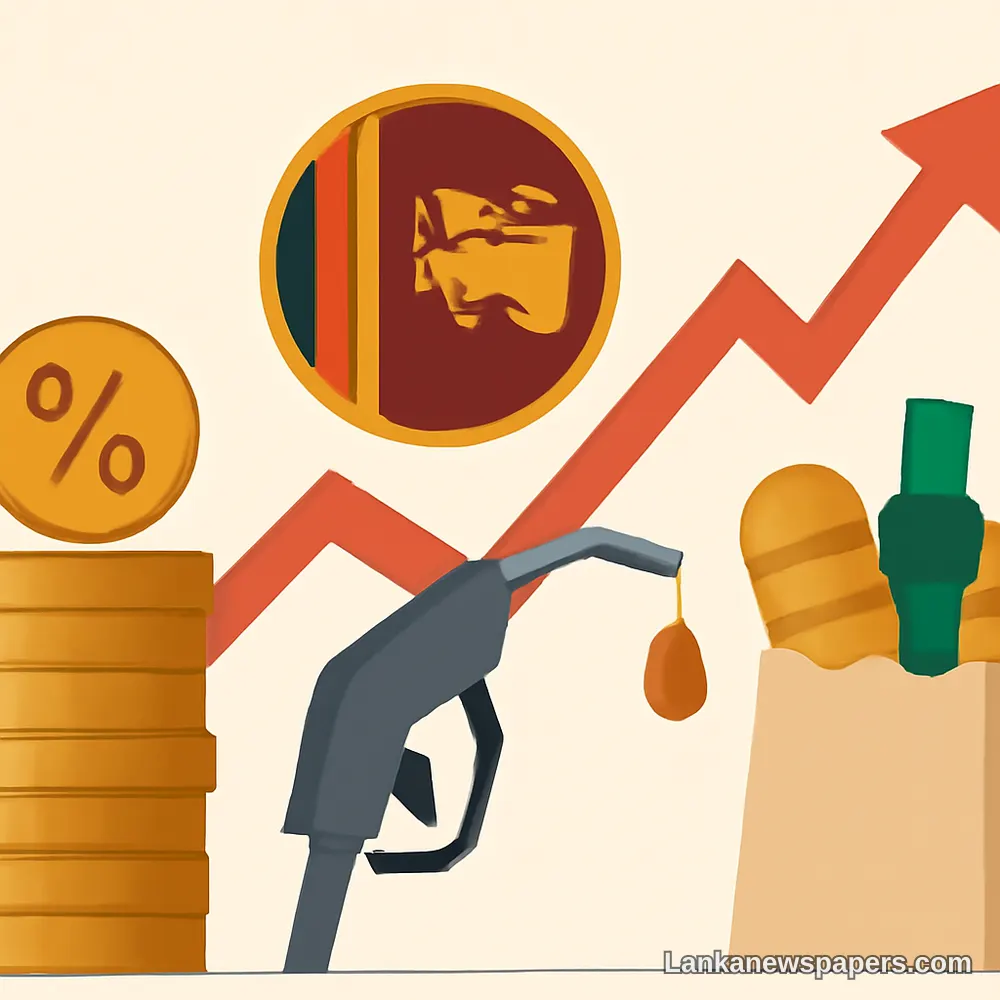
Sri Lanka's battle against rising prices has taken a fresh turn for the worse, with headline inflation climbing to 6.8% year-on-year in June, a notable increase from the 5.5% recorded in May. The acceleration signals that cost-of-living pressures continue to weigh heavily on ordinary Sri Lankans, particularly those already stretched thin by years of economic hardship.
What Is Driving the Rise?
The surge in inflation is being felt most acutely in two areas that households cannot easily avoid — energy and food. Fuel costs remain a dominant pressure point, hitting consumers every time they visit a petrol station or pay an electricity bill. Meanwhile, grocery bills continue to climb, making the weekly shopping run an increasingly painful exercise for families across the island.
These are not abstract economic figures. For millions of Sri Lankans, the jump from 5.5% to 6.8% in a single month translates directly into less purchasing power and harder choices at the checkout counter.
A Persistent Challenge
The latest data underscores that Sri Lanka's inflation problem is far from resolved, despite the country's broader efforts to stabilise its economy following the severe crisis of recent years. Policymakers and the Central Bank of Sri Lanka face renewed pressure to address the underlying factors fuelling price increases without stifling the fragile economic recovery already underway.
- Headline inflation rose to 6.8% year-on-year in June
- This compares to 5.5% recorded in May
- Energy costs are identified as a primary driver
- Food prices continue to add significant upward pressure
Outlook
Economists and market watchers will be closely monitoring whether this upward trend continues into July and beyond, or whether targeted interventions can help bring price growth back under control. For now, the June figures serve as a stark reminder that the road to economic stability in Sri Lanka remains long and uneven.



💬 Join the Discussion 2
See what readers are saying — and add your view.
6.8% they say, but my market bill tells a very different story
exactly, who is calculating this, vegetables alone went up like 30%