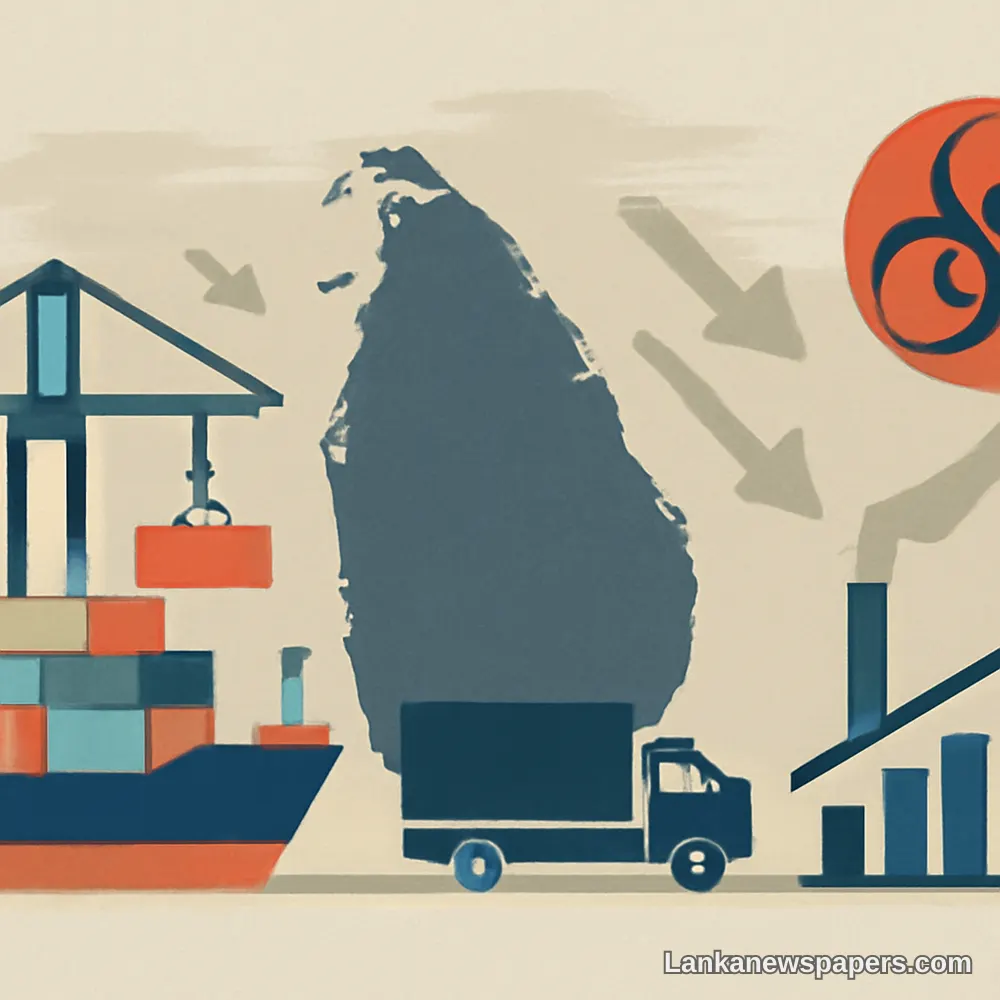
A Fragile Recovery Still Facing Headwinds
Sri Lanka's economy, long dependent on international trade and vulnerable to external shocks, continues to face a series of persistent threats that could derail its hard-won recovery from the devastating financial crisis of recent years. Despite cautious optimism following a painful restructuring process and an International Monetary Fund bailout programme, economists and policymakers warn that the island nation is far from out of danger.
Trade Dependency Leaves Little Room for Error
As a small, open economy, Sri Lanka relies heavily on imports for essential goods ranging from fuel and pharmaceuticals to food staples, while simultaneously depending on export earnings and foreign remittances to maintain foreign exchange reserves. This dual vulnerability means that any disruption to global trade flows — whether caused by geopolitical tensions, shipping route instability, or fluctuating commodity prices — can rapidly translate into domestic hardship for ordinary Sri Lankans.
The country's export basket, dominated by garments, tea, rubber, and spices, remains narrow and susceptible to shifts in demand from key trading partners, particularly in Europe and North America. A slowdown in consumer spending in those markets could significantly dent Sri Lanka's foreign currency inflows at a time when the country can least afford it.
Key Vulnerabilities Facing the Economy
- Continued exposure to global commodity price volatility, particularly in oil and food markets
- A narrow export base with limited diversification into higher-value industries
- Dependence on worker remittances, which can fluctuate with conditions in host countries
- Ongoing pressure on the Sri Lankan rupee amid global dollar strength
- High debt servicing obligations that constrain government spending on development
Global Uncertainty Adding Pressure
The broader global environment is offering little comfort. Ongoing conflicts in multiple regions, tightening monetary policies in advanced economies, and the reconfiguration of global supply chains all pose challenges for a recovering small economy like Sri Lanka's. Disruptions to key shipping lanes, including concerns around the Red Sea corridor, have already raised freight costs and extended delivery times for Sri Lankan exporters and importers alike.
Tourism, another critical pillar of the economy and a vital source of foreign exchange, is recovering but remains sensitive to international perceptions of stability and safety. Any negative developments — whether political unrest or natural disasters — could quickly dampen tourist arrivals and set back recovery targets.
Calls for Structural Reform
Analysts stress that Sri Lanka must urgently pursue structural economic reforms to reduce its vulnerability to external shocks. This includes diversifying the export sector, investing in value-added industries, improving ease of doing business, and fostering a more robust domestic manufacturing base.
The economy cannot afford to remain a passenger at the mercy of global winds. Structural transformation is not optional — it is existential for Sri Lanka's long-term stability.
The government faces the unenviable task of balancing fiscal consolidation — a requirement of its IMF programme — with the need to stimulate growth and protect vulnerable citizens from the ongoing cost-of-living pressures. Getting that balance wrong could reignite public discontent, as Sri Lankans remain acutely aware of the suffering endured during the 2022 economic collapse.
The Road Ahead
While Sri Lanka has made measurable progress in stabilising its macroeconomic fundamentals, the path to sustainable and inclusive growth remains narrow and fraught with risk. Policymakers, business leaders, and civil society alike are being urged to maintain reform momentum and build economic resilience before the next inevitable global storm arrives.
For a country that has experienced the catastrophic consequences of economic mismanagement firsthand, the stakes could not be higher. The window to build a more resilient, diversified, and competitive economy is open — but it will not remain so indefinitely.



💬 Join the Discussion 1
See what readers are saying — and add your view.
same story every year, nothing actually changes no?