Easter Sunday Attacks: A Calculated Conspiracy — How the Politicians, Police and Plotters Failed Sri Lanka
A Tragedy That Did Not Have to Happen
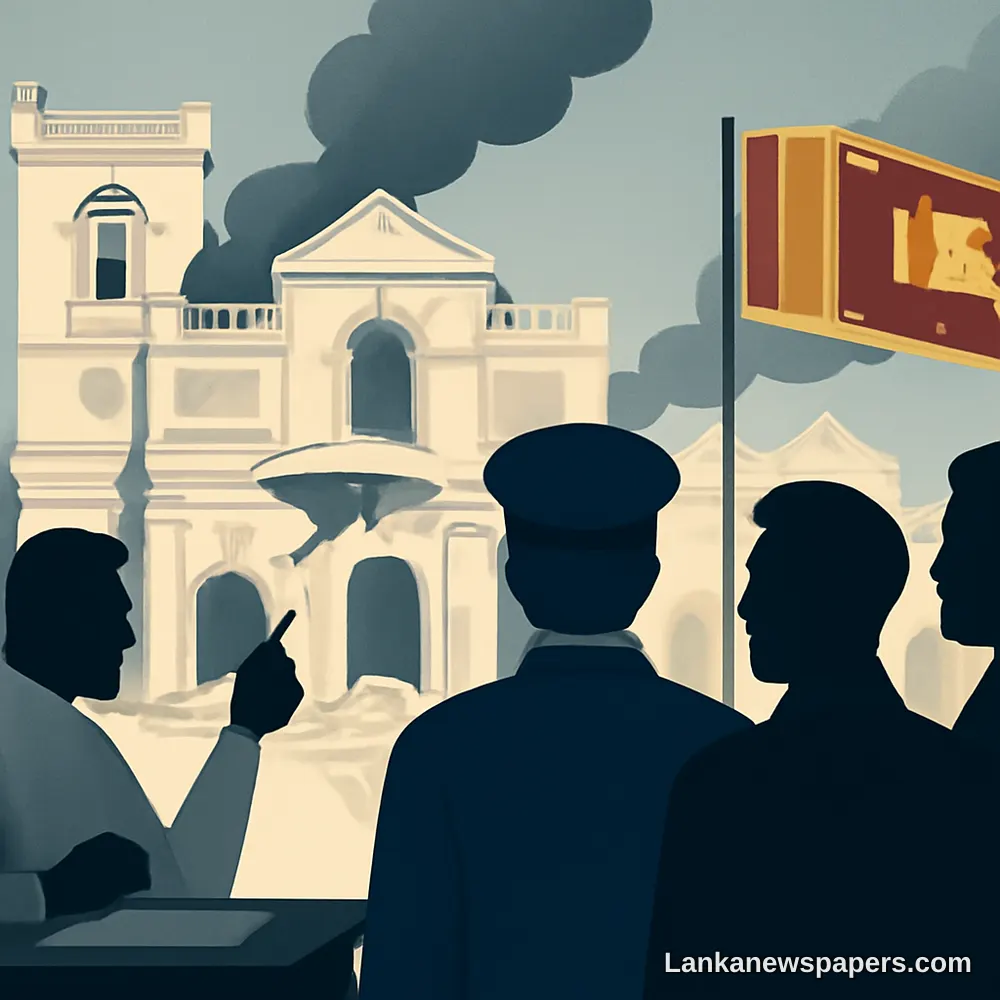
More than six years have passed since the devastating Easter Sunday bombings of 2019 tore through Sri Lanka's churches and luxury hotels, claiming nearly 270 innocent lives and leaving hundreds more permanently scarred. Yet the central question that continues to haunt this island nation remains unanswered in any court of law: was this catastrophe the result of systemic failure, or was it something far more sinister — a disaster allowed to unfold by design?
The Three-Way Nexus at the Heart of the Failure
Investigators, legal analysts and civil society advocates who have studied the attacks closely point to what they describe as a damning convergence of three powerful forces — politicians, police leadership and the plotters themselves — whose interactions in the weeks and months before April 21, 2019, created the conditions for mass murder.
Prior intelligence warnings, shared between foreign agencies and senior Sri Lankan security officials, explicitly named individuals and groups planning coordinated suicide attacks. Those warnings were documented. They were received. And they were ignored.
The failure was not one of information. It was one of will.
Political Dysfunction at the Worst Possible Moment
Sri Lanka's political establishment was, at the time of the attacks, paralysed by an unprecedented constitutional crisis. The bitter power struggle between then-President Maithripala Sirisena and Prime Minister Ranil Wickremesinghe had fractured the unity of the security apparatus. Cabinet meetings had been boycotted. Communication between key ministries had broken down. Senior intelligence officials reportedly withheld critical threat briefings from one faction while briefing the other.
Critics argue this political dysfunction was not merely an unfortunate backdrop — it was a vacuum that those responsible for the bombings may have deliberately exploited.
A Police Leadership That Looked Away
Questions surrounding the role of senior police officials have never been fully resolved. Despite receiving actionable intelligence warnings in writing, law enforcement leadership failed to place the named suspects under surveillance, failed to alert hotels and churches through proper security channels, and failed to convene an emergency security council that could have mobilised a preventive response.
Several officers who held key positions at the time of the attacks faced initial scrutiny but have faced no meaningful legal accountability. Families of the victims describe this as a second betrayal — one delivered not by bombers, but by institutions sworn to protect the public.
Victims' Families Demand Justice, Not Inquiries
For the hundreds of families who lost loved ones in the Kochchikade church, St. Sebastian's Church in Negombo, Zion Church in Batticaloa and the Shangri-La, Cinnamon Grand and Kingsbury hotels, the years of commissions, parliamentary debates and inconclusive investigations have compounded their grief with frustration.
- Multiple presidential commissions have produced reports that remain partially classified.
- Key suspects connected to the Zahran Hashim-led National Thowheed Jamath network remain in pre-trial detention without conviction.
- No senior political figure or police official has been held criminally responsible for the intelligence failure.
The Danger of Leaving This Chapter Unresolved
Legal experts warn that Sri Lanka's failure to conclusively prosecute those responsible — both the direct perpetrators and those who failed in their duty to prevent the massacre — sets a dangerous precedent. Accountability gaps of this magnitude do not merely fail the victims. They signal to future actors, within the state and outside it, that catastrophic negligence carries no consequence.
For a country still rebuilding its democratic institutions and its reputation as a safe destination for tourism and investment, the Easter Sunday bombings cannot remain a wound left deliberately unhealed.
A Nation Still Waiting for the Truth
As Sri Lanka moves forward under new political leadership, civil society groups and victims' organisations are renewing their calls for a fully independent, internationally supported judicial process. They argue that only transparent, impartial accountability — not another commission, not another report — can begin to honour the 270 lives lost on that April morning and restore the public's faith in the state's most fundamental obligation: the protection of its people.

💬 Join the Discussion 3
See what readers are saying — and add your view.
which politicians are named? article doesnt say clearly.
everyone knew before it happened. goverment just let it happen.
exactly. 269 ppl died and nobody is accountable still.