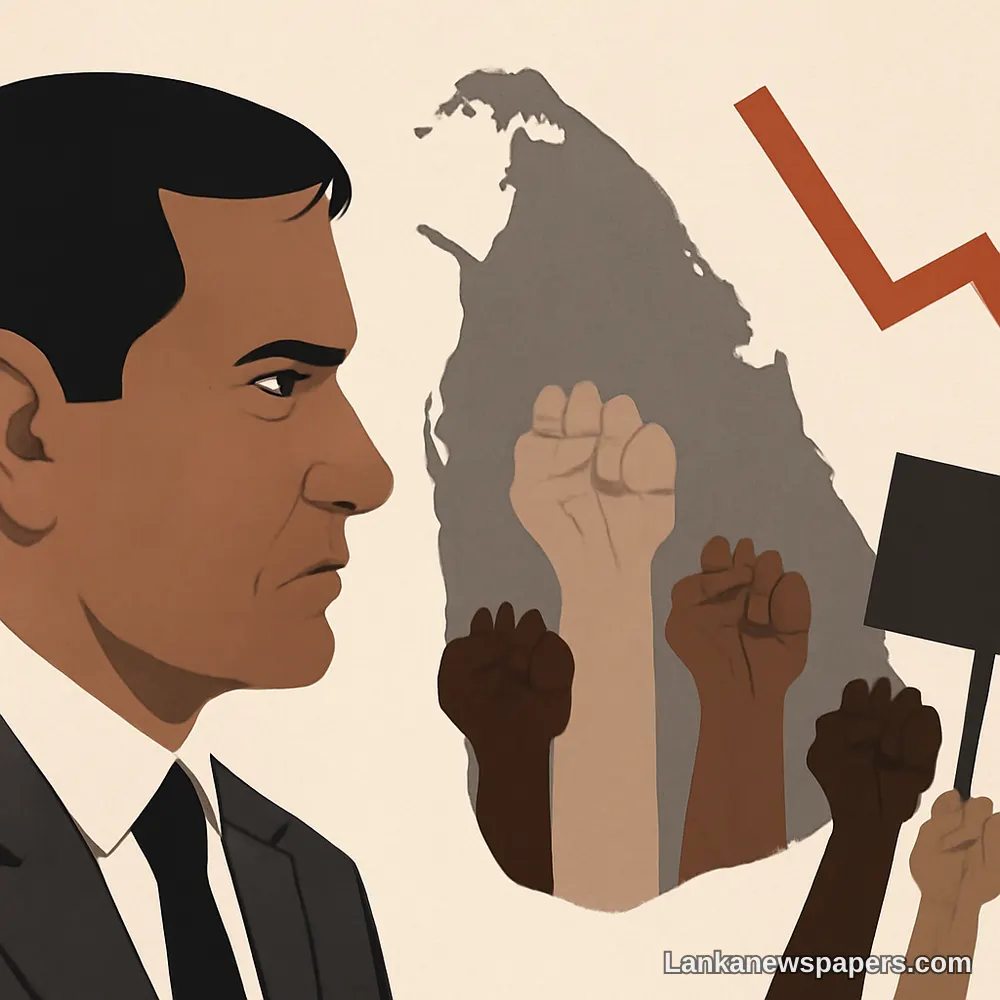
Questions continue to mount over the role played by Major General Suresh Sallay, the former head of Sri Lanka's State Intelligence Service (SIS), during the mass public uprising known as the Aragalaya — a period that culminated in the dramatic storming of the Presidential Secretariat and official residence in July 2022.
A Crisis That Caught Intelligence Off Guard
The Aragalaya, which translates broadly to "struggle" in Sinhala, was the most significant popular protest movement in Sri Lanka's post-independence history. Tens of thousands of citizens took to the streets across the island, driven by a catastrophic economic collapse marked by severe shortages of fuel, medicine, and essential goods. Yet, according to emerging accounts, those at the helm of the country's intelligence apparatus appeared unprepared for the scale and momentum of public discontent.
Major General Suresh Sallay, who served as the Director of the SIS during this turbulent period, has come under scrutiny for what critics describe as a fundamental failure to anticipate and adequately warn political leadership of the explosive trajectory the protests would take.
The Role of the State Intelligence Service
The SIS is mandated to monitor internal and external threats to national security, providing timely assessments to the country's leadership. In the lead-up to the events of July 9, 2022 — when protesters breached and occupied President Gotabaya Rajapaksa's official residence — the intelligence service's inability to forecast the severity of the situation raises serious institutional questions.
- The SIS failed to provide adequate early warning of the scale of the July 9 protests.
- Security arrangements at key government installations proved wholly insufficient.
- President Gotabaya Rajapaksa was forced to flee the country shortly after the occupation of his residence.
Political Connections and Accountability
Sallay, widely regarded as a close confidant of the Rajapaksa family, was appointed to lead the SIS under the previous administration. His proximity to political power has led many observers to question whether intelligence assessments were shaped by political considerations rather than objective analysis of ground realities.
Critics argue that the failure was not merely one of capability, but one of institutional culture — where intelligence professionals may have been reluctant to deliver unwelcome assessments to those in power.
Broader Implications for Sri Lanka's Security Architecture
The intelligence lapses during the Aragalaya did not occur in isolation. They followed the devastating Easter Sunday attacks of April 2019, during which prior warnings were similarly ignored or inadequately acted upon. Together, these episodes paint a troubling picture of systemic weaknesses within Sri Lanka's national security and intelligence framework.
Calls for a thorough and independent review of the SIS and its conduct during the Aragalaya period have grown louder among civil society groups, opposition politicians, and security analysts. Many argue that without genuine accountability and institutional reform, Sri Lanka remains vulnerable to future failures of the same nature.
As the country works to rebuild both its economy and its democratic institutions in the aftermath of the 2022 crisis, the question of who bears responsibility for the intelligence failures of that period remains very much alive in the public consciousness.

💬 Join the Discussion 3
See what readers are saying — and add your view.
Whole intelligence unit was sleeping or what? Ppl were suffering for months before aragalaya.
He knew nothing or he knew everything and kept quiet. Both are bad.
Exactly. Silence at that time was basically betrayal.