Protests Erupt Over Moves to Shield Alleged Mastermind of Sri Lanka's Easter Sunday Bombings
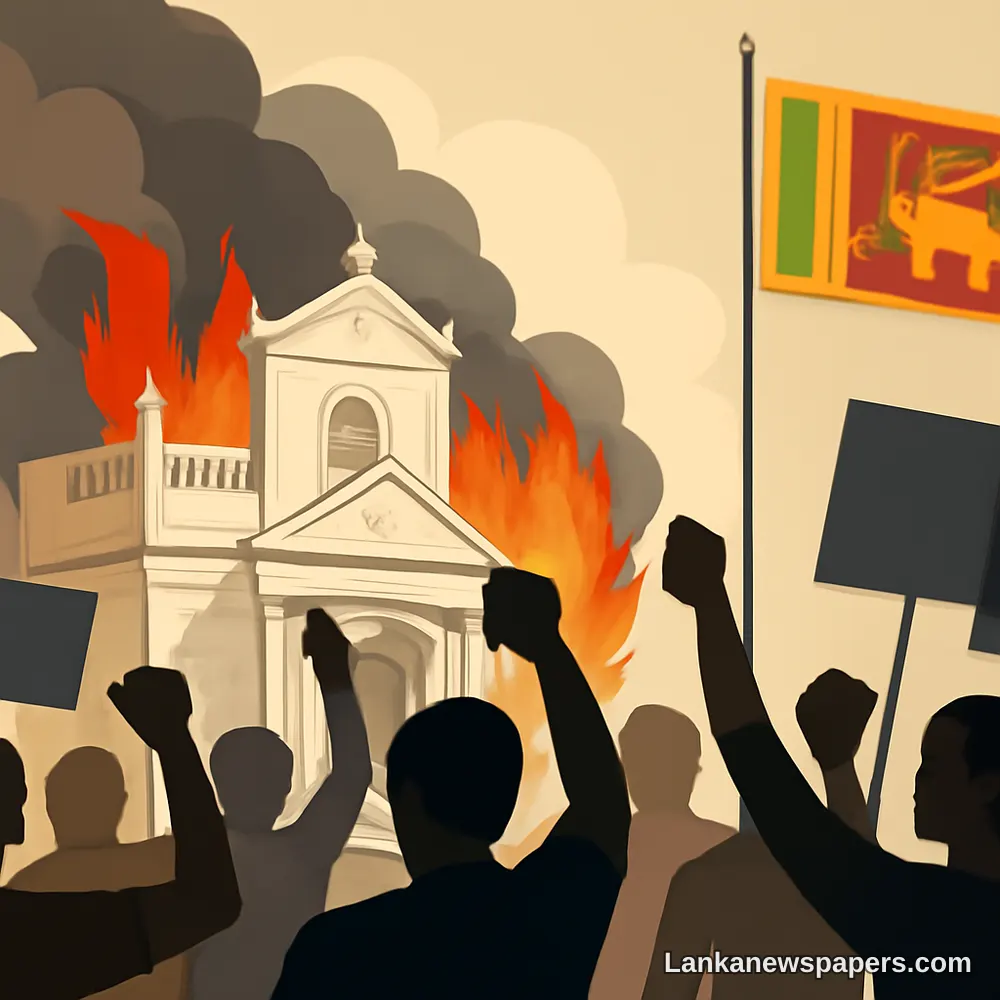
Fresh protests have broken out in Sri Lanka following reports that efforts are being made to protect a key figure alleged to have played a central role in plotting the devastating Easter Sunday attacks of 2019, which claimed the lives of more than 260 people and left hundreds more injured.
Renewed Public Anger
The demonstrations reflect deep and enduring frustration among victims' families, civil society groups, and members of the Catholic community, who have long demanded full accountability for one of the deadliest terrorist attacks in the island nation's history. The coordinated suicide bombings targeted churches and luxury hotels across Colombo, Negombo, and Batticaloa on Easter Sunday, April 21, 2019.
Protesters have taken to the streets in response to what they describe as deliberate political manoeuvring intended to shield an individual widely believed to have been instrumental in orchestrating the carnage. Critics argue that successive governments have failed to deliver genuine justice, and that any attempt to protect a suspected plotter represents a profound betrayal of the victims and their families.
Justice Delayed, Justice Denied
The Catholic Church in Sri Lanka, which has been among the most vocal advocates for justice since the attacks, has repeatedly criticised what it sees as a lack of political will to bring all those responsible to account. Cardinal Malcolm Ranjith, the Archbishop of Colombo, has on numerous occasions called on both local authorities and the international community to ensure that the full truth behind the bombings is exposed and that perpetrators at every level face the law.
Years after the attacks, the investigation and subsequent legal proceedings have been widely criticised for their slow pace and perceived lack of transparency. Many suspects have been arrested, but questions surrounding high-level involvement and possible prior knowledge by state officials remain unresolved.
Political Dimensions
The latest protests underscore the extent to which the Easter Sunday attacks remain a deeply charged political issue in Sri Lanka. Allegations of political interference in the investigation have surfaced repeatedly over the years, with opposition politicians and civil society leaders accusing those in power of deliberately obstructing efforts to uncover the complete chain of responsibility.
Victims' families have expressed outrage at what they perceive as a two-tiered system of justice, where powerful individuals appear insulated from consequences while lower-level operatives face prosecution.
- The Easter Sunday attacks killed over 260 people and wounded approximately 500 others.
- Six coordinated bomb blasts struck three churches and three hotels simultaneously.
- The attacks were linked to the local Islamist extremist group National Thowheed Jamath, with reported ties to the Islamic State.
- Questions over prior intelligence warnings ignored by authorities have never been fully resolved.
Calls for Transparent Inquiry
Advocacy groups are now renewing their calls for an independent and transparent inquiry, free from political interference, to conclusively establish who ordered and facilitated the attacks. Many believe that without such accountability, the wounds left by the tragedy cannot begin to heal.
Families of the victims have consistently maintained that they will not rest until every individual responsible — regardless of their political connections or social standing — is brought before the law and made to answer for their role in the attacks.
As protests continue, pressure is mounting on the government to demonstrate that it is committed to justice rather than expediency, and to ensure that the memory of those killed on that fateful Easter morning is honoured through meaningful accountability.

💬 Join the Discussion 0
Be the first to share your view on this story.