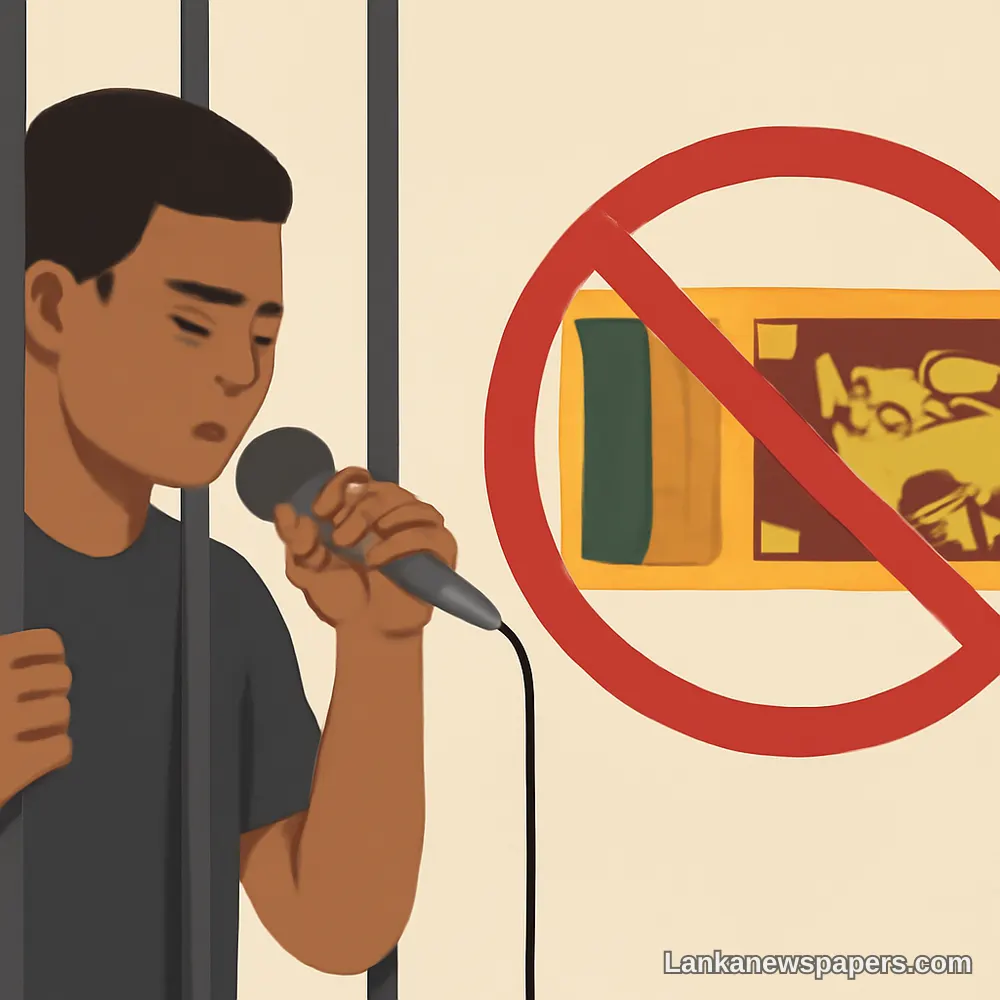
The Sri Lankan government has reaffirmed its ban on the Liberation Tigers of Tamil Eelam (LTTE) as international and domestic pressure intensifies over the continued detention of a Tamil rapper whose arrest has drawn widespread condemnation.
Government Stands Firm on LTTE Prohibition
Authorities in Colombo have reiterated that the LTTE remains a proscribed organisation under Sri Lankan law, signalling that any content or expression deemed to glorify or promote the banned militant group will continue to face legal consequences. The statement comes as critics argue that the detained rapper's artistic work does not constitute support for terrorism but rather reflects Tamil cultural identity and the lived experiences of the community.
Rapper's Detention Sparks Controversy
The arrest of the Tamil rapper has ignited a fierce debate over freedom of expression, minority rights, and the boundaries of Sri Lanka's anti-terrorism legislation. Human rights advocates and Tamil community representatives have called for his immediate release, arguing that criminalising artistic expression sets a deeply troubling precedent for civil liberties in the country.
Critics have pointed out that laws originally designed to combat armed insurgency are increasingly being applied to cultural and artistic expression within the Tamil community, raising serious questions about how such legislation is interpreted and enforced.
Broader Implications for Tamil Community
The case has drawn attention both locally and internationally, with diaspora groups and human rights organisations voicing concern over what they describe as the systematic suppression of Tamil voices. Many observers note that incidents such as this risk deepening ethnic tensions that Sri Lanka has long struggled to address in the post-war era.
- The LTTE was militarily defeated by Sri Lankan forces in May 2009, ending a nearly three-decade civil war.
- The organisation remains banned not only in Sri Lanka but also in several Western nations, including the United States, the United Kingdom, and the European Union member states.
- Sri Lanka's Prevention of Terrorism Act has frequently been criticised by human rights groups for its broad scope and potential for misuse.
Calls for Dialogue and Legal Reform
Civil society groups have renewed calls on the government to review its counterterrorism framework to ensure that creative expression and cultural identity are adequately protected under the law. They argue that genuine reconciliation between the Sinhalese and Tamil communities cannot be achieved while such legal ambiguities remain unresolved.
Human rights advocates stress that distinguishing between terrorism and artistic expression is fundamental to upholding democratic values and fostering lasting peace in a post-conflict society.
The government has yet to indicate whether it will reconsider the charges against the rapper or engage in broader discussions on reforming legislation that many argue continues to disproportionately affect Sri Lanka's Tamil minority.

💬 Join the Discussion 4
See what readers are saying — and add your view.
what did he even rap about, anyone know the full story
goverment always using security excuses to silence tamils
banning LTTE is one thing but jailing a rapper is different no
exactly, singing a song is not terrorism machan