Lost World: How 'Portrait of a Colombo Tamil Family' Captures Life Before the Tragedy of Black July
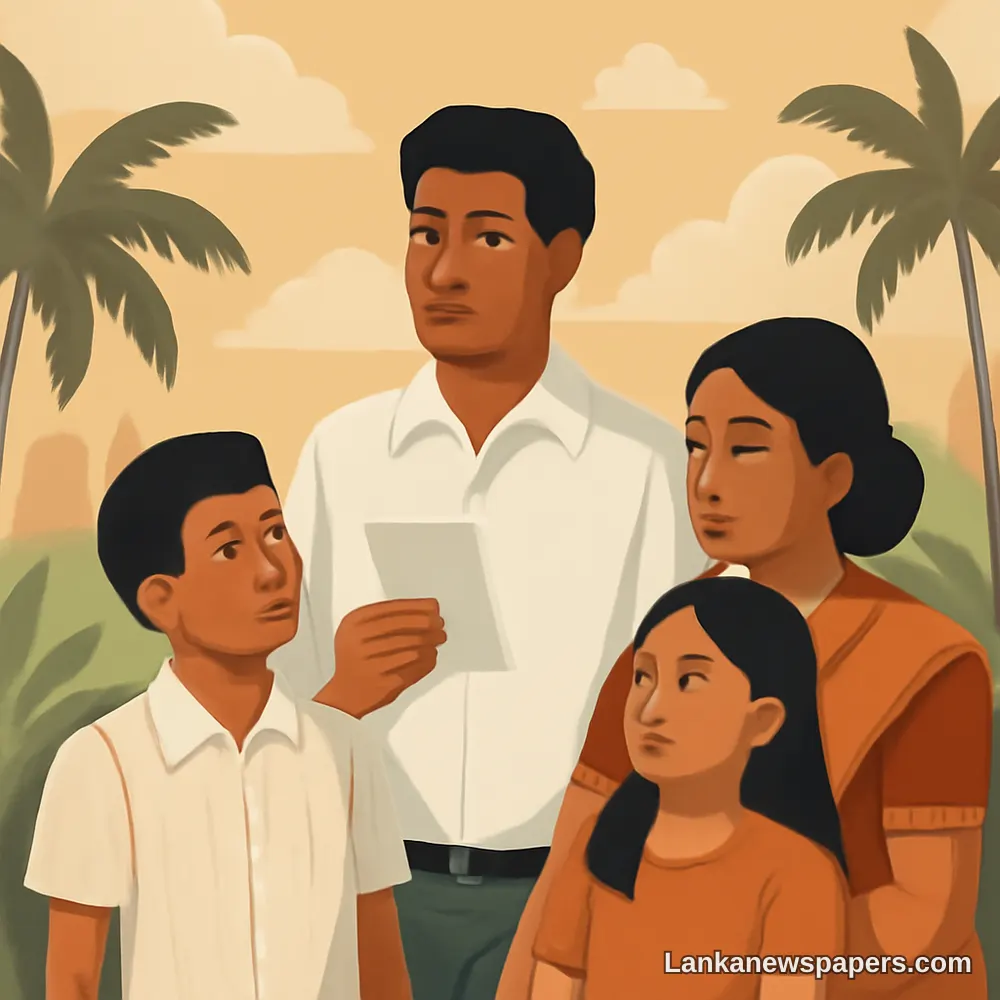
A Glimpse Into a Vanished Colombo
Before the flames of July 1983 consumed neighbourhoods, shattered families and drove tens of thousands from the country they called home, Colombo was a city where Tamil and Sinhalese households lived as neighbours, colleagues and friends. A new work titled Portrait of a Colombo Tamil Family attempts to recover that lost world — not through statistics or political analysis, but through the intimate textures of everyday life.
Black July and Its Long Shadow
The anti-Tamil pogrom of July 1983, widely known as Black July, remains one of the darkest chapters in Sri Lanka's modern history. Mobs swept through Colombo and other cities, targeting Tamil homes and businesses in a wave of violence that killed hundreds and displaced hundreds of thousands more. For the Tamil community in particular, it marked a before and after — a rupture so severe that entire generations grew up in diaspora, carrying memories of a city they would never quite recognise again.
What the Portrait Captures
The work in question draws on personal recollection and family history to reconstruct the rhythms of Tamil middle-class life in Colombo in the years and decades preceding the riots. Among the details it preserves are:
- The social fabric of mixed urban neighbourhoods where ethnicity was rarely the defining characteristic of daily interaction
- Domestic rituals, festivals and family gatherings that anchored community identity
- Professional and civic life in a capital city that, for all its tensions, still felt like shared ground
- The gradual accumulation of anxieties as political conditions worsened through the 1970s and early 1980s
Memory as Historical Record
Works of this nature serve a function that formal historiography sometimes struggles to fulfil. Where archives record policy and incident, personal narrative records feeling — the warmth of a household, the smell of a particular street, the sound of a city before catastrophe reshaped it.
To remember Colombo before Black July is not merely an act of nostalgia. It is an act of witness — insisting that what was destroyed had real value and real human faces.
For Sri Lankan readers, particularly younger generations who know July 1983 only as history, accounts such as this one offer something invaluable: a reminder that the lives upended by that violence were not abstractions, but families with stories, routines and roots stretching back generations in the same city.
Why This Matters Now
Sri Lanka continues to navigate the legacies of its civil conflict, including ongoing conversations about reconciliation, memory and national identity. Cultural works that humanise communities across ethnic lines — that insist on the complexity of shared urban life before division hardened into warfare — remain as relevant today as ever.
Portrait of a Colombo Tamil Family is a contribution to that necessary conversation, preserving a chapter of the city's social history that might otherwise fade quietly from living memory.


💬 Join the Discussion 1
See what readers are saying — and add your view.
Such a sad chapter in our history. those families lost everything overnight.