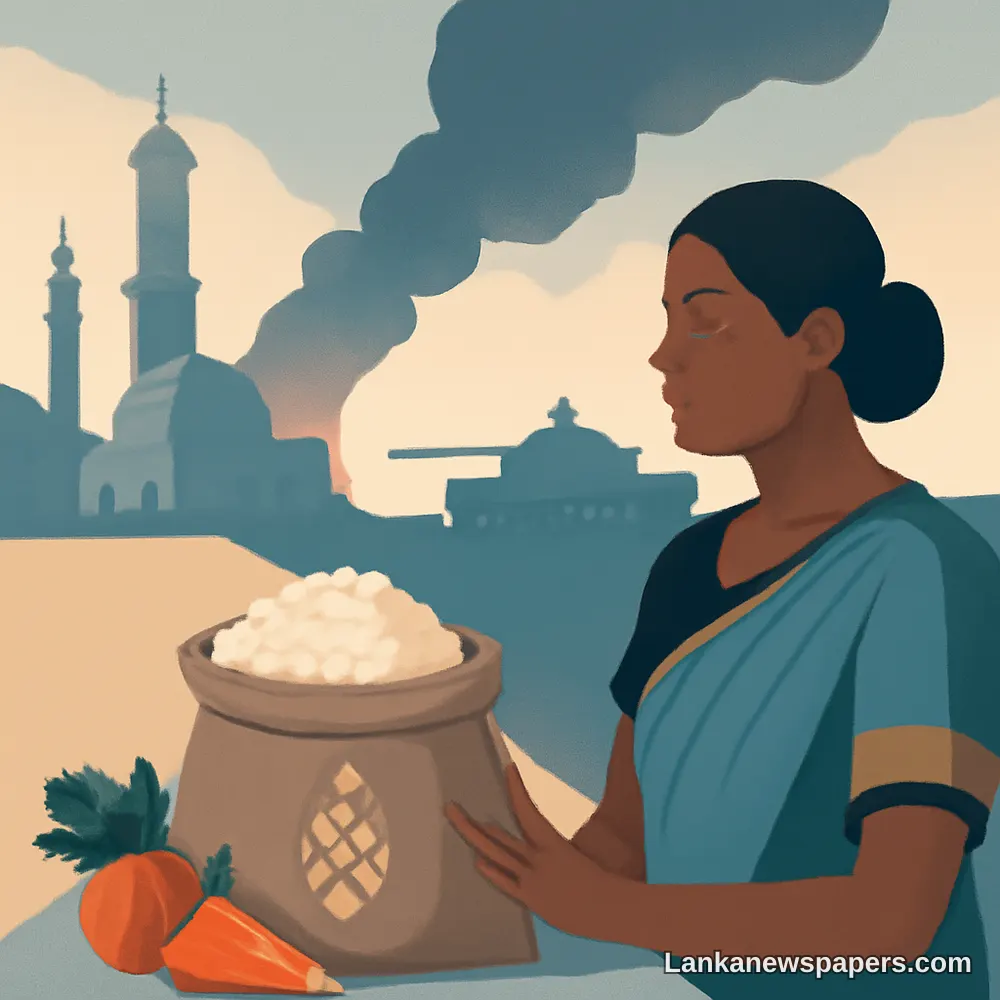
Regional conflict sending shockwaves through Sri Lankan households
The ongoing crisis in the Middle East is increasingly making its presence felt far beyond the region's borders, with Sri Lanka emerging as one of the nations facing significant pressure on food security as a direct consequence of the conflict, according to a June 2026 assessment of the situation.
A vulnerable economy caught in the crossfire
Sri Lanka, still navigating the aftermath of its worst economic crisis in decades, finds itself particularly exposed to the ripple effects of geopolitical instability in the Middle East. The island nation's heavy dependence on imported food commodities and fuel means that any disruption to global supply chains or spike in international commodity prices is felt swiftly and acutely by ordinary Sri Lankan families.
The Middle East conflict has contributed to heightened volatility in global markets, pushing up the cost of essential goods at a time when many Sri Lankan households are still struggling to regain financial stability following the economic turmoil of recent years.
Key areas of concern
- Rising import costs for staple food items driven by global supply chain disruptions
- Increased fuel prices affecting transportation and agricultural production costs
- Potential decline in remittances from Sri Lankan migrant workers based in the Middle East
- Heightened pressure on the country's foreign exchange reserves
Remittances at risk
A particularly worrying dimension of the crisis concerns the large community of Sri Lankan migrant workers employed across Middle Eastern countries. Remittances sent home by these workers represent a vital lifeline for thousands of families and a critical source of foreign currency for the broader economy. Any sustained instability in the region threatens both the livelihoods of these workers and the steady flow of funds upon which many Sri Lankan households depend.
Food access becoming a growing challenge
Humanitarian observers monitoring the situation have flagged that the compounding pressures of global conflict and domestic economic fragility are narrowing food access for vulnerable segments of Sri Lanka's population. Low-income families, in particular, face the sharpest impact as prices for basic necessities continue to fluctuate unpredictably.
The convergence of lingering domestic economic weakness and an escalating regional crisis abroad presents a serious challenge to Sri Lanka's efforts to achieve sustained food security for its most vulnerable citizens.
Calls for proactive policy response
Analysts and aid organisations have underscored the importance of proactive government measures to cushion the blow on at-risk communities. Strengthening domestic agricultural production, diversifying import sources, and reinforcing social safety nets have been highlighted as priority areas requiring urgent attention from policymakers in Colombo.
As the situation in the Middle East continues to evolve, Sri Lanka's ability to insulate its population from the worst effects of the crisis will depend heavily on swift, coordinated action at both the policy and community levels.



💬 Join the Discussion 1
See what readers are saying — and add your view.
Middle east problem, our plates empty. goverment still sleeping.